
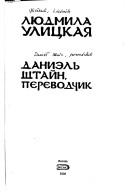
Daniel Stein, Interpreter
Ludmila Ulitskaya · b. 1943 · Russia
Originally Daniel Stein, Perevodchik (Russian)
Why it matters
A Jewish Holocaust survivor who became a Catholic priest and saved hundreds of lives as a Gestapo interpreter is reconstructed through letters, transcripts, and testimony. Ulitskaya's documentary-collage epic of faith across confessions.
At a glance
A documentary-collage of letters, transcripts, and testimony from many voices with no single narrator.
Deep dive
The documentary file assembled here is trying to reconstruct one real man who worked as a Gestapo interpreter while secretly saving Jewish lives, and every new voice added to it makes him harder, not easier, to file under either traitor or saint.
Written for readers who have finished the book. No plot recap, and nothing here is safe to read first.
Themes & symbolism
Ulitskaya builds Daniel Stein out of letters, interview transcripts, official memos, and the fragmentary recollections of dozens of people who knew him at different points in his life, with no single narrator ever stepping forward to settle how to read him. The character is drawn directly from the real Oswald Rufeisen, a Polish Jew who survived the war working undercover as an interpreter for the Gestapo in Belarus while secretly warning and smuggling Jews out of a ghetto, later converted to Catholicism, and became a Carmelite priest running a Hebrew-speaking congregation in Haifa.
Daniel's insistence, late in life, that direct ethical action matters more than institutional labels, Jewish, Catholic, Israeli, Polish, puts him at odds with both a Church hierarchy uneasy about his unconventional Hebrew liturgy and Israeli authorities unsettled by a convert who still claims Jewish belonging. Ulitskaya, a geneticist before she was a novelist, brings the same patient documentary instinct to Daniel that she brings elsewhere to Soviet dissidents and quiet moral holdouts, tracing how a single life lived across confessional lines exposes how much of institutional religion is really about policing boundaries rather than adjudicating conscience.
Ulitskaya includes her own voice among the documentary sources, breaking in periodically as herself, corresponding with a friend about the difficulty of the project, admitting where invention had to fill gaps the archival record left open. That authorial intrusion keeps the novel from pretending to a documentary objectivity it has already structurally disavowed, since a book built from other people's letters and memories is itself just one more partial account added to the pile, written by someone with her own stake in how Daniel gets remembered.
The Brother Daniel Case, Almost Unaltered
Rufeisen's real 1962 petition to Israel's Supreme Court, seeking automatic citizenship under the Law of Return as a Jew who had converted to Catholicism, became a landmark ruling, known ever since as the Brother Daniel case, that the state could recognize someone as ethnically Jewish while denying that a convert to another religion still qualified for immigration rights reserved for Jews by faith. Ulitskaya folds the case's actual legal reasoning into the novel's documentary material almost unchanged, letting a real courtroom argument about the boundaries of Jewish identity sit alongside her invented characters' letters as though both carried equal evidentiary weight.
The last seal: what actually happens, and why it lands the way it does.
The ending, explained
The novel closes after Daniel's death with a final wave of letters and tributes from the people who knew him, each offering an assessment that disagrees, sometimes sharply, with the others about what his congregation, his choices, and his legacy actually amount to, whether his approach to interfaith ministry should continue in his exact form or was inseparable from his own singular life. Ulitskaya refuses to let any one verdict close the file, ending the documentary collage on genuine plurality of memory rather than a settled epitaph, true to the method the whole book has used from its first page.
Where to go next
 Ludmila Ulitskaya · 2010The Big Green TentLvl 5Medium pace
 Vasily Grossman · 1980Life and FateLvl 7Medium pace
 Vladimir Sorokin · 2006Day of the OprichnikLvl 5Fast paced
 Anton Chekhov · 1899Selected StoriesLvl 4Medium pace
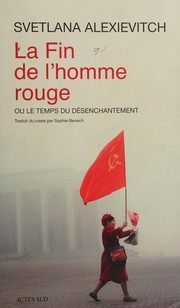 Svetlana Alexievich · 2013Secondhand TimeLvl 4Medium pace
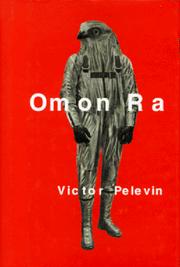 Viktor Pelevin · 1992Omon RaLvl 5Fast paced