
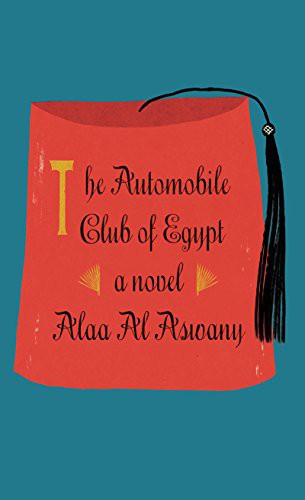
The Automobile Club of Egypt
Alaa Al Aswany · b. 1957 · Egypt
Originally Nadi al-Sayarat (Arabic) · translated by Russell Harris
Why it matters
A Cairo garage serving King Farouk's inner circle becomes a microcosm of tyranny, class, and stirrings of revolt in 1940s Egypt. Al Aswany's widest-lens novel, tracing one family's slide from servility toward rebellion.
At a glance
A large multigenerational cast and shifting narrators spread across a longer historical canvas.
Deep dive
A dismissed royal landowner takes a menial job at a British-run Cairo club that serves the entourage of a decadent, indulged king, and his four children spend the rest of the novel deciding, separately, what they owe a family and a country both built on other people's humiliation.
Written for readers who have finished the book. No plot recap, and nothing here is safe to read first.
Themes & symbolism
Abd el-Aziz Gaafar loses the family's ancestral land and, reduced to working as a storeroom clerk at Cairo's Automobile Club, a private lodge for the British colonial elite and King Farouk's own dissolute circle, is publicly flogged after a minor dispute with a superior, an injury he never recovers from. Al Aswany builds the entire novel outward from that single humiliation: Abd el-Aziz's four children, Kamel, Mahmud, Said, and Saleha, each inherit a version of the same problem, how to live inside a hierarchy built to require exactly this kind of submission from people like their father, and each answers differently.
The Club itself functions as colonial Egypt in miniature, its Egyptian staff subjected to arbitrary beatings and constant surveillance by Alku, King Farouk's Nubian favorite and the Club's de facto overseer, while its British and Egyptian aristocratic members drink, gamble, and conduct affairs in the same rooms the staff are forbidden from entering by any but the service door. Al Aswany, writing about the years just before the 1952 revolution that would end the monarchy entirely, lets that asymmetry accumulate through small, specific indignities rather than declared politics: Kamel's slow radicalization, Mahmud's decision to sell his own charm to older European women for money, Saleha's stalled ambition to study mathematics, are all, in Al Aswany's telling, versions of the same colonial arithmetic working itself out at the level of one family.
Alku and the Discipline of an Occupied Palace
Alku, more feared by the Club's Egyptian staff than King Farouk himself, enforces a regime of arbitrary punishment, docked wages, public humiliation, physical violence, that exists to keep a colonized workforce compliant without the British members ever having to dirty their own hands with it, and Al Aswany is precise about how that arrangement lets everyone above Alku maintain plausible deniability about the cruelty their comfort depends on. The staff's growing, halting attempts to resist him over the novel's second half read less as labor politics in the modern sense than as the first tremors of a much larger refusal Egypt itself was about to stage.
A Novel That Stops Short of 1952
Al Aswany sets the entire novel in the years immediately preceding the Free Officers' coup that would depose Farouk and end British influence in Egypt for good, and pointedly never lets the narrative reach that revolution: Kamel's underground organizing, the Club staff's resistance, and the family's accumulated grievances all point toward a reckoning the book withholds. That refusal reads as deliberate rather than an oversight, Al Aswany writing a prelude rather than a resolution, so the reader is left holding the same unfinished tension 1952 was actually built from, an unwritten future the characters can sense coming that the novel declines to grant them.
Where to go next
 Alaa Al Aswany · 2002The Yacoubian BuildingLvl 4Fast paced
 Alaa Al Aswany · 2007ChicagoLvl 4Medium pace
 Naguib Mahfouz · 1956Palace WalkLvl 4Medium pace
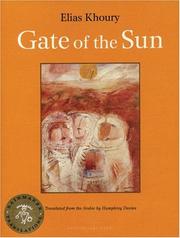 Elias Khoury · 1998Gate of the SunLvl 7Slow burn
 Ghassan Kanafani · 1963Men in the SunLvl 5Medium pace
 Nawal El Saadawi · 1975Woman at Point ZeroLvl 3Fast paced