
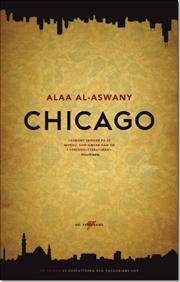
Chicago
Alaa Al Aswany · b. 1957 · Egypt
Originally Shikaghu (Arabic) · translated by Farouk Abdel Wahab
Why it matters
Egyptian graduate students and professors in a University of Illinois histology department carry the regime's corruption and repression across the ocean with them. Al Aswany turns his own years of medical study abroad into a panorama of Egypt in exile.
At a glance
Multiple interwoven plotlines in brisk, accessible, journalistic prose, as in his other novels.
Deep dive
Egyptian graduate students and professors at a Chicago histology department carry Cairo's surveillance state across the ocean with them, and a dissident's plan to confront a visiting head of state becomes the test of who among them actually believes what they claim to.
Written for readers who have finished the book. No plot recap, and nothing here is safe to read first.
Themes & symbolism
Al Aswany sets his ensemble inside the histology department at the University of Illinois at Chicago, a discipline built on slicing tissue into thin cross-sections and examining them under magnification, and uses that structure as his own narrative method: short chapters slice between half a dozen storylines, an assimilated professor whose daughter's American life horrifies him, an idealistic Egyptian professor gone quietly cynical, a devout veiled doctoral student navigating an American secularism she did not expect to want, without ever settling on one of them as the novel's real center. The effect is closer to social diagnosis than plot, Al Aswany examining post-9/11 Chicago's Egyptian community the way his characters examine tissue, thin, cross-sectional, and under bright light.
Ahmad Danana, head of the Egyptian students' union, functions as the novel's clearest villain and its sharpest political point at once: his scholarship depends on reporting fellow students' opinions back to Egyptian State Security, and Al Aswany makes clear that Danana's zeal is not ideological but purely careerist, a small, frightened man discovering that surveillance is the only kind of power available to him. Nagi Abd al-Samad, a poet expelled from Cairo University for his politics, represents the opposite temptation, open dissent, and the novel spends its length testing which posture, Danana's collaboration or Nagi's defiance, actually survives contact with real consequences rather than safe distance from Cairo.
Al Aswany, who trained in Chicago himself as a young dentist, writes the American half of his cast with the same unsparing eye: Ra'fat Thabit, a professor who has spent decades performing total assimilation, discovers that his adopted country offers no more protection for his daughter than the one he fled, while the interracial relationship between his colleague Muhammad Salah and a Black American partner draws out an American racism the immigrant characters had not expected to find waiting for them alongside Egyptian authoritarianism. Neither country, in Al Aswany's arrangement, gets to be the free one.
Danana's Currency Is Fear, Not Belief
Al Aswany refuses to let Danana read as a true believer in the regime he serves, and that refusal is the novel's sharpest move: every act of surveillance Danana commits, reporting a colleague's joke, threatening a student's funding, is staged as small-scale self-preservation rather than conviction, which makes him more unsettling than a committed ideologue would be. The system he serves does not need loyalty, Al Aswany suggests, only enough frightened people angling to keep what little they have, and Chicago's real subject is how easily an authoritarian state exports that arrangement wherever its citizens go.
The last seal: what actually happens, and why it lands the way it does.
The ending, explained
Nagi and Muhammad Salah plan a small act of protest during the Egyptian president's official Chicago visit: Salah, chosen to deliver the welcoming remarks, intends to read a statement defending Egyptians' right to freedom and democracy instead. He loses his nerve at the podium and says nothing, and unable to face Nagi, his estranged activist former partner Zeinab, or his own account of himself, he later takes his own life. Shaymaa, pregnant by a fellow student who will not commit to her, has an abortion and returns to an uncertain life still bound by the community's judgment. Ra'fat's daughter Sarah, whose drug use he refused to see clearly, dies from it, the assimilation he built his whole American life around failing to protect the one person it was supposedly for. Al Aswany closes without a single unifying resolution, each storyline settling into its own private defeat rather than a shared one.
Where to go next
 Alaa Al Aswany · 2002The Yacoubian BuildingLvl 4Fast paced
 Alaa Al Aswany · 2013The Automobile Club of EgyptLvl 5Medium pace
 Naguib Mahfouz · 1956Palace WalkLvl 4Medium pace
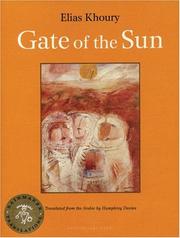 Elias Khoury · 1998Gate of the SunLvl 7Slow burn
 Ghassan Kanafani · 1963Men in the SunLvl 5Medium pace
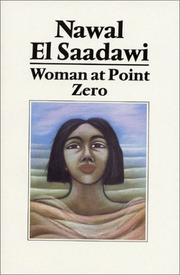 Nawal El Saadawi · 1975Woman at Point ZeroLvl 3Fast paced