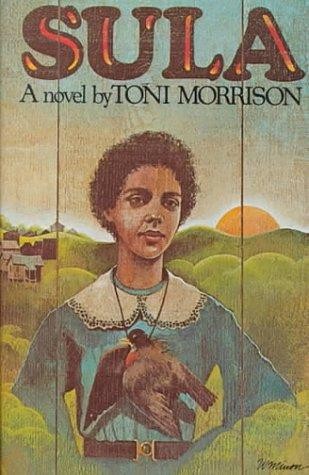
Sula
Toni Morrison · 1931–2019 · USA
Why it matters
Two Black girls in an Ohio hill town called the Bottom grow into radically different women: one conventional, one a scandal the whole community needs. Morrison's second novel makes female friendship and transgression inseparable.
At a glance
Compressed time jumps and an unsentimental, morally ambiguous heroine demand close reading.
Deep dive
Why the whole Bottom needs Sula to come home and behave exactly as badly as she does, and what that says about who the neighborhood is actually protecting when it calls her evil.
Written for readers who have finished the book. No plot recap, and nothing here is safe to read first.
Themes & symbolism
The Bottom, the Black hill neighborhood above Medallion, Ohio, was originally handed to a freed slave as a cruel joke, poor hill land sold to him as valuable land at the 'bottom of heaven.' Morrison uses that founding lie as the community's whole moral inheritance, a place defined from the start by living inside somebody else's bad joke and calling it home. Against that backdrop, Nel Wright and Sula Peace grow into near-opposite products of their households: Nel raised toward rigid, self-erasing respectability by her mother Helene, Sula raised in Eva Peace's chaotic house, where love and violence are barely distinguishable, Eva burns her own heroin-addicted son Plum alive and describes it entirely as mercy.
Sula's return to the Bottom after years away, met by a plague of robins, cements her status as something closer to a local weather event than a person, and Morrison is explicit about the function this serves: the town needs an agreed-upon embodiment of evil to define its own goodness against, and once Sula occupies that role, its residents actually treat each other more carefully than before, protecting their marriages and children purely out of the negative example she provides. Sula never asks for or accepts the role of village scapegoat; she simply refuses every form of self-sacrifice the town expects of its women, and that refusal alone is enough to be read as evil by people who have never had the option to make it.
Chicken Little in the River and What the Silence Between Them Costs
The childhood drowning that binds Sula and Nel, a boy slipping from Sula's hands into the water during a game, is never confessed or discussed by either woman for the rest of their lives, and it functions as the friendship's true foundation rather than its violation, the two of them bound less by affection than by a shared, unspoken guilt neither will name. When Sula later sleeps with Nel's husband Jude, Morrison frames the friendship's collapse as almost secondary to that older, deeper complicity, which survives everything else that comes between them.
The last seal: what actually happens, and why it lands the way it does.
The ending, explained
Sula dies alone, in physical pain and completely unrepentant, having lived by no code anyone else in the Bottom recognizes as legitimate, and the town's collective relief at her death briefly loosens the very discipline her presence had imposed, neighbors growing careless with each other again the moment their shared object of vigilance is gone. Decades later, an elderly Nel, visiting Eva in a nursing home, is accused by Eva of having been just as responsible as Sula for Chicken Little's drowning, a memory Nel has spent her life keeping separate from her grief over losing Jude. Walking home afterward, Nel finally understands that the loss she's carried for thirty years was never really about her husband at all.