
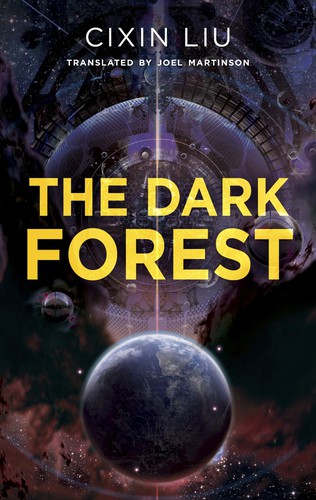
The Three-Body Problem
Liu Cixin · b. 1963 · China
Originally San Ti (Chinese) · translated by Ken Liu
Why it matters
A Cultural Revolution betrayal sets off a chain of events leading to humanity's first contact with an alien civilization. Hard science fiction married to real philosophical dread, and the novel that put Chinese science fiction on the global map.
At a glance
Hard-science exposition and a nested virtual-reality game complicate an otherwise brisk plot.
Deep dive
Why Liu Cixin roots first contact with an alien civilization not in a laboratory but in the specific cruelty Ye Wenjie survives during the Cultural Revolution.
Written for readers who have finished the book. No plot recap, and nothing here is safe to read first.
Themes & symbolism
Ye Wenjie watches her physicist father beaten to death at a Red Guard struggle session, an event Liu Cixin renders in unsparing, specific detail before the novel's science fiction premise has even fully arrived. Her subsequent exile to Red Coast Base, a remote radio observatory built for military purposes, reframes what follows as consequence rather than pure discovery: her disillusionment with humanity's capacity to correct its own worst impulses is the actual engine behind her later decision to answer a signal she has been explicitly warned not to answer.
The 'Three Body' virtual reality game that recruits Wang Miao into the novel's central mystery depicts Trisolaris, a civilization orbiting three suns whose gravitational interactions make its climate catastrophically unpredictable, alternating between livable 'Stable Eras' and civilization-ending 'Chaotic Eras.' Liu builds the game around a genuine unsolved problem in celestial mechanics, the three-body problem, and lets Trisolaris's perpetual instability mirror the historical instability Ye Wenjie has just survived, an alien species whose whole culture has been shaped by living at the mercy of forces it cannot predict or control.
The sophons, subatomic particles unfolded from eleven dimensions and sent ahead of the Trisolaran fleet to disrupt human physics experiments, dramatize the invasion as an epistemological siege centuries before any ship arrives: humanity's particle accelerators start returning nonsense, and its capacity to develop new science, not just its cities or armies, becomes the actual battlefield. Liu grounds the device in real, if speculative, physics, which is part of why the threat lands as plausible rather than as space-opera abstraction.
Sophons: Locking a Species Out of Its Own Physics
Rather than sending soldiers first, the Trisolarans send sophons, intelligent, proton-sized particles capable of unfolding into a two-dimensional plane large enough to etch a message across, or refolding into invisible interference generators that corrupt the results of human particle colliders. The choice is strategically exact within the novel's own logic: a civilization four centuries behind Trisolaris in propulsion can still eventually catch up through scientific progress, so the sophons' real function is to freeze that progress in place, ensuring humanity spends its centuries of warning unable to advance the one thing that might have let it fight back.
The last seal: what actually happens, and why it lands the way it does.
The ending, explained
Ye Wenjie's full history finally surfaces: decades earlier at Red Coast, against explicit instruction from an anonymous Trisolaran pacifist warning her that any reply would draw an invasion, she answered an alien signal anyway, believing a species incapable of managing its own cruelty might be improved, or disciplined, by contact with something more advanced. That single, despairing decision is revealed to have already committed Earth to a war it cannot yet fight: the Trisolaran fleet is now openly en route, four centuries out, while the sophons ensure human physics stays crippled for the entire approach. The novel ends not with a battle but with that slow-motion siege confirmed and understood, Wang Miao and the scientists around him left facing an adversary they cannot out-invent their way past for four hundred years.
Where to go next
 Octavia Butler · 1979KindredLvl 4Fast paced
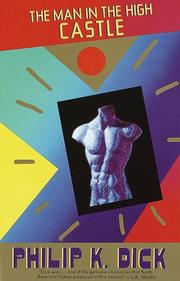 Philip K. Dick · 1962The Man in the High CastleLvl 6Medium pace
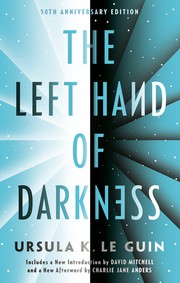 Ursula K. Le Guin · 1969The Left Hand of DarknessLvl 6Medium pace
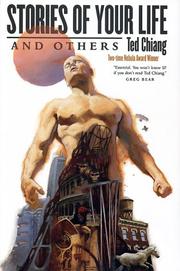 Ted Chiang · 2002Stories of Your Life and OthersLvl 5Medium pace
 Su Tong · 1990Raise the Red LanternLvl 4Medium pace
 Yan Lianke · 2005Serve the People!Lvl 4Fast paced