
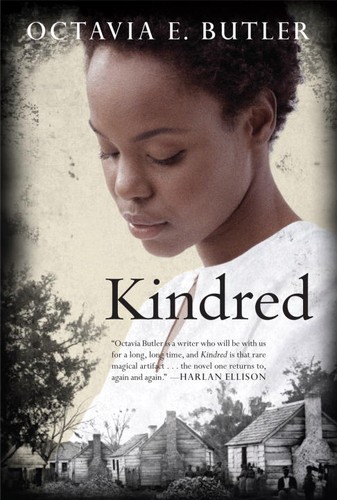
Kindred
Octavia Butler · 1947–2006 · United States
Why it matters
A modern Black woman is pulled repeatedly back to an antebellum Maryland plantation to keep her white ancestor alive. Butler makes slavery bodily and immediate: time travel as the most unbearable kind of proximity.
At a glance
Clear, propulsive prose keeps a structurally simple time-travel device easy to follow.
Deep dive
The device that keeps Butler's novel from ever letting a reader enjoy the comfortable distance of costume drama.
Written for readers who have finished the book. No plot recap, and nothing here is safe to read first.
Themes & symbolism
Time travel in Kindred isn't a plot mechanism so much as a moral trap: Dana can't observe antebellum Maryland from any safe remove, because her own existence is contingent on Rufus Weylin surviving long enough to father Hagar with Alice. Every rescue Dana performs — pulling a drowning child from a river, talking Rufus out of a fire he's set himself — is simultaneously an act of self-preservation and an act of complicity, since keeping Rufus alive means keeping the machinery of his violence against Alice running too. Butler refuses the reader the usual historical-novel escape hatch of retrospective safety; because Dana's body is actually there, whipped, sold-adjacent, owned on paper by strangers, the past stops being a setting and becomes a place things can still happen to you.
Alice is the novel's clearest casualty of that trap. Dana can protect her at the margins but never restore her actual autonomy — over her body, her children, her own eventual death — and the friendship between the two women is constantly strained by the fact that Dana, however unwillingly, is invested in an outcome (Hagar's birth) that requires Alice's continued suffering under Rufus. Kevin's parallel ordeal, stranded in the past for years of subjective time while barely any passes in 1976, supplies a quieter version of the same argument: prolonged exposure to a slaveholding world reshapes even a well-meaning white husband in ways his marriage to Dana can't simply absorb once they're both home.
Butler is also making a pointed argument about genre. Kindred borrows science fiction's premise but refuses science fiction's usual pleasures — there's no explanation offered for the time slips, no rules to master, no way to plan around them, because the point isn't a puzzle to solve but a history to survive. That refusal to aestheticize the mechanism keeps the novel's attention exactly where Butler wants it: not on how the travel works, but on what it costs Dana every single time she's forced back.
The arm in the wall
Dana's final return home costs her an arm, fused into the plaster at the exact point of transition and lost for good. It's the novel's one overtly fantastical image, and Butler earns it by making it literal rather than symbolic-and-nothing-else: the wound is permanent, unhealed, visible for the rest of Dana's life. It says plainly what the whole book has been arguing structurally — that contact with slavery's history doesn't end when the history lesson does, and that no one, however far removed by generations or geography, gets to walk away from it whole.
The last seal: what actually happens, and why it lands the way it does.
The ending, explained
After Alice dies by suicide, following the sale of her children, a grief-shattered Rufus tries to force himself on Dana — the household's one remaining tie to Alice — and Dana kills him in self-defense, ending both her usefulness to him and the chain of danger that has summoned her back and forth across two centuries. By this point Hagar has already been born, so the ancestral line the whole novel has been protecting is secure; Dana's final act is possible precisely because it no longer threatens her own existence. The physical cost of that last crossing, her arm fused into the wall of her own house, makes the ending's logic explicit: she can finally stop returning, but she can't return unmarked.
Where to go next
 Octavia Butler · 1993Parable of the SowerLvl 4Fast paced
 Philip K. Dick · 1962The Man in the High CastleLvl 6Medium pace
 Margaret Atwood · 1985The Handmaid's TaleLvl 5Medium pace
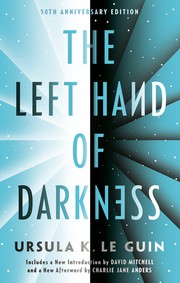 Ursula K. Le Guin · 1969The Left Hand of DarknessLvl 6Medium pace
 Yevgeny Zamyatin · 1924WeLvl 5Fast paced
 Mary Shelley · 1818FrankensteinLvl 4Medium pace