
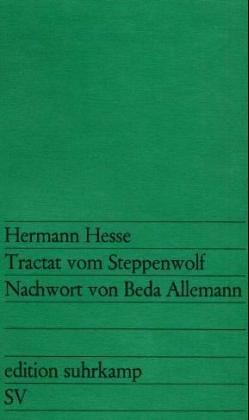
Steppenwolf
Hermann Hesse · 1877–1962 · Germany / Switzerland
Originally Der Steppenwolf (German)
Why it matters
Harry Haller, torn between bourgeois respectability and a wolfish inner despair, is offered a 'Magic Theatre' of the self. Hesse's fever-dream of the divided soul, rediscovered by every restless generation.
At a glance
Surreal, symbol-laden interludes and nested manuscripts complicate a divided-self allegory.
Deep dive
A middle-aged intellectual convinced he's half man and half wolf gets handed a strange rulebook for a magic theater, and Hesse uses it to argue his hero's whole self-diagnosis was too simple by half.
Written for readers who have finished the book. No plot recap, and nothing here is safe to read first.
Themes & symbolism
Harry Haller's account of himself as a 'Steppenwolf,' a solitary predator trapped inside a bourgeois human existence he despises and cannot escape, gives the novel its title and its opening trap: Hesse spends the first stretch of the book letting Harry's self-mythology stand largely unchallenged, a man of refined culture disgusted by comfortable middle-class complacency, before systematically dismantling the binary as too crude to describe anyone, let alone Harry. The 'Treatise on the Steppenwolf,' a pamphlet Harry finds and reads midway through, states this explicitly: a human soul contains not two natures but a thousand, and Harry's insistence on exactly two, man and wolf, spirit and instinct, is itself a symptom of the depression and self-isolation the book is diagnosing.
Hermine, the young woman Harry meets in a tavern after nearly deciding to kill himself, functions as his deliberate education in everything his intellectual life has starved: dancing, jazz, sensual pleasure, ordinary sociability, the very 'bourgeois' textures of experience Harry had convinced himself he was too serious for. Hesse frames her not as a romantic rescue but as a teacher, someone who insists Harry learn to live in his body and among other people before he can access the deeper transformation the novel is building toward, and her later demand that Harry eventually kill her reads as the logical extreme of that curriculum: a lesson in acting decisively rather than endlessly theorizing.
The Magic Theater, entered near the novel's end through a door marked 'For Madmen Only,' stages Harry's fragmented psyche as a literal arcade of doors and rooms, hunting humans for sport, chess games played with pieces representing his own personality traits, memories of past loves replayed and altered, and Hesse uses its surreal, deliberately unstable logic to argue that the self Harry has spent the whole novel trying to pin down as one fixed, tragic thing is actually a game to be played with humor and detachment rather than a sentence to be endured.
A Novel Written Out of Hesse's Own Crisis
Hesse wrote Steppenwolf in 1927 during a period of severe personal depression, following a failed marriage and deep alienation from the German culture around him, and Harry Haller's biography, age, temperament, wartime pacifism that made him a target of nationalist contempt, tracks closely enough with Hesse's own that the novel reads as thinly veiled self-diagnosis. That autobiographical pressure is part of why the book resonated so powerfully with later readers, especially the 1960s counterculture, who took the Magic Theater's invitation to dissolve a rigidly unified self as a literal endorsement of psychedelic experience, a reading Hesse found reductive but which nonetheless made Steppenwolf one of the most widely read German novels of the twentieth century decades after its initial, more modest reception.
The last seal: what actually happens, and why it lands the way it does.
The ending, explained
Inside the Magic Theater, Harry watches Hermine and his friend Pablo together and, in a jealous rage the theater's logic treats as performance rather than real crime, stabs Hermine, only for Pablo to calmly fold her body up like a discarded doll and dismiss the episode as Harry again failing to grasp that nothing here deserves the deadly seriousness he brings to everything. Pablo and the immortal figure of Mozart judge Harry not for the fantasy murder but for his humorlessness, his inability to laugh at his own tragic self-conception, and sentence him only to try again someday. Hesse ends on that suspended, unresolved note rather than a completed transformation: Harry hasn't been cured, only shown what taking himself so gravely has cost him, and given one more chance to learn to laugh instead.
Where to go next
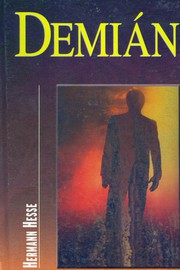 Hermann Hesse · 1919DemianLvl 5Slow burn
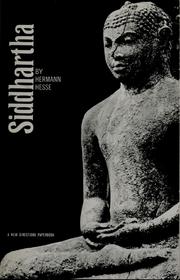 Hermann Hesse · 1922SiddharthaLvl 3Medium pace
 Hermann Hesse · 1930Narcissus and GoldmundLvl 4Slow burn
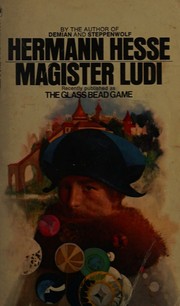 Hermann Hesse · 1943The Glass Bead GameLvl 7Slow burn
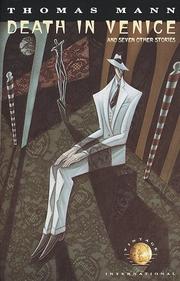 Thomas Mann · 1912Death in VeniceLvl 6Slow burn
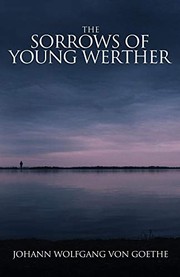 Johann Wolfgang von Goethe · 1774The Sorrows of Young WertherLvl 3Medium pace