
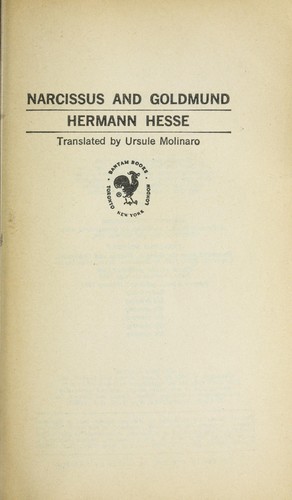
Narcissus and Goldmund
Hermann Hesse · 1877–1962 · Germany / Switzerland
Originally Narziß und Goldmund (German)
Why it matters
A monk of the mind and a wanderer of the flesh: two friends at a medieval cloister choose opposite paths to the sacred, one through contemplation, the other through art and desire. Hesse's most fully realized fable of contrary vocations.
At a glance
Clear, legend-like prose despite its sustained philosophical dialectic.
Deep dive
A monk and his student choose opposite paths to the sacred, one through discipline, the other through the body, and Hesse follows the wanderer's path all the way to a face he spends decades trying to carve.
Written for readers who have finished the book. No plot recap, and nothing here is safe to read first.
Themes & symbolism
Narcissus, the ascetic teacher, and Goldmund, the student he recognizes as fundamentally unsuited to monastic life, split Hesse's usual divided psyche across two whole characters instead of one: spirit, form, and discipline on one side, senses, image, and desire on the other, bound together by a friendship that survives decades of separation precisely because neither man tries to talk the other into becoming him. It's Narcissus himself, still a novice teacher at Mariabronn, who sends Goldmund out into the world, recognizing correctly that the cloister will slowly kill whatever is most alive in his student if he stays.
Goldmund's wandering life keeps circling back to a single image he's trying to carve: a maternal, erotic figure he calls simply "the Mother," and every woman he loves along the way, dozens of them across years of travel, becomes raw material folded into that unfinished project, an obsession that only resolves once his own actual mother's face, barely remembered from infancy and long assumed lost to memory entirely, finally surfaces clearly enough to finish the work.
Goldmund's affair with Rebekka, a Jewish woman he meets during a plague epidemic sweeping through the towns he passes, and his failure to save her from the persecution and violence that follows the plague's spread, is the novel's starkest collision between his aesthetic wandering and real historical violence: beauty, sensation, and freedom, everything Goldmund has organized his life around, prove entirely useless against a pogrom, and he can do nothing for her but grieve.
Master Niklaus's Settled Workshop
Goldmund's apprenticeship to the sculptor Niklaus offers him a clear alternative future: guild respectability, steady commissions, a comfortable house, a wife to inherit, and a creative life Niklaus himself privately admits has gone stale in exchange for all that security. Niklaus even offers to make Goldmund his heir outright, a settled livelihood most of the novel's other wanderers would take without a second thought. Goldmund refuses the trade even after finishing his own first masterwork, a carved figure of Saint John modeled on a dead friend's face, under Niklaus's roof, choosing the road again rather than settling into the master's version of success, a decision Hesse frames as genuinely costly, not simply romantic wanderlust.
The last seal: what actually happens, and why it lands the way it does.
The ending, explained
Imprisoned and nearly executed for an affair with a nobleman's mistress, Goldmund is recognized and ransomed at the last moment by Narcissus, now abbot of Mariabronn, and brought back to the cloister to live out his final years among the brothers he once left behind. He finishes no grand new work there, but Hesse gives him something closer to peace, his restless life folding into acceptance rather than regret over roads not taken. Dying, Goldmund asks Narcissus, who has never loved a woman in his life, how he intends to manage his own death without one, a last needling question that leaves sensual experience, not ascetic discipline, with the final word between them.
Where to go next
 Hermann Hesse · 1919DemianLvl 5Slow burn
 Hermann Hesse · 1922SiddharthaLvl 3Medium pace
 Hermann Hesse · 1927SteppenwolfLvl 6Medium pace
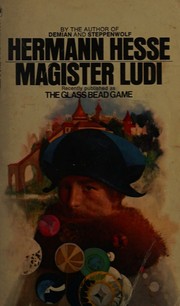 Hermann Hesse · 1943The Glass Bead GameLvl 7Slow burn
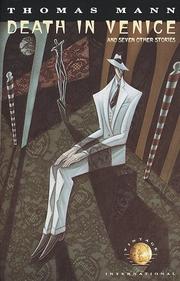 Thomas Mann · 1912Death in VeniceLvl 6Slow burn
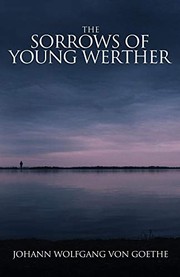 Johann Wolfgang von Goethe · 1774The Sorrows of Young WertherLvl 3Medium pace