

Speak, Memory
Vladimir Nabokov · 1899–1977 · Russia / USA
Why it matters
Nabokov reconstructs a lost St Petersburg childhood, a murdered father, and an exile's chess of memory, insisting throughout that recollection can be composed like art. His most intimate book, still relentlessly stylized.
At a glance
Nonlinear, image-driven chapters trade chronology for pattern and reward patient rereading.
Deep dive
Nabokov narrates his own vanished Russian childhood, gives more attention to the colors of individual letters and the wings of a single butterfly than to the assassination that upends his family, and argues, structurally, that this is exactly the right proportion.
Written for readers who have finished the book. No plot recap, and nothing here is safe to read first.
Themes & symbolism
Nabokov opens Speak, Memory by describing the ordinary human span as a brief crack of light between two darknesses, the oblivion before birth and the one after death, and treats the entire memoir that follows as an act of resistance against that darkness: precise, deliberately patterned recall as the only weapon available against time. The book's most famous device, his own synesthesia, in which letters and sounds arrive to him already colored, is presented not as a curiosity but as evidence of a mind built for exactly this project, recovering a lost world through sensory exactness rather than narrative summary.
That exactness extends to his lifelong obsession with butterflies, which occupies more sustained attention across the book than almost any single family event, including the 1922 assassination of his father, a prominent liberal politician shot in Berlin by monarchist gunmen aiming for a colleague he had stepped in front of to protect. Nabokov mentions the death early and glancingly, refusing it the narrative climax a more conventional memoir would build toward, a structural choice that argues, without ever saying so, that grief organized as spectacle is a betrayal of the person actually lost, and that his father is better honored by the patient specificity given to a childhood tutor or a first butterfly than by a single dramatized scene of violence.
Letters That Arrive Already Colored
Nabokov describes his synesthesia in exacting detail, the letter q as a browner shade than k, a soft yellow for the French word for love, treating it less as a private curiosity than as a working method: if ordinary perception already arrives shot through with unexpected correspondence, then a memoir built on noticing those correspondences is simply paying attention correctly. He extends the logic to argue that his own life, examined closely enough, reveals a designed pattern of recurring images and dates, insisting throughout that Speak, Memory is not a plain factual record but a deliberately shaped composition, closer in spirit to one of the chess problems he also spent years constructing.
The last seal: what actually happens, and why it lands the way it does.
The ending, explained
The book closes in 1940, with Nabokov, his wife Véra, and their young son Dmitri boarding a ship in France bound for America, fleeing the German invasion just ahead of it, an image Nabokov ties directly back to his opening meditation on the crack of light between two darknesses: the ship, glimpsed first by Dmitri as a confusing shape beyond a park, resolves into the vessel that will carry the family out of one collapsing world into another, unresolved, one. Nabokov offers no summary of what the exile has cost him; the closing image simply completes the pattern the whole memoir has been assembling, time itself finally arranging its scattered details into a shape only visible once the crossing is underway.
Where to go next
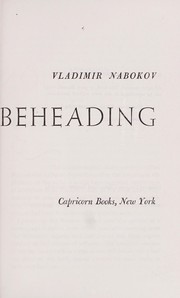 Vladimir Nabokov · 1938Invitation to a BeheadingLvl 7Slow burn
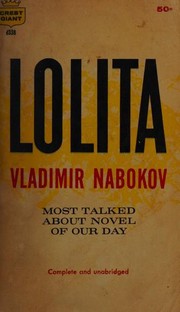 Vladimir Nabokov · 1955LolitaLvl 8Medium pace
 Vladimir Nabokov · 1957PninLvl 4Medium pace
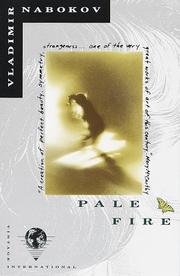 Vladimir Nabokov · 1962Pale FireLvl 9Slow burn
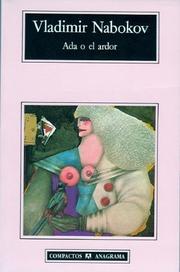 Vladimir Nabokov · 1969Ada, or Ardor: A Family ChronicleLvl 9Slow burn
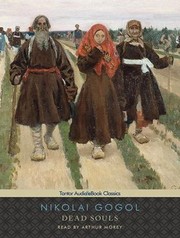 Nikolai Gogol · 1842Dead SoulsLvl 5Medium pace