
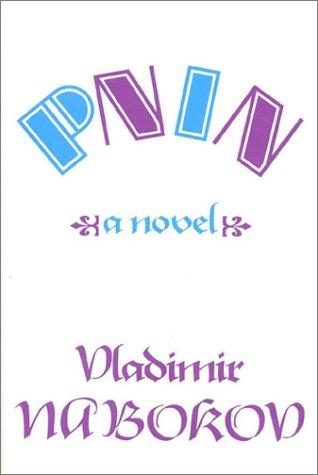
Pnin
Vladimir Nabokov · 1899–1977 · Russia / USA
Why it matters
A bumbling, tender émigré professor mangles English and dignity in equal measure across an American campus that never quite lets him in. Nabokov's gentlest book hides real heartbreak under its comedy.
At a glance
Episodic chapters and a light comic surface make this Nabokov's most accessible novel.
Deep dive
A hapless Russian professor stumbles through one humiliation after another at an American college, and the narrator telling his story turns out to have his own reasons for making Pnin look this foolish.
Written for readers who have finished the book. No plot recap, and nothing here is safe to read first.
Themes & symbolism
Timofey Pnin teaches Russian at the fictional Waindell College with a comic ineptitude for American life that Nabokov mines relentlessly, mangled idioms, a set of false teeth, a squirrel-watering party that goes chaotically wrong, and for most of the novel's length that comedy is the whole apparent point. Then, without warning, the narration pauses on a single, plainly written paragraph recounting the death of Mira Belochkin, Pnin's first love, murdered in a Nazi camp decades earlier, a passage Nabokov isolates from the surrounding slapstick entirely, no ironic distance, no punchline, and the contrast retroactively reframes everything comic around it as a performance Pnin has built specifically to survive carrying that memory.
Late in the book the narrator, previously unnamed, reveals himself as a fellow Russian émigré who claims to have known Pnin back in Russia, and when the two finally meet at a party, Pnin flatly disputes the narrator's version of their shared past, calling him a liar to his face. Nabokov lets that confrontation stand without resolving whose account is accurate, turning the whole novel retroactively into a question about narrative authority itself: whoever gets to tell an exile's story gets to decide how much dignity that exile is allowed to keep, and the narrator, hired to take over Pnin's own teaching position by the novel's end, has plainly not been a neutral custodian of it. Every earlier chapter, reread with that rivalry in mind, starts to look less like affectionate comedy and more like a colleague quietly settling an old score at Pnin's expense.
The One Paragraph About Mira
Nabokov gives Mira Belochkin's death a single unadorned paragraph, stripped of the wordplay and comic timing that governs nearly every other page, and places it with no transition in the middle of an otherwise ordinary chapter, so that a reader moving briskly through Pnin's mishaps runs straight into it unprepared. The formal isolation is the argument: some griefs cannot be integrated into a life's ongoing comedy, they simply sit inside it, sealed off, visited rarely and never resolved, which is exactly how Pnin himself seems to carry it.
The last seal: what actually happens, and why it lands the way it does.
The ending, explained
Pnin loses his position at Waindell to the very narrator who has been telling his story, a scholar Pnin has already publicly accused of distorting the facts of their shared past, and the novel's last image is Pnin driving away from the college in his small car with his dog beside him, disappearing down the road just as the narrator arrives to take over both his job and, implicitly, his old romantic interest. It is the one moment the narrator cannot control: Pnin escapes the frame of the story being told about him, refusing to be caught delivering a final humiliation for the narrator's benefit, and Nabokov leaves him, for once, simply out of reach.
Where to go next
 Vladimir Nabokov · 1938Invitation to a BeheadingLvl 7Slow burn
 Vladimir Nabokov · 1951Speak, MemoryLvl 6Slow burn
 Vladimir Nabokov · 1955LolitaLvl 8Medium pace
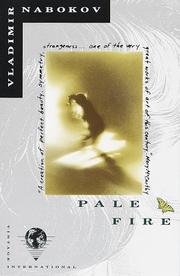 Vladimir Nabokov · 1962Pale FireLvl 9Slow burn
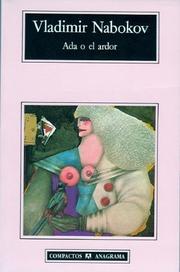 Vladimir Nabokov · 1969Ada, or Ardor: A Family ChronicleLvl 9Slow burn
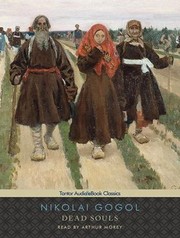 Nikolai Gogol · 1842Dead SoulsLvl 5Medium pace