
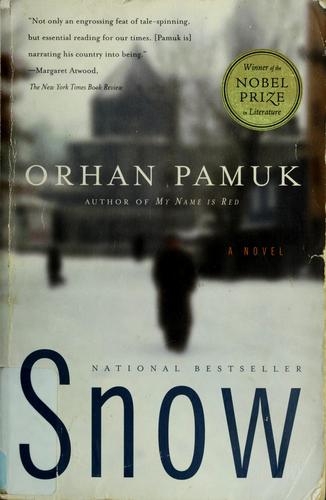
Snow
Orhan Pamuk · b. 1952 · Turkey
Originally Kar (Turkish) · translated by Maureen Freely
Why it matters
A poet returns from exile to snowbound Kars, where headscarf politics, a theater coup, and love close over him in three days. The great novel of secularism and faith colliding, more timely every year.
At a glance
Dense political argument and a framed, self-referential narrator complicate an otherwise linear plot.
Deep dive
A political poet returns from years of German exile to a snowbound Turkish border town to investigate a wave of suicides among girls forbidden to wear headscarves at school, and finds a stage play, a coup, and an old love waiting for him instead.
Written for readers who have finished the book. No plot recap, and nothing here is safe to read first.
Themes & symbolism
Ka, a poet who has spent twelve years in political exile in Frankfurt, comes to the snowbound eastern city of Kars ostensibly to report on a cluster of suicides among teenage girls forbidden to wear headscarves in state schools, though his real motive, never quite admitted, is Ipek, a former classmate now separated from her Islamist husband. Pamuk sets the entire novel over three isolated days when snow cuts Kars off from the rest of Turkey, and uses that isolation to compress the country's largest argument, secularism against political Islam, into a town small enough for every faction, the state's soldiers, an Islamist militant known as Blue, a theater troupe touring propaganda plays, Kurdish nationalists, to end up in the same handful of teahouses and hotel lobbies.
Snow itself is the novel's most worked symbol, and Pamuk is unusually precise about it: Ka, watching flakes fall outside his hotel window, sketches a snowflake with six unique arms and privately assigns them to reason, memory, and imagination, then uses that diagram to organize the nineteen poems that arrive in him, seemingly whole, during his three days in Kars. The poems function as the novel's great absence, since Ka writes them down in a green notebook that later goes missing, so that a book obsessed with the specific, recoverable texture of political conviction spends its own central artistic achievement permanently out of reach, both to its narrator and to the reader.
Pamuk builds his cast so that no faction gets the last word: Blue is charismatic and ruthless in the same breath, the secularist actor-director Sunay Zaim stages a literal military coup from inside a theater performance without the novel ever treating him as merely a monster, and the headscarf girls themselves are never allowed to become simple martyrs, since Kadife, the most prominent of them, has reasons for wearing hers that have as much to do with love and defiance as with faith. The effect is a novel that keeps refusing the reader's hope for a side to root for, precisely because Pamuk thinks Turkey's actual argument does not have one.
A Coup Staged as Live Theater
The novel's central set piece has Sunay Zaim's touring company perform a satirical play called My Fatherland or My Headscarf for a live Kars audience and, unannounced to almost everyone watching, actual soldiers on stage open fire into the crowd once the drama reaches its scripted anti-religious climax, killing several people including Necip, a devout, science-fiction-obsessed teenager Ka has befriended. Pamuk collapses the distance between performance and state violence so completely that Kars's citizens spend the following days unsure whether they witnessed a play, a massacre, or a coup, which is exactly the confusion a small, isolated city offers a government that wants deniability.
The last seal: what actually happens, and why it lands the way it does.
The ending, explained
Ka strikes a deal to secure Blue's release from custody in exchange for Kadife agreeing to unveil on stage during a second theater performance, but he also, under pressure and out of a longing to finally leave Kars with Ipek, gives soldiers information that leads to Blue's death in a raid; Ipek learns what Ka did and refuses to leave with him. During the staged unveiling, Kadife shoots Sunay Zaim dead with a gun she had been told was unloaded, becoming a folk heroine to a city already unsure what any of it meant. Ka returns alone to Frankfurt and, years later, is shot dead on a German street, an act the frame narrator, a novelist named Orhan investigating his old friend's life, suspects was carried out by Blue's former followers. Orhan's own trip to Kars to reconstruct these events, and his failure to ever recover Ka's lost notebook of poems, closes the novel on the same note of permanent, unresolvable loss it opens on.
Where to go next
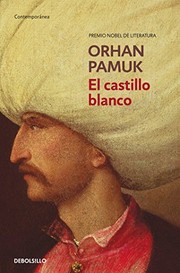 Orhan Pamuk · 1985The White CastleLvl 5Medium pace
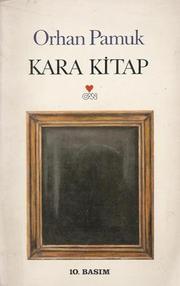 Orhan Pamuk · 1990The Black BookLvl 8Slow burn
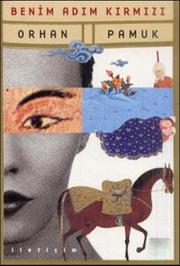 Orhan Pamuk · 1998My Name Is RedLvl 7Medium pace
 Orhan Pamuk · 2008The Museum of InnocenceLvl 6Slow burn
 Elif Shafak · 2006The Bastard of IstanbulLvl 4Medium pace
 Italo Calvino · 1972Invisible CitiesLvl 5Slow burn