
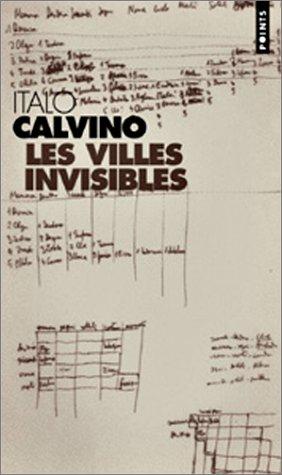
Invisible Cities
Italo Calvino · 1923–1985 · Italy
Originally Le città invisibili (Italian) · translated by William Weaver
Why it matters
Marco Polo describes fifty-five impossible cities to Kublai Khan: each a meditation on memory, desire, and signs; all, perhaps, Venice. The most beloved experimental book of its century: structure as poetry.
At a glance
Fragmentary prose-poem structure with no conventional plot to follow.
Deep dive
Marco Polo describes fifty-five cities to Kublai Khan that may all, in the end, be describing the same one.
Written for readers who have finished the book. No plot recap, and nothing here is safe to read first.
Themes & symbolism
Every city Marco Polo describes to the aging, doubting Kublai Khan is eventually revealed, in fragments scattered across the book, to be Venice seen from a different angle — memory, desire, signs, trading, eyes, names, the dead, the sky — which means the book's real subject is less a catalog of imagined places than an extended meditation on how a single beloved and half-remembered city (or life, or person) fractures into countless different descriptions depending on what the describer is trying to preserve or escape. Calvino uses the frame explicitly: when Kublai finally asks why Marco never speaks of his home, Marco answers that every time he describes a city, he's saying something about Venice — the confession the whole structure has been building toward.
The book's organizing device — eleven thematic categories (Cities and Memory, Cities and Desire, Cities and Signs, Thin Cities, Trading Cities, Cities and Eyes, Cities and Names, Cities and the Dead, Continuous Cities, Hidden Cities) interleaved according to a numerical pattern rather than a narrative sequence — treats the imagination as combinatorial: a finite set of human preoccupations (loss, longing, semiotics, mortality) generating what feels like infinite variation, the way a small set of words can generate any sentence ever spoken. That structural ambition places the book closer to Oulipian constraint-writing than to conventional fiction, form itself standing in for the argument about how imagination actually works.
Kublai Khan, ruler of an empire he increasingly suspects he doesn't really possess or understand, uses Marco's reports as a way of holding onto a world slipping from his control through information rather than direct experience — a very old anxiety (can an emperor know his empire only through report?) that Calvino makes newly urgent by writing it in a mid-twentieth-century idiom, with cities that anticipate surveillance, urban sprawl, and information overload as much as they evoke Kublai's thirteenth-century Mongol court.
A Structure Instead of a Plot
Calvino wrote Invisible Cities in short, self-contained bursts over several years rather than as a continuous narrative, and the finished book has no plot in the conventional sense — no rising action, no protagonist's arc, just the accumulating dialogue between Marco and Kublai interspersed with the city-descriptions themselves, arranged so a reader can enter almost anywhere and still track the book's logic. The nine chapters' numerical scheme (ten cities per category at the ends, five in the middle, symmetrically interleaved) is Calvino's own visible cage, a deliberate constraint in the tradition of his OuLiPo colleagues Raymond Queneau and Georges Perec, treating extreme formal restriction as a generator of imaginative freedom rather than an obstacle to it.
The Closing Argument About the Inferno
The book's final page is the closest thing it offers to a thesis statement, and Calvino places it deliberately outside the numbered-city structure: Kublai observes that the inferno of the living is already here, and Marco answers that there are two ways to bear it — accept it until it's no longer felt, or, harder, 'seek and learn to recognize who and what, in the midst of the inferno, are not inferno, then make them endure, give them space.' Every imagined city in the book has, in some sense, been an attempt at exactly that second, harder practice — not escaping the given world but learning to see, and protect, whatever inside it isn't yet ruined.
Where to go next
 Italo Calvino · 1957The Baron in the TreesLvl 4Medium pace
 Italo Calvino · 1979If on a winter's night a travelerLvl 6Medium pace
 Orhan Pamuk · 1998My Name Is RedLvl 7Medium pace
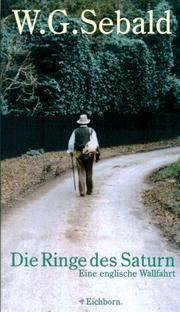 W. G. Sebald · 1995The Rings of SaturnLvl 7Slow burn
 Jorge Luis Borges · 1944FiccionesLvl 7Slow burn
 Roberto Bolaño · 1998The Savage DetectivesLvl 7Medium pace