

Nervous Conditions
Tsitsi Dangarembga · b. 1959 · Zimbabwe
Why it matters
A Rhodesian village girl hungers for the education that will free her and sever her from her roots. Dangarembga's landmark of African girlhood under colonialism, opening on the line 'I was not sorry when my brother died.'
At a glance
Clear coming-of-age narration; the difficulty is in its layered social critique, not the prose.
Deep dive
Two cousins absorb the same colonial education in two very different registers, and the novel's title comes from an unlikely source: Sartre's introduction to Fanon.
Written for readers who have finished the book. No plot recap, and nothing here is safe to read first.
Themes & symbolism
Tambudzai's path to an education runs directly through her brother Nhamo's death: as the family's presumed heir to the mission schooling their uncle Babamukuru controls, Nhamo dies of an illness the novel treats almost impatiently, and only his absence opens a place for Tambu at the same school. Dangarembga refuses to let that opportunity feel purely triumphant. Tambu's hunger for the very system that will later damage her cousin Nyasha is presented without embarrassment, an honest account of how badly colonial education is wanted even by those who will eventually see what it costs, and the novel's real subject is the gap between Tambu's ambition at seventeen and what she is able to understand about it only in hindsight, narrating from later in her life.
Nyasha, raised partly in England and returned to Rhodesia fluent in a skepticism her family finds alarming, fights with her food the way she fights with her father Babamukuru's authority: refusing meals, purging in secret, starving herself toward a body she can at least claim as her own decision in a household that otherwise decides everything for her. Babamukuru himself is no simple tyrant; he is a mission-educated man who has internalized the same colonial hierarchy that subordinates him to white missionaries, and reproduces its discipline inside his own household because it is the only model of authority he has been given. Nyasha's body becomes the site where two systems, patriarchy and colonial education, collide without either one yielding, and her illness is the novel's clearest evidence that assimilation extracts a price measured in flesh.
The Sartre Epigraph
Dangarembga takes her title from Jean-Paul Sartre's preface to Frantz Fanon's The Wretched of the Earth, where Sartre writes that the condition of the colonized is itself a nervous condition, psychological damage inflicted as surely as physical or economic damage. Placing that line at the front of a novel narrated by a girl who succeeds, on paper, at everything the colonial system asks of her is a pointed choice: Nyasha's visible collapse and Tambu's quieter, more ambivalent complicity are offered as two versions of the same diagnosis, one loud and one nearly invisible, and the novel trusts the reader to see Tambu's apparent success story as no less symptomatic than her cousin's breakdown.
The last seal: what actually happens, and why it lands the way it does.
The ending, explained
Nyasha's crisis comes to a head the night before she and Tambu are due to sit important exams, when she tears apart her history notes in a rage at their version of colonial conquest, then turns her fury inward, refusing food entirely until her family is frightened enough to seek help neither Babamukuru's authority nor the mission's medicine has a real framework for treating. Tambu, watching this from the outside, does not experience it as a warning that changes her course; she takes up the scholarship to the more prestigious, more thoroughly colonial Sacred Heart convent school regardless, narrating her own departure with a clear-eyed admission that she is choosing the same path that broke her cousin, aware of the cost for the first time and proceeding anyway.
Where to go next
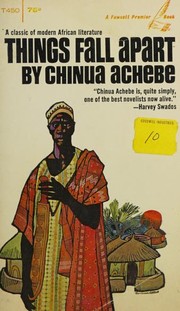 Chinua Achebe · 1958Things Fall ApartLvl 4Medium pace
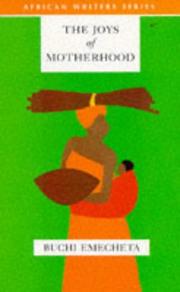 Buchi Emecheta · 1979The Joys of MotherhoodLvl 4Medium pace
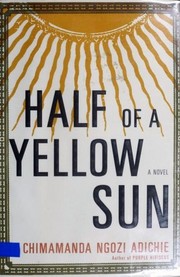 Chimamanda Ngozi Adichie · 2006Half of a Yellow SunLvl 4Fast paced
 Ngũgĩ wa Thiong'o · 1967A Grain of WheatLvl 6Slow burn
 David Storey · 1976SavilleLvl 5Medium pace
 Joseph Conrad · 1899Heart of DarknessLvl 7Slow burn