
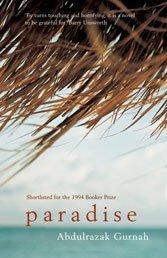
Paradise
Abdulrazak Gurnah · b. 1948 · Tanzania / UK
Why it matters
A boy sold into servitude travels a caravan route into East Africa's interior on the eve of European colonization. Innocence lost to both indigenous slavery and encroaching empire, from the Nobel laureate's breakthrough novel.
At a glance
Measured, lyrical prose that unfolds gradually through a naive boy's limited perspective.
Deep dive
Yusuf is twelve when his father hands him over to a merchant to settle a debt, and Gurnah spends the rest of the novel testing how many names, nephew, apprentice, son, that arrangement can wear before anyone calls it what it actually is.
Written for readers who have finished the book. No plot recap, and nothing here is safe to read first.
Themes & symbolism
Yusuf's father sends him off with the merchant Aziz to work off a family debt, but no one around Yusuf ever uses the word for what he has become. He is called Aziz's nephew, fed well, dressed in clean clothes, and set to work in the shop and later on the trading caravan into the interior, and the gap between that comfortable language and his actual status, a human being pledged against money owed, widens every time someone calls Aziz 'Uncle' in front of him. Gurnah keeps the arrangement's real name, rehani, a pawn, surfacing only at the edges of the story, leaving it to the reader to recognize a bondage that the novel's own characters have trained themselves not to see.
The long caravan journey west from the coast, through villages that trade cloth and beads for ivory and captives, does the novel's real historical work: it shows an East Africa already dense with commerce, hierarchy, and bondage well before any European colonial officer appears on the page. Gurnah refuses the tempting shortcut of a precolonial Eden ruined only by the Germans who arrive at the story's edges; Arab and Swahili traders, and African chiefs along the route, are already buying and selling people, and Yusuf's own bondage is one thread in a much older and wider fabric of exchange that colonialism will graft onto rather than invent.
The walled garden behind Aziz's house, tended and beautiful, gives the novel its title and its central irony: paradise, in the Quranic sense the old gardener Kalasinga likes to invoke, is also a walled enclosure, entered by permission and left by no one's choice but the owner's. Amina, another of Aziz's wards and the girl Yusuf comes to love, lives inside that same garden under the same soft, absolute confinement, and the novel lets its most beautiful setting double as its clearest image of what owning a person can look like when it is dressed in kindness.
The Merchant's Ledger and the Missionary's Ledger
Gurnah sets Aziz's careful accounting of debts, goods, and people against the arrival of German colonial administrators and missionaries who keep their own ledgers of souls and territory, and lets the reader notice how alike the two bookkeeping systems are even as one claims to be civilizing the other. Neither system has room in it for asking Yusuf what he wants; both simply enter him as an asset on a different page.
The last seal: what actually happens, and why it lands the way it does.
The ending, explained
As Aziz's fortunes and the wider region come under increasing pressure from German colonial forces requisitioning labor and land, Aziz moves to formalize his hold over Amina by marrying her himself, closing off any future Yusuf might have imagined with her and confirming that his own place in the household was never going to convert into anything more than continued dependence. With the only compensation the household ever offered him now gone and German askari troops marching through on their way to put down resistance in the interior, Yusuf leaves Aziz's compound and falls in step behind the column, walking toward the very colonial power that is dismantling the world he has just lost. Gurnah offers no relief in the gesture: it reads as a boy trading one form of bondage for another, choosing motion over a stillness that has already cost him everything.
Where to go next
 Abdulrazak Gurnah · 2020AfterlivesLvl 5Medium pace
 Chimamanda Ngozi Adichie · 2006Half of a Yellow SunLvl 4Fast paced
 Zakes Mda · 1995Ways of DyingLvl 5Medium pace
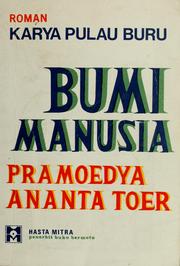 Pramoedya Ananta Toer · 1980This Earth of MankindLvl 4Medium pace
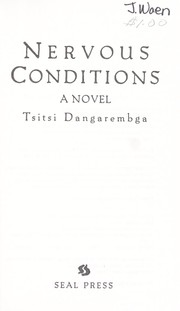 Tsitsi Dangarembga · 1988Nervous ConditionsLvl 4Medium pace
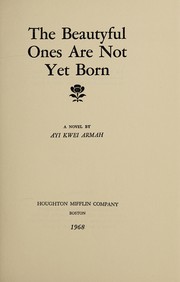 Ayi Kwei Armah · 1968The Beautyful Ones Are Not Yet BornLvl 6Slow burn