
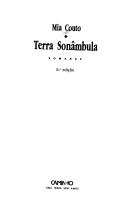
Sleepwalking Land
Mia Couto · b. 1955 · Mozambique
Originally Terra Sonâmbula (Portuguese) · translated by David Brookshaw
Why it matters
An old man and a boy wander a landscape gutted by civil war, reading a dead man's notebooks that blur into their own reality. Magical realism forged directly from African civil conflict rather than imported from Latin America.
At a glance
Two interwoven timelines and Couto's neologism-laden, poetic prose complicate the read.
Deep dive
A boy who can't remember his own name reads aloud from a dead man's exercise books on a war-ruined road, and the story inside them starts answering questions about his own life that he never thought to ask out loud.
Written for readers who have finished the book. No plot recap, and nothing here is safe to read first.
Themes & symbolism
Muidinga, a boy with no memory of his own past, and Tuahir, an old man who has taken him in, shelter inside a burned-out bus on a road abandoned by Mozambique's civil war, its seats still holding the dead. Among the wreckage Muidinga finds a satchel of exercise books belonging to a man named Kindzu, and begins reading them aloud each night, so the novel runs on two tracks at once: the bare, present-tense survival of two refugees going nowhere in particular, and the far stranger, denser story unspooling from a stranger's notebooks.
Kindzu's own notebooks describe a Mozambique where the war has undone the ordinary rules separating the living from the dead and the real from the invented: villages abandon their names, spirits argue with the living, and the road itself, in Couto's insistent phrase, seems to be sleepwalking, wandering without any government or army actually in control of where it goes. Couto is less interested in reporting the war's atrocities directly than in describing what prolonged war does to a country's capacity to tell a straight story about itself, and the shifting, dreamlike unreliability of both narratives stands in for whatever a documentary record of this war would otherwise have been.
Couto's Mozambique keeps circling back to naming as an act of survival: characters rename villages, rivers, and each other, insisting that a devastated place can be remade simply by being called something else with enough conviction. Muidinga's own amnesia turns this into a structural joke and a real ache at once, a boy with no name of his own reading his way, night after night, into someone else's, until it becomes unclear by the novel's end how separate the two of them, and their two stories, ever really were.
A War Narrated by Its Survivors, Not Its Armies
Neither side of Mozambique's real civil war is ever named directly in the novel, and soldiers appear mostly as weather, a force that arrives, does damage, and moves on rather than a set of political actors with a program. Couto's refusal to sort the war into sides pushes the focus onto exactly the two people the war usually erases from its own accounts: an old man and a boy with nothing left to lose or defend, left to make sense of the wreckage in whatever language still works.
The last seal: what actually happens, and why it lands the way it does.
The ending, explained
As Kindzu's notebooks run out and Muidinga finishes reading them, the frame story and the notebooks' story begin to fold into each other in ways Couto never fully separates back out: details from Kindzu's account start matching details of Muidinga's own erased life closely enough to suggest the boy is not merely reading a stranger's story but somehow living inside its aftermath, possibly as Kindzu's own lost son. Tuahir, who has spent the novel refusing to explain his own past, is left keeping watch over a boy whose identity the book declines to fully resolve, and the burned bus, rather than staying a fixed image of the war's dead, becomes the site where two separate acts of storytelling finally meet. The land Couto has called sleepwalking throughout does not wake up cleanly; it simply gets a fuller, stranger account of its own dreaming.
Where to go next
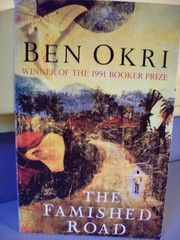 Ben Okri · 1991The Famished RoadLvl 8Slow burn
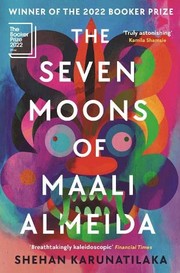 Shehan Karunatilaka · 2022The Seven Moons of Maali AlmeidaLvl 6Fast paced
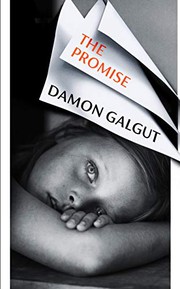 Damon Galgut · 2021The PromiseLvl 6Medium pace
 Zakes Mda · 1995Ways of DyingLvl 5Medium pace
 Amos Tutuola · 1952The Palm-Wine DrinkardLvl 6Fast paced
 A. S. Byatt · 1990PossessionLvl 7Medium pace