
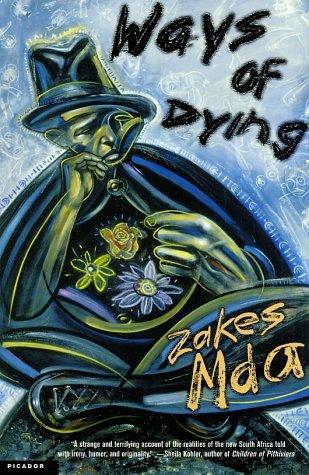
Ways of Dying
Zakes Mda · b. 1948 · South Africa
Why it matters
A professional mourner navigates funerals and shantytowns in a violent, transitional South Africa. Grief turned into both vocation and dark comedy, blending magical realism with township life.
At a glance
An unusual collective 'we' narrator and episodic structure are the main hurdles.
Deep dive
Toloki has invented a profession no one asked for, grieving strangers for a living, and the funeral that reunites him with a woman from his own village is the one he can't treat as just another job.
Written for readers who have finished the book. No plot recap, and nothing here is safe to read first.
Themes & symbolism
Toloki has made himself South Africa's only professional mourner, arriving uninvited at strangers' funerals in a nameless city, dressed in a costume of his own design, to grieve on behalf of families too exhausted, too poor, or too numbed by loss to grieve properly themselves. Mda treats the invented profession less as eccentricity than as a rational response to a specific historical moment, the early 1990s, when political violence is producing bodies faster than communities can absorb the grief for them, and a stranger willing to mourn professionally starts to look like a form of essential infrastructure rather than a joke.
At one of these funerals Toloki finds himself grieving for Noria, a woman from his own home village whom he loved hopelessly as a boy, now burying a son killed in the same political violence that fills the city's cemeteries every week. Mda narrates much of the novel in a collective 'we', the voice of the township itself watching and commenting on Toloki and Noria's reunion, a technique that keeps individual grief permanently visible against a community's larger, ongoing catalogue of loss rather than letting either character's mourning become simply private.
Noria's own gift, an improvised singing that can calm crying children and hold a room's attention, and Toloki's costume and self-appointed ritual, both read as acts of creation staged directly against destruction, evidence that dignity in Mda's township is not handed down by any authority but built, deliberately and often strangely, by people with almost nothing else to work with. The novel's many, wildly different funerals, from the dignified to the absurd, become the book's real structural spine, a catalogue of how a community keeps insisting on ceremony even when death has become almost routine.
Grief as a Skilled Trade
Mda gives Toloki's mourning its own vocabulary and technique, the correct posture, the calibrated wail, the discipline of arriving early and staying respectfully in the background, treating what looks like a morbid joke as an actual craft with standards. That craft framing lets the novel take Toloki fully seriously as a professional rather than a curiosity, and makes his eventual willingness to let Noria's grief become personal, rather than another job, register as the real risk he takes in the book.
The last seal: what actually happens, and why it lands the way it does.
The ending, explained
Toloki and Noria spend the funeral's aftermath together, and the practical, unglamorous work of comforting each other, sharing food, sitting through the long silences that follow a burial, replaces the more theatrical mourning Toloki has built his whole identity around. Mda lets their bond form without forcing a tidy romance: what grows between them looks more like the beginning of a shared household than a swept-up love story, two people who have each separately made a life out of surviving loss deciding to survive the next round of it together. The novel closes without political violence resolving or the city becoming safer, but with Toloki, for the first time, imagining a future built around a specific person rather than a professional distance from everyone's grief but his own.
Where to go next
 Zakes Mda · 2000The Heart of RednessLvl 6Medium pace
 Ben Okri · 1991The Famished RoadLvl 8Slow burn
 Abdulrazak Gurnah · 1994ParadiseLvl 5Medium pace
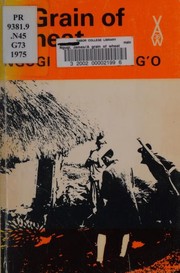 Ngũgĩ wa Thiong'o · 1967A Grain of WheatLvl 6Slow burn
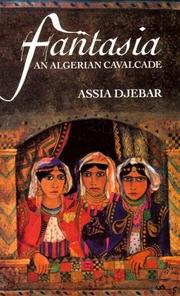 Assia Djebar · 1985Fantasia: An Algerian CavalcadeLvl 8Slow burn
 Ayi Kwei Armah · 1968The Beautyful Ones Are Not Yet BornLvl 6Slow burn