
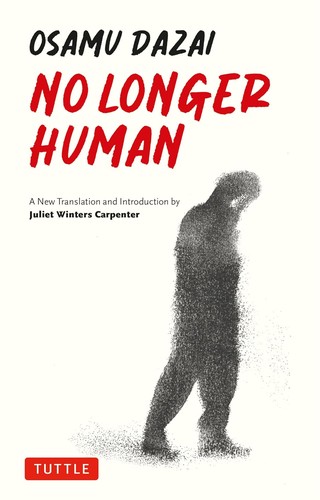
No Longer Human
Osamu Dazai · 1909–1948 · Japan
Originally Ningen Shikkaku (Japanese) · translated by Donald Keene
Why it matters
Three notebooks by a man who performs humanity without ever feeling entitled to it. Japan's perennial bestseller of alienation: Dazai drowned himself the year it appeared, sealing book and life together.
At a glance
Direct confessional voice; difficulty is emotional and thematic, not syntactic.
Deep dive
The three photographs a stranger describes before the notebooks even begin, and why Dazai frames Yozo's confession as evidence handed over by somebody else entirely.
Written for readers who have finished the book. No plot recap, and nothing here is safe to read first.
Themes & symbolism
Yozo's 'clowning' — performing cheerful normalcy from early childhood because he cannot decode what other people actually feel — is presented not as shyness but as a survival technique so total it becomes indistinguishable from his identity. The book's famous line, that he lost the qualification to be human, describes alienation as a disqualification rather than a mood: something done to him and then internalized as verdict.
A succession of women — Tsuneko, Shizuko, Yoshiko — are drawn precisely to the helplessness Yozo performs, and he in turn fails or ruins each of them; Yoshiko's rape by a shopkeeper he trusted, witnessed and left unstopped, is the novel's real turning point, converting his passivity from self-protection into something closer to complicity. Dazai insists that withdrawal from other people is itself a kind of violence, not its opposite.
Addiction — morphine, then alcohol, then institutionalization — literalizes the title with clinical exactness: Yozo doesn't just feel inhuman, he is eventually filed as insane, given a diagnosis that turns the novel's metaphor into paperwork.
The Frame: Three Photographs
An unnamed preface-narrator describes three photographs of Yozo — as a child, a student, an older man — each subtly wrong: a smile that isn't quite a smile, a face hard to picture afterward despite having just seen it. The notebooks that follow are handed over by a bar madam who knew him. This framing keeps the reader at one remove from Yozo's self-account, inviting sympathy while quietly undercutting the reliability of everything he claims about himself.
Dazai's Life as the Novel's Shadow
The parallels to Dazai's own life are exact enough to erase the distance between author and character: multiple suicide attempts, a failed double suicide that killed his partner and not him (echoed in Yozo's own botched attempt with Tsuneko), addiction, a wealthy family he felt disqualified from. Dazai completed the novel's serialization and then, weeks later, succeeded at a double suicide with Tomie Yamazaki — turning the book, for Japanese readers ever since, into something no one can quite read as fiction alone. The novel has stayed in print continuously since 1948 and remains one of the best-selling Japanese novels of all time, a strange, durable popularity for a book whose entire argument is that its narrator forfeited the right to be understood by anyone.
The last seal: what actually happens, and why it lands the way it does.
The ending, explained
Institutionalized and later released into a distant relative's rural care by his own family, who effectively discard him, Yozo settles into a diminished, medicated half-life — twenty-seven and, he says, already looking like a man of forty, neither happy nor unhappy, no longer human but no longer suffering from trying to be. The framing narrator closes by relaying the bar madam's verdict on the notebooks: despite everything he's confessed, he was 'a good boy, an angel.' That gap between Yozo's self-loathing account and the plain affection of someone who actually knew him is the novel's last and cruelest irony.
Where to go next
 Osamu Dazai · 1947The Setting SunLvl 4Slow burn
 Ryūnosuke Akutagawa · 1915Rashōmon and Other StoriesLvl 5Fast paced
 Kenzaburō Ōe · 1964A Personal MatterLvl 5Medium pace
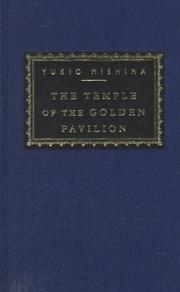 Yukio Mishima · 1956The Temple of the Golden PavilionLvl 6Slow burn
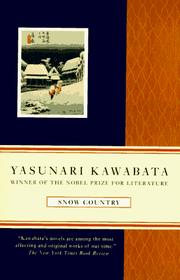 Yasunari Kawabata · 1947Snow CountryLvl 5Slow burn
 Natsume Sōseki · 1914KokoroLvl 4Medium pace