
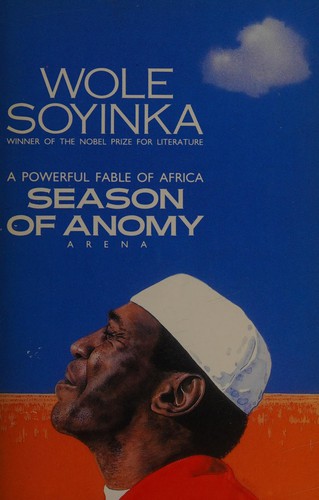
Season of Anomy
Wole Soyinka · b. 1934 · Nigeria
Why it matters
Ofeyi searches a nation sliding into massacre and cult-like corporate rule for the woman he loves, carrying a utopian farming commune's ideals into the wreckage. Soyinka's second and final novel, written in the shadow of the war he was jailed for trying to stop.
At a glance
Mythic allegory, fragmented chronology, and dense prose poetry demand as much patience as The Interpreters.
Deep dive
Ofeyi writes advertising copy for a cocoa cartel by day and dreams of a fairer country on the side, until the woman he loves is taken during a massacre and the dream turns into a rescue mission with no map.
Written for readers who have finished the book. No plot recap, and nothing here is safe to read first.
Themes & symbolism
Ofeyi works inside the machinery of the Cartel, a cabal of businessmen and politicians running the country's cocoa industry as a private fiefdom, producing the very propaganda that keeps its corruption invisible to the public. His assignment to promote Aiyero, a small fishing community organized around genuinely communal, noncompetitive principles, as a marketing image for the Cartel's products backfires on its sponsors: Ofeyi falls for the real thing Aiyero represents rather than the sanitized advertisement he was hired to make of it, and starts trying to seed its cooperative model in towns the Cartel would much rather keep passive and divided.
Soyinka builds the novel's second half around the Cross-river massacres, a wave of ethnic killing targeting people of Aiyero descent that draws directly on the real pogroms preceding Nigeria's civil war, and lets the violence overtake the novel's earlier idealism almost without warning, the way it overtook the country's own recent history. Ofeyi's lover Iriyise, a performer the Cartel has also used as a promotional face, is swept up and imprisoned during the killing, and Ofeyi's search for her across a landscape of mass graves and displaced survivors gives the second half of the novel the shape of a descent, deliberately echoing Orpheus going down after Eurydice, into a country's own underworld.
Ofeyi's uneasy alliance with the Dentist, a precise, ideologically committed assassin waging his own private war against the Cartel's enforcers, forces the novel's idealism to reckon with the violence its opponents have already normalized: Aiyero's noncompetitive ethic looks increasingly insufficient against men willing to organize massacres, and Soyinka never lets Ofeyi, or the reader, settle comfortably on either the Dentist's methods or the alternative of standing by while more Aiyero descendants are killed.
Cocoa as the Machinery of Complicity
Soyinka keeps returning to the literal mechanics of the cocoa trade, plantations, processing, Ofeyi's own advertising copy, to insist that the Cartel's violence and the nation's ordinary commercial life are the same system rather than separate spheres, one criminal and one legitimate. Ofeyi's job selling cocoa and his later search through massacre sites are not two different plots but one continuous supply chain, and the novel's dense, incantatory prose keeps forcing that continuity back into view whenever the story threatens to let it fade into background.
The last seal: what actually happens, and why it lands the way it does.
The ending, explained
Ofeyi and the Dentist eventually trace Iriyise to a prison camp, where she has survived the massacre's aftermath but emerges from captivity catatonic, withdrawn into a silence the violence has left her unable to break out of on her own. Soyinka refuses the rescue narrative its expected payoff: getting Iriyise's body out of the camp does not restore the woman Ofeyi went looking for, and the novel ends on her fragile, uncertain recovery rather than on any clean victory over the Cartel, whose machinery survives the massacre largely intact. What the novel leaves standing is Aiyero's example, damaged but not extinguished, and Ofeyi's refusal to abandon either the woman he loves or the idea that produced the massacre's real target in the first place.
Where to go next
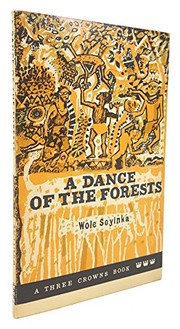 Wole Soyinka · 1960A Dance of the ForestsLvl 8Slow burn
 Wole Soyinka · 1963The Lion and the JewelLvl 3Fast paced
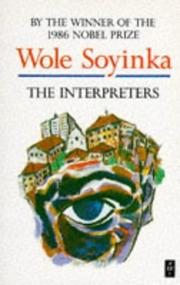 Wole Soyinka · 1965The InterpretersLvl 8Slow burn
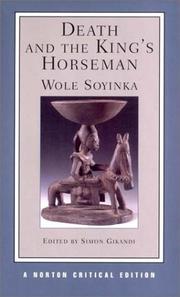 Wole Soyinka · 1975Death and the King's HorsemanLvl 6Medium pace
 Ayi Kwei Armah · 1968The Beautyful Ones Are Not Yet BornLvl 6Slow burn
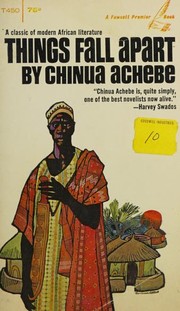 Chinua Achebe · 1958Things Fall ApartLvl 4Medium pace