
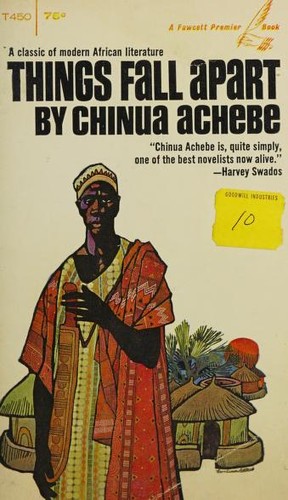
Things Fall Apart
Chinua Achebe · 1930–2013 · Nigeria
Why it matters
Okonkwo's rise and ruin as the missionaries arrive: an Igbo world rendered whole from inside, in English bent to its proverbs. The founding text of modern African literature; twenty million copies and counting.
At a glance
Plain, controlled prose; the difficulty is thematic and cultural, not syntactic.
Deep dive
The single paragraph that reduces Okonkwo's entire life to an anthropological footnote, and what Achebe is doing by ending there.
Written for readers who have finished the book. No plot recap, and nothing here is safe to read first.
Themes & symbolism
Every violent overcorrection in Okonkwo's life traces back to his terror of resembling his gentle, debt-ridden father, Unoka: the beatings, the killing of Ikemefuna — a boy who calls him father, in a killing he wasn't obligated to take part in and was explicitly warned against — and the accidental gun death that sends him into seven years' exile all read as masculinity performed against an internal threat rather than an external one. His chi, the personal god Igbo cosmology holds partly responsible for a man's fortune, is invoked repeatedly as working against him, leaving deliberately open how much of his ruin is fate and how much is self-authored. His son Nwoye's conversion to Christianity, which Okonkwo experiences as pure betrayal, reads instead as a rational response to a culture that had no place in it for a gentle son — it's the abandoned twins, left to die in the forest by a custom Okonkwo enforces without question, that first push Nwoye toward the missionaries.
Colonialism's actual weapon in the novel isn't the gun, it's paperwork and narrative: the church, the court, and a language that lets a District Commissioner arrest and humiliate the egwugwu — masked ancestral spirits, the clan's highest authority — without consequence, converting a cosmology into folklore overnight. Okonkwo's suicide is the novel's final, devastating irony: it's a crime against the earth goddess whose laws he spent the whole book enforcing, so his own clansmen can't even touch his body to bury it. The man most afraid of weakness dies officially designated an abomination, cut down at last by his own culture's definition rather than the colonizer's.
Whose Story Gets Told
In the closing paragraph, the District Commissioner, having watched Okonkwo hang, decides the incident is worth a paragraph in the book he's planning, The Pacification of the Primitive Tribes of the Lower Niger. Achebe's own title sits in open opposition to the Commissioner's: the four hundred pages that precede this paragraph are the corrective, restoring to Okonkwo the interior complexity a colonial chronicle would flatten into a footnote about a native who hanged himself.
Proverbs as Igbo Grammar
Achebe called proverbs "the palm-oil with which words are eaten," and the novel is built from them — they carry law, humor, warning, and cosmology throughout, doing argumentative work a Western novel would hand to exposition. Writing in English bent to Igbo rhythm and saying rather than replicating British prose norms was itself a formal act of resistance: the novel doesn't just describe an oral culture's sophistication, its own sentences perform it.
The last seal: what actually happens, and why it lands the way it does.
The ending, explained
After Okonkwo kills a court messenger sent to break up a village meeting, he expects Umuofia to rise with him against the British — instead, the crowd erupts in confusion rather than rallying, and Okonkwo realizes, in that silence, that his clan has already adapted enough to choose survival over confrontation. It's the first time his instincts have completely misjudged his own community. He hangs himself in the forest; because suicide offends the earth, his clansmen may not touch or bury him, and only strangers can cut him down. The District Commissioner arrives to find the scene useful material and files it away for his memoir, planning to give it a paragraph. That casual reduction — a man's entire life folded into a line about pacification — is Achebe's final indictment of colonial record-keeping, and exactly the erasure this novel, narrated from inside Umuofia, exists to reverse.
Where to go next
 Chinua Achebe · 1960No Longer at EaseLvl 4Medium pace
 Chinua Achebe · 1964Arrow of GodLvl 5Medium pace
 Chinua Achebe · 1966A Man of the PeopleLvl 4Fast paced
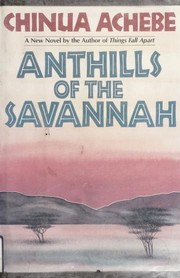 Chinua Achebe · 1987Anthills of the SavannahLvl 7Medium pace
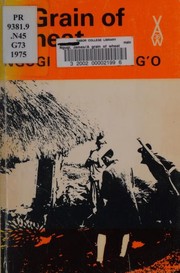 Ngũgĩ wa Thiong'o · 1967A Grain of WheatLvl 6Slow burn
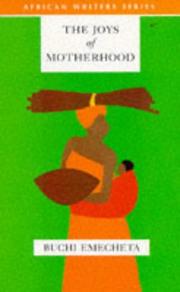 Buchi Emecheta · 1979The Joys of MotherhoodLvl 4Medium pace