
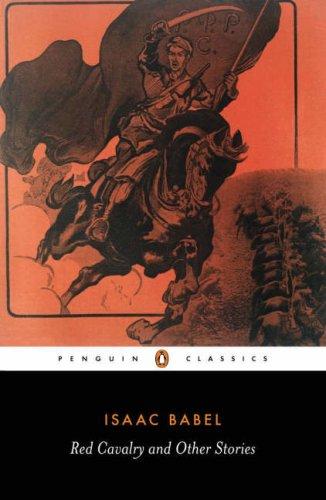
Red Cavalry
Isaac Babel · 1894–1940 · Russia / Ukraine
Originally Konarmiya (Russian)
Why it matters
The Polish-Soviet war compressed into brutal, jeweled miniatures, narrated by a bespectacled Jew riding with Cossacks. Babel's flint-hard prose finds horror and beauty in the same sentence.
At a glance
Compressed, elliptical vignettes demand attention despite their brevity and vivid imagery.
Deep dive
A bespectacled Jewish intellectual rides with Cossack cavalry into Poland in 1920, filing dispatches under a borrowed name, and the war he describes keeps testing exactly how far he'll go to be accepted by the men he's riding with.
Written for readers who have finished the book. No plot recap, and nothing here is safe to read first.
Themes & symbolism
Babel served as a war correspondent with Marshal Budyonny's First Cavalry Army during the 1920 Soviet-Polish War under the pen name Kirill Lyutov, and Red Cavalry's narrator carries the same disguise: a myopic, bookish Jew trying to pass among Cossack horsemen who despise intellectuals almost as reflexively as they despise Jews. 'My First Goose' compresses that whole tension into one scene: Lyutov, mocked and denied a place to sleep by his new squadron, wins their grudging respect only by seizing an old woman's goose and crushing its head under his boot with deliberate, performed cruelty, a small, appalling initiation that buys him a bed and costs him something the story never pretends he'll get back.
'Crossing the Zbrucz,' the collection's opening story, sets violence and domestic intimacy in the same frame from the first page: Lyutov billets for the night in a Jewish household and wakes to find he has been sleeping beside a corpse, an old man whose throat has been cut, laid out by his pregnant daughter because there was nowhere else safe to put him. Babel refuses throughout to separate the war's atrocities from its incidental beauty, describing a burning shtetl or a cavalry charge with the same lush, controlled lyricism he gives a sunset, an aesthetic choice that keeps implicating Lyutov, and by extension Babel himself, in the violence he's supposedly only observing.
The Mercy Killing in The Death of Dolgushov
In 'The Death of Dolgushov,' a mortally wounded soldier begs Lyutov for the mercy of a quick death rather than capture and torture by the retreating Poles, and Lyutov, squeamish, can't bring himself to do it; another rider, Afonka Bida, does the job without hesitation and turns on Lyutov afterward with real contempt for his hesitation, nearly shooting him too. The scene is Babel's clearest staging of the gap between Lyutov's literary sensitivity and the plain, unsentimental competence war demands, and it never resolves in Lyutov's favor.
Budyonny's War on His Own War Correspondent
Marshal Budyonny himself denounced Red Cavalry publicly after its 1926 publication, accusing Babel of slandering the Cavalry Army's heroism with squalor and moral compromise, and the book's unglamorous portrait of Soviet soldiers as looters, killers, and frightened men rather than revolutionary heroes made Babel politically vulnerable for the rest of his career. He was arrested in 1939 on fabricated espionage charges and shot in 1940, his manuscripts confiscated and largely destroyed, a fate the book's own unflinching honesty about violence and power did nothing to protect him from.
Where to go next
 Isaac Babel · 1931Odessa TalesLvl 4Fast paced
 Anton Chekhov · 1899Selected StoriesLvl 4Medium pace
 Nikolai Gogol · 1842Dead SoulsLvl 5Medium pace
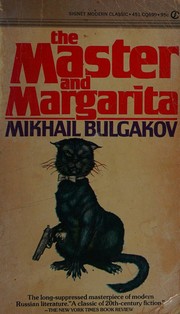 Mikhail Bulgakov · 1967The Master and MargaritaLvl 6Fast paced
 Varlam Shalamov · 1966Kolyma TalesLvl 5Medium pace
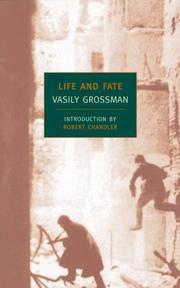 Vasily Grossman · 1980Life and FateLvl 7Medium pace