
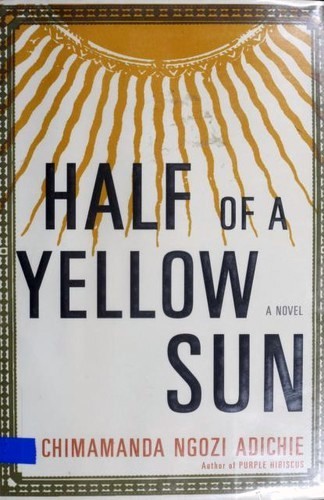
Half of a Yellow Sun
Chimamanda Ngozi Adichie · b. 1977 · Nigeria
Why it matters
Twin sisters, a houseboy, and an English writer swept into the Biafran war: the conflict Nigeria wouldn't discuss, given its definitive novel by a writer born after it ended. The Orange Prize's 'winner of winners.'
At a glance
Clear multi-perspective narration; the challenge is emotional weight, not prose difficulty.
Deep dive
The question this novel keeps circling — who gets to narrate Biafra, and to whom — turns out to have its answer hiding in a manuscript title everyone assumes belongs to someone else.
Written for readers who have finished the book. No plot recap, and nothing here is safe to read first.
Themes & symbolism
Richard, the English writer trying and failing to produce the definitive book on Biafra, is the novel's clearest statement about the limits of outsider empathy: he has access, sympathy, even genuine grief, but he lacks the standing and the interior claim on the material that would let his book matter the way he wants it to. Adichie's structural payoff is that the searing in-novel manuscript, 'The World Was Silent When We Died,' turns out by the final pages to have been written not by Richard but by Ugwu — the houseboy Richard rarely thought of as a person capable of authorship at all. The novel's argument about who owns a catastrophe's story is resolved not by debate but by simply handing the pen to the person Richard overlooked.
Olanna and Kainene split the novel's response to catastrophe along the axis of privilege. Olanna's idealism, moving in with Odenigbo, embracing the revolution's language of Pan-African renewal, is available to her precisely because her family's wealth is a safety net she never has to fully test; Kainene's colder pragmatism, running the family's wartime trade and organizing refugee relief, reads as the more clear-eyed response to a nation collapsing. That the twins are identical only in appearance and never in temperament is the point — Adichie is less interested in sisterly rivalry than in showing two equally intelligent women arriving at opposite survival strategies from the same catastrophe, neither one fully vindicated by the war's end. Ugwu's arc is the most morally complicated of all — from a village boy Odenigbo's household barely credits with an inner life, to a conscripted soldier who witnesses and briefly joins in a gang rape, to the war's actual chronicler. Adichie refuses to let his eventual authorship retroactively absolve what he did as a soldier.
Ugwu's Complicity
The gang rape scene is the novel's hardest passage precisely because Adichie won't let Ugwu, our most sympathetic point-of-view character, off the hook for it. He isn't only a witness to wartime brutality; for a moment he's a participant, and the book declines to explain it away as coercion or youth. That refusal is the point — Half of a Yellow Sun's real subject isn't the exceptional cruelty of a few soldiers but how ordinary decency curdles under siege, which makes Ugwu's later role as the war's moral historian more complicated and more earned than a redemption arc would be.
Kainene's Disappearance
Kainene vanishes on a cross-line trading mission during the war's chaotic final weeks and is never found, never explained, never mourned with any certainty — a device, not an oversight. Biafra's actual toll included hundreds of thousands of uncounted and unrecovered dead, and Adichie declines to grant her novel's cast the closure the historical record itself never provided. Leaving Kainene's fate open is the closest the book comes to formal protest against a war Nigeria still doesn't like to discuss.
The last seal: what actually happens, and why it lands the way it does.
The ending, explained
As Biafra collapses under siege and starvation and the secession fails, Kainene disappears while trading supplies behind enemy lines and is never located — standing in for the war's uncounted, unrecovered dead rather than offering the reader resolution. Olanna, Odenigbo, and Ugwu survive into an uncertain peacetime, altered and diminished. The final revelation that Ugwu, not Richard, authored the searing account of the war's atrocities reroutes credit for the 'true' history away from the sympathetic outsider and toward the former houseboy who lived it, was changed by it, and alone had the standing to tell it.
Where to go next
 Chimamanda Ngozi Adichie · 2013AmericanahLvl 3Fast paced
 Chinua Achebe · 1958Things Fall ApartLvl 4Medium pace
 Tsitsi Dangarembga · 1988Nervous ConditionsLvl 4Medium pace
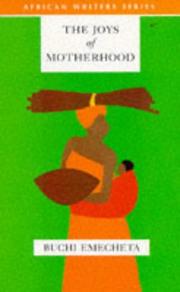 Buchi Emecheta · 1979The Joys of MotherhoodLvl 4Medium pace
 Ngũgĩ wa Thiong'o · 1967A Grain of WheatLvl 6Slow burn
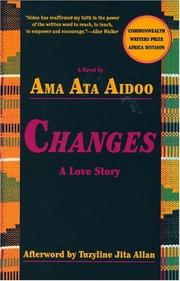 Ama Ata Aidoo · 1991ChangesLvl 3Medium pace