
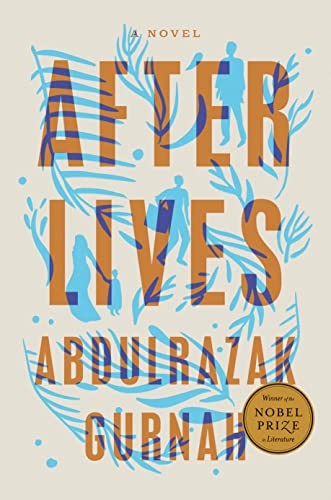
Afterlives
Abdulrazak Gurnah · b. 1948 · Tanzania / UK
Why it matters
Lives are upended across German East Africa's colonial wars and their long, unacknowledged aftermath. Gurnah's Nobel-year novel excavates a colonial history rarely rendered in such intimate human detail.
At a glance
Multi-generational span and shifting timeframes require sustained attention across decades.
Deep dive
Ilyas is taken by German colonial troops as a boy and comes back a soldier in their army, and Gurnah spends the rest of the novel following what that choice costs everyone who loved him, across two continents and two wars.
Written for readers who have finished the book. No plot recap, and nothing here is safe to read first.
Themes & symbolism
Gurnah sets the novel in German East Africa at the turn of the twentieth century, opening with Ilyas being taken from his coastal village as a child and raised inside the German colonial school system, only to return years later as a soldier in the Schutztruppe, the same colonial force that suppressed the real Maji Maji rebellion with a scorched-earth campaign that killed hundreds of thousands of East Africans through violence and the famine it deliberately caused. Ilyas's identification with his captors, genuine rather than merely tactical, is some of the novel's most unsettling material, since Gurnah refuses to let a man who has survived what he survived read simply as either victim or collaborator.
Hamza, conscripted as an askari in the same German army during the First World War's East African campaign, and Ilyas's younger sister Afiya, taken in as a household drudge after her brother disappears and rescued from that arrangement by the shopkeeper Khalifa, are Gurnah's other two anchors, and their eventual marriage, built slowly across years of ordinary work and patience rather than any single dramatic event, is the novel's answer to Ilyas's story, survival that does not require identifying with the power that did the damage.
Gurnah threads the colonial East African material directly into Nazi Germany a generation later, since Ilyas eventually leaves for Germany himself in the 1920s in search of the acknowledgment his wartime service never earned him there, and the novel's late chapters draw an explicit line between the empire that took him as a child and the regime that would later murder him. His story deliberately parallels that of Bayume Mohamed Husen, a real former askari who settled in Germany, married, and was ultimately sent to Sachsenhausen, where he died, a historical afterlife of German colonial violence that outlasted the colony itself by decades.
A Namesake Sent to Find Him
Hamza and Afiya name their own son Ilyas after her vanished brother, and by the novel's final pages that younger Ilyas, now grown, travels to postwar Germany to try to trace what actually happened to his uncle, uncovering only fragments: a marriage, a factory job, an arrest, a camp. Gurnah lets the search stay genuinely incomplete rather than supplying the closure a lesser novel would manufacture for a reader who has followed the first Ilyas's disappearance the whole book; the not-knowing is presented as the actual, accurate shape of what colonial violence and Nazi genocide together left behind for the people who came after.
The last seal: what actually happens, and why it lands the way it does.
The ending, explained
Ilyas is eventually arrested in Germany, apparently over a relationship with a German woman that the regime's race laws made a crime, and is sent to a concentration camp, where he dies; Gurnah reveals this only obliquely, through the younger Ilyas's fragmentary research decades later rather than through any direct scene, so the fact of the death is confirmed well before its full circumstances are. One detail the research surfaces without fully explaining is that someone who loved him seems to have followed him into the camp system rather than let him go alone. Gurnah closes not on Hamza and Afiya's own long, quiet survival but on their son standing in archives on another continent, still assembling a life the century's violence made sure could never be fully recovered.
Where to go next
 Abdulrazak Gurnah · 1994ParadiseLvl 5Medium pace
 Chimamanda Ngozi Adichie · 2006Half of a Yellow SunLvl 4Fast paced
 Zakes Mda · 1995Ways of DyingLvl 5Medium pace
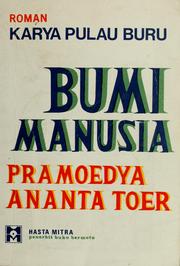 Pramoedya Ananta Toer · 1980This Earth of MankindLvl 4Medium pace
 Tsitsi Dangarembga · 1988Nervous ConditionsLvl 4Medium pace
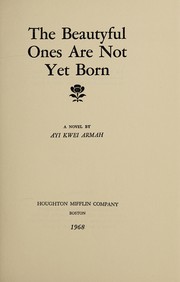 Ayi Kwei Armah · 1968The Beautyful Ones Are Not Yet BornLvl 6Slow burn