
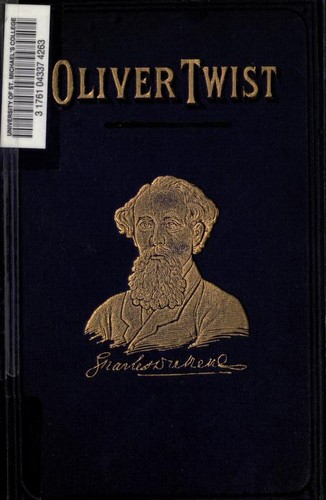
Oliver Twist
Charles Dickens · 1812–1870 · England
Why it matters
An orphan born in a workhouse falls in with a den of child pickpockets run by the sinister Fagin. Dickens's first full novel turned an exposé of the Poor Law and London's criminal underworld into serialized sensation, launching his lifelong campaign against institutional cruelty.
At a glance
Melodramatic plotting and thick London slang, but a shorter, more linear read than his later novels.
Deep dive
An orphan raised on gruel and cruelty falls in with a den of child pickpockets, and Dickens builds a loud reform argument around a boy whose goodness the plot ultimately explains as something closer to inheritance than upbringing.
Written for readers who have finished the book. No plot recap, and nothing here is safe to read first.
Themes & symbolism
Mr. Bumble and the workhouse embody the actual philosophy behind the 1834 Poor Law, that relief should be made miserable enough to discourage anyone from claiming it, and Dickens aims his satire less at cartoonish sadists than at petty officials faithfully administering a cruelty the law itself designed. Oliver's request for more gruel has become so famous a line that it's easy to forget how narrow and specific the target actually is: not wickedness in general, but a bureaucratic system built to starve people efficiently and call it prudence.
Fagin, run as a fence and trainer of child thieves, is written throughout the original text with an antisemitism that goes well beyond period casualness, referred to constantly as simply 'the Jew' and drawn in early illustrations with exaggerated caricature; a Jewish reader named Eliza Davis wrote to Dickens directly to object, and Dickens quietly revised later editions and public readings to soften some of the language, later creating the far more sympathetic Jewish character Riah in Our Mutual Friend, an apparent partial act of contrition that doesn't undo what's on the page here.
The novel's stated argument, that a corrupt environment produces corrupt people, sits uneasily against its own plot mechanics: Oliver, raised from infancy in a workhouse and then among thieves, never actually steals convincingly, lies well, or absorbs any of Fagin's training, and the late reveal that he's the illegitimate but genteel-blooded nephew of a respectable family supplies the real explanation, blood telling despite circumstance. Dickens wants environment to be the villain and heredity to be the hero's secret rescue at the same time, and the book never quite squares the contradiction it's built on.
The Portrait Dickens Later Regretted
Dickens's initial defense of Fagin's characterization, that criminals of the period genuinely tended to be Jewish, gave way over the following two decades to real, documented discomfort once readers pressed him on it directly. The revisions he made were partial and came late, after the caricature had already shaped how generations of readers and illustrators pictured the character, and the novel remains the clearest case in his body of work where a stated social conscience and an unexamined prejudice occupy the same pages without either one canceling the other out.
The last seal: what actually happens, and why it lands the way it does.
The ending, explained
Monks, revealed to be Oliver's own half-brother Edward Leeford, has spent the novel trying to destroy evidence of Oliver's parentage to keep an inheritance for himself, a scheme unraveled largely through information Nancy risks, and eventually loses, her life to supply; Bill Sikes murders her once he learns she's been in contact with Brownlow's household, then dies fleeing a pursuing mob, accidentally hanging himself with his own escape rope. Fagin is captured, tried, and sentenced to hang, visited in his condemned cell beforehand by Oliver and Brownlow in one of the novel's bleakest scenes, his earlier charm entirely stripped away by terror. Oliver's parentage and inheritance are confirmed, and he's formally adopted into Brownlow's household, the tidy legal resolution arriving, as it does throughout the book, through discovered bloodline rather than any change the workhouse or the streets ever managed to work on him.
Where to go next
 Charles Dickens · 1839Nicholas NicklebyLvl 4Fast paced
 Charles Dickens · 1843A Christmas CarolLvl 2Fast paced
 Charles Dickens · 1850David CopperfieldLvl 5Medium pace
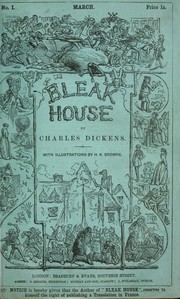 Charles Dickens · 1853Bleak HouseLvl 7Slow burn
 Charles Dickens · 1854Hard TimesLvl 4Medium pace
 Charles Dickens · 1857Little DorritLvl 7Slow burn