
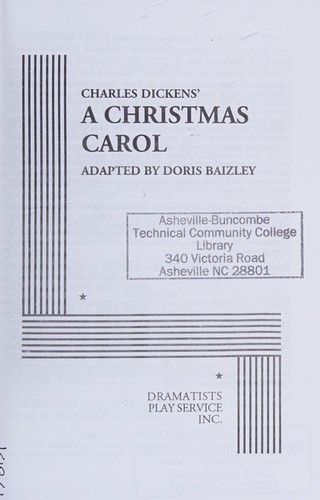
A Christmas Carol
Charles Dickens · 1812–1870 · England
Why it matters
A miserly moneylender is shown his past, present, and future by three spirits in a single night, and wakes changed. Dickens's most compact and most read work invented the modern Christmas ghost story and made 'Scrooge' a byword for the ungenerous.
At a glance
Short, direct, and written for reading aloud; the gentlest entry point into Dickens.
Deep dive
A miser is shown three versions of a single night, and the version that actually breaks him isn't the one most adaptations bother to keep in.
Written for readers who have finished the book. No plot recap, and nothing here is safe to read first.
Themes & symbolism
Scrooge's opening lines, 'are there no prisons, are there no workhouses,' and his hope that the poor would rather die and 'decrease the surplus population,' are directly lifted from the political economy debates of Dickens's own moment, a pointed parody of Malthusian reasoning and the same Poor Law logic Dickens had already attacked at length in Oliver Twist. The ghost story format lets him make the argument in miniature: not simply that Scrooge is personally stingy, but that an entire respectable ideology had supplied him with intellectual cover for indifference.
The Ghost of Christmas Present's robe conceals two starved, wretched children, named Ignorance and Want, presented to Scrooge directly with the warning to beware them both but Ignorance most of all, a scene routinely cut from stage and screen adaptations in favor of the cozier Cratchit dinner table. It's the book's single most radical image, more overtly political than anything else in the story, and its near-total absence from popular memory says something about which parts of Dickens's ghost story culture actually kept.
Scrooge's reform, once it arrives, is described in the specific vocabulary of business rather than simple sentiment: he raises Bob Cratchit's salary, becomes a second father to Tiny Tim, and is praised in the closing lines as being as good a master and as good a friend as the old city knew, Dickens deliberately framing generosity as a redirection of the marketplace Scrooge already lives inside rather than a rejection of it.
Ignorance and Want, the Scene the Adaptations Cut
Most film and stage versions keep the three ghosts and drop the two children entirely, which quietly changes the story's argument: without them, Scrooge's reform reads as a personal emotional awakening, while with them, Dickens is explicit that an entire society's indifference, not just one man's, produces exactly this kind of suffering. The scene's disappearance from popular memory is its own small case study in how a text's harder edges get sanded off by repeated retelling.
Written in Six Weeks to Pay Off a Debt
Dickens wrote the book in about six weeks in the autumn of 1843, driven partly by falling sales on his serialized Martin Chuzzlewit and by his own household's mounting expenses, and self-financed its first printing after a dispute with his usual publisher over profit shares, a decision that made the book a commercial success but, thanks to production costs and a cheap cover price he insisted on to reach ordinary readers, a thinner one than he'd hoped for personally. The book's instant popularity nonetheless helped cement several now-standard Christmas customs, including a renewed emphasis on charitable giving and family gathering, that had been fading in early Victorian England before Dickens gave them a story to attach themselves to.
The last seal: what actually happens, and why it lands the way it does.
The ending, explained
What actually breaks Scrooge isn't sentiment but a direct comparison the Ghost of Christmas Yet to Come forces on him: his own future death, unmourned, his possessions stripped and sold by servants before his body is even cold, set against the Cratchits' quiet, genuine grief over Tiny Tim's now-certain death in that same future. Waking to discover it's still Christmas morning tells him every future he's just watched remains avoidable rather than fixed, and the story's real urgency lands in how fast he acts on that: not a slow moral education but an immediate scramble to buy a turkey, give to charity, and show up, uninvited, at his nephew's door before the day is out.
Where to go next
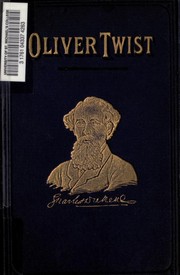 Charles Dickens · 1838Oliver TwistLvl 4Fast paced
 Charles Dickens · 1839Nicholas NicklebyLvl 4Fast paced
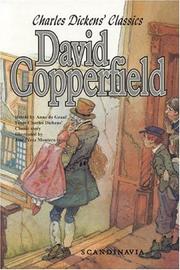 Charles Dickens · 1850David CopperfieldLvl 5Medium pace
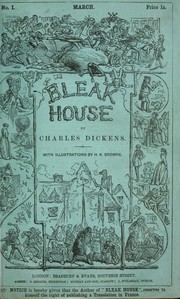 Charles Dickens · 1853Bleak HouseLvl 7Slow burn
 Charles Dickens · 1854Hard TimesLvl 4Medium pace
 Charles Dickens · 1857Little DorritLvl 7Slow burn