
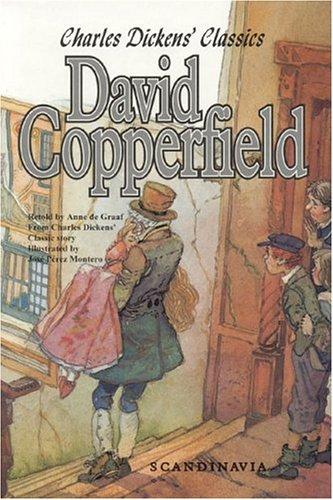
David Copperfield
Charles Dickens · 1812–1870 · England
Why it matters
Dickens's 'favourite child' and barely veiled autobiography: the blacking factory transmuted into fiction. The great Victorian novel of growing up; Tolstoy and Kafka both counted it among their essential books.
At a glance
Long, episodic, and densely populated, though narrated in clear first person.
Deep dive
The narrator opens by asking whether he'll turn out to be the hero of his own life, and Dickens spends eight hundred pages taking the question more seriously than the fairy-tale plot lets on.
Written for readers who have finished the book. No plot recap, and nothing here is safe to read first.
Themes & symbolism
Dickens draws directly on the worst period of his own boyhood, pasting labels in a shoe-blacking warehouse while his father sat in debtors' prison, and gives it almost unchanged to David after his mother's remarriage strands him with the Murdstones; the chapter is the novel's rawest writing precisely because Dickens wasn't inventing the humiliation of a middle-class child performing manual labor alongside boys with none of his prospects, he was reporting it. David's later infatuation with Steerforth, the charming, entitled schoolmate he never stops half-worshipping even after Steerforth destroys the Peggotty family by seducing and abandoning Little Em'ly, gives the novel its clearest study of charisma as a moral blind spot: David can see exactly what Steerforth is doing to the people around him and keeps loving him anyway, well past the point the reader has stopped.
David's own arc runs through two marriages Dickens deliberately doesn't treat as equivalent choices: Dora Spenlow, his first wife, is pretty, useless at housekeeping, and adored in a register David himself comes to recognize as more infatuation than partnership, while Agnes Wickfield, patient and capable since girlhood, has been quietly the novel's actual moral center all along, waiting for David to finish learning what Dickens calls disciplining his heart before he's capable of seeing her as anything but a sister. Uriah Heep's professed "umbleness," repeated so often it becomes a verbal tic, is the novel's darkest joke about self-presentation, a performance of total self-effacement covering an ambition to seize the Wickfield family's entire fortune, and Dickens pairs him pointedly against Mr. Micawber, whose grandiose, chronically indebted optimism is never once cynical, only helplessly, endearingly sincere.
Micawber, Written From Life
Mr. Micawber's endless expectation that "something will turn up," delivered in the same rolling, elevated diction whether he's celebrating a windfall or fleeing creditors out a back door, is Dickens's most affectionate portrait in the novel because it's the least disguised: John Dickens, the author's own father, spent time in the Marshalsea debtors' prison for exactly this pattern of doomed optimism, and Dickens gave Micawber his father's rhetorical excess almost intact while forgiving him far more generously on the page than he seems to have forgiven him in life. The gap between Micawber's comic, cheerful bankruptcy and David's own grim blacking-factory chapters is the space Dickens uses to work out two different responses to the same childhood catastrophe, one funny enough to bear rereading, one still too close to disguise as anything but pain.
The last seal: what actually happens, and why it lands the way it does.
The ending, explained
Dora's health declines slowly across the novel's second half after a difficult confinement Dickens never states outright, and she dies asking Agnes, already present in the household as her friend, to be the one David eventually marries, a request that makes explicit what the narrative structure had already been suggesting for hundreds of pages. David spends a period afterward traveling and working through grief before he can recognize what's been in front of him, and when he finally returns to propose to Agnes, she reveals she has loved him since childhood and simply waited, without ever pressing her claim, for him to catch up to his own feelings. The famous closing chapters, gathering every surviving character into a settled domestic tableau, answer the book's opening uncertainty about David's own standing in his story by suggesting the real heroism was never the eventful plot at all, just the slow, undramatic work of learning to see Agnes clearly.
Where to go next
 Charles Dickens · 1838Oliver TwistLvl 4Fast paced
 Charles Dickens · 1839Nicholas NicklebyLvl 4Fast paced
 Charles Dickens · 1843A Christmas CarolLvl 2Fast paced
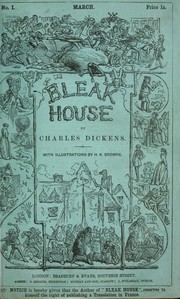 Charles Dickens · 1853Bleak HouseLvl 7Slow burn
 Charles Dickens · 1854Hard TimesLvl 4Medium pace
 Charles Dickens · 1857Little DorritLvl 7Slow burn