
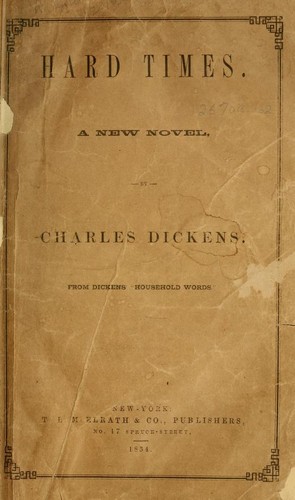
Hard Times
Charles Dickens · 1812–1870 · England
Why it matters
Set in the grim mill town of Coketown, Dickens's shortest novel indicts a fact-obsessed education that starves imagination and a factory system that starves everything else. His most concentrated dose of industrial-age social criticism.
At a glance
Short and pointed, though its allegorical names and sustained polemic can feel schematic.
Deep dive
Dickens's shortest novel names its schoolmaster Gradgrind, its capitalist Bounderby, and its factory town Coketown, and dares the reader to call the argument crude.
Written for readers who have finished the book. No plot recap, and nothing here is safe to read first.
Themes & symbolism
Thomas Gradgrind's classroom speech demanding 'facts alone' launches a pedagogy stripped of imagination that he applies just as rigidly to his own children, Louisa and Tom, raised on statistics and reason with feeling systematically trained out of them; Sissy Jupe, the circus performer's daughter Gradgrind takes in, becomes the book's rebuke simply by being unable to define a horse by zoological classification while knowing everything about horses that actually matters, having lived among them her whole life.
Bounderby's constant, blustering claims to have risen entirely self-made from gutter poverty, no family, no help, pure grit, are revealed late in the novel to be almost entirely invented: his mother is alive, loving, and has simply been paid for years to stay away and preserve his myth. Dickens exposes the self-made-man story, already a powerful piece of Victorian mythology, as one capitalism will happily reward even when it's demonstrably fabricated.
Sleary's traveling circus, dismissed throughout by Gradgrind's philosophy as frivolous and useless, ends up supplying the real charity, community, and rescue the novel's respectable institutions can't manage, sheltering Tom from arrest at the book's climax; Dickens compresses his whole social panorama here into something closer to a schematic fable than the accumulated detail of Bleak House, dedicating the book directly to Thomas Carlyle and choosing bluntness over breadth.
Bounderby's Invented Poverty
The reveal that Bounderby's rags-to-riches origin story is a fabrication, sustained for decades by quietly paying his own mother to disappear from view, lands as one of the novel's sharpest jokes precisely because nobody in Coketown ever thought to check it: a useful myth about deserving one's own wealth turns out to require active, ongoing lying to survive contact with the facts its teller claims to worship above everything else.
Stephen Blackpool, Ground Between Both Systems
Stephen Blackpool, the one working factory hand the novel gives real interiority, is crushed by mechanisms belonging to neither Gradgrind's philosophy nor Bounderby's capital directly: trapped in a marriage to an alcoholic wife he can't legally leave, ostracized by his own union for refusing to strike out of personal principle, then framed for the bank robbery Tom actually commits, he dies having been failed by law, labor solidarity, and management in roughly equal measure. Dickens uses him to insist the book's target is bigger than one bad philosophy or one fraudulent capitalist, that an entire industrial arrangement fails people who never asked to be tested by it at all.
The last seal: what actually happens, and why it lands the way it does.
The ending, explained
Louisa's loveless, practically arranged marriage to Bounderby collapses when she nearly succumbs to the seducer Harthouse's advances and flees back to her father's house in genuine crisis, forcing Gradgrind to confront that his fact-only system produced a daughter with no defense against manipulation. Tom, having robbed Bounderby's bank and let an innocent worker take the blame, is smuggled out of the country disguised as one of Sleary's performers, the very entertainers his father's philosophy trained him to despise now the only people willing to save him. Bounderby is publicly exposed as a fraud and dies alone and unmourned, and Gradgrind spends his remaining years trying to make his statistics 'subservient to Faith, Hope, and Charity,' while Dickens denies Louisa any marriage-plot reward at all, closing instead on a woman left permanently changed but genuinely alone.
Where to go next
 Charles Dickens · 1838Oliver TwistLvl 4Fast paced
 Charles Dickens · 1839Nicholas NicklebyLvl 4Fast paced
 Charles Dickens · 1843A Christmas CarolLvl 2Fast paced
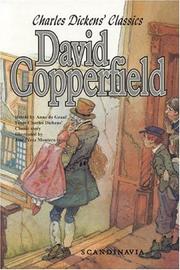 Charles Dickens · 1850David CopperfieldLvl 5Medium pace
 Charles Dickens · 1853Bleak HouseLvl 7Slow burn
 Charles Dickens · 1857Little DorritLvl 7Slow burn