
Little Dorrit
Charles Dickens · 1812–1870 · England
Why it matters
A woman born and raised in the Marshalsea debtors' prison finds herself, and her family's ruinous secret, entangled with the Circumlocution Office's bottomless bureaucratic indifference. Among Dickens's darkest and most structurally ambitious novels, and (his own father having been jailed for debt) his most personal indictment of the system.
At a glance
His longest and most tightly plotted late novel, layering deep social satire onto a sprawling cast.
Deep dive
Why Dickens builds a novel where a debtors' prison, a government office, a marriage, and a rich man's mind all turn out to be the same institution wearing different clothes.
Written for readers who have finished the book. No plot recap, and nothing here is safe to read first.
Themes & symbolism
Amy Dorrit is born inside the Marshalsea and has never known any other home; her father William has been confined there so long he has been crowned, half-mockingly and half-sincerely by the other debtors, the Father of the Marshalsea, a title he wears with a ruined man's pathetic dignity, correcting visitors' manners and accepting testimonial coins as though he still ran a household rather than owed the world money he cannot pay. Dickens builds the whole novel around variations on that single joke turned tragedy: confinement so total it becomes identity, and a man who has forgotten there was ever a self underneath the role the prison assigned him.
The Circumlocution Office, staffed entirely by the aristocratic Barnacle family, exists to answer every question with a longer form and a later appointment, its official motto effectively How Not To Do It; Dickens aims the satire at government by inherited privilege rather than government by competence, an institution whose actual function is producing delay and calling it process. Arthur Clennam's own imprisonment, first in his mother's cold house of unexplained guilt and later, after a bad investment in Merdle's bank, literally back inside the Marshalsea itself, closes the circle Dickens has been drawing the entire book: prison is not a building so much as a condition that follows a person through family, government, marriage, and money with equal indifference to where they happen to be standing.
Mr. Merdle, celebrated across London as the greatest financial genius of the age, dines with duchesses and cabinet ministers while carrying, unknown to anyone, a fraud so vast it will collapse half the fortunes in the novel the moment it's exposed; his eventual suicide with a borrowed penknife in a public bathhouse reads less as a single man's ruin than as Dickens's verdict on a society that had already decided reputation was worth more than any actual audit of what backed it.
A Dinner Party the Mind Reads as a Prison Yard
Once Mr. Dorrit inherits a fortune and the family is released into a life of European travel and society dinners, Dickens gives him one of his cruelest late scenes: presiding over a grand banquet among the wealthy, Dorrit's mind suddenly reverts entirely to the Marshalsea, and he addresses the assembled guests as fellow prisoners, welcoming them to the college and soliciting a testimonial as though two decades of confinement had simply continued underneath the borrowed manners of a gentleman. The scene argues what the rest of the novel has been building toward structurally: money changes a man's address, not the shape the prison has already carved into him.
The last seal: what actually happens, and why it lands the way it does.
The ending, explained
Merdle's bank collapses, wiping out the fortune the Dorrit family had only recently acquired and ruining Arthur Clennam along with it, so he ends the novel back inside the Marshalsea as a debtor himself, the very cell where Amy grew up now holding the man she loves. Amy, who inherited nothing she wants to keep and has never stopped thinking of the prison as home, returns from the Continent to nurse him and marries him there, poor again by choice as much as by circumstance. The long-running mystery of Arthur's birth and Mrs. Clennam's withheld guilt resolves quietly rather than triumphantly, and the newlyweds walk out into the London street at the close, Dickens noting explicitly that the crowd's noisy fret and chafe simply swallows them, an ending that trades rescue for ordinary anonymous life among people who never noticed either of them was ever imprisoned at all.
Where to go next
 Charles Dickens · 1838Oliver TwistLvl 4Fast paced
 Charles Dickens · 1839Nicholas NicklebyLvl 4Fast paced
 Charles Dickens · 1843A Christmas CarolLvl 2Fast paced
 Charles Dickens · 1850David CopperfieldLvl 5Medium pace
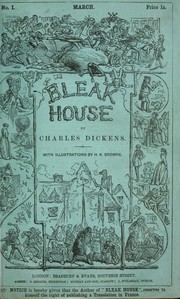 Charles Dickens · 1853Bleak HouseLvl 7Slow burn
 Charles Dickens · 1854Hard TimesLvl 4Medium pace