
Les Misérables
Victor Hugo · 1802–1885 · France
Originally Les Misérables (French)
Why it matters
The nineteenth century's great novel of mercy: one stolen loaf of bread, one relentless policeman, and the barricades of 1832. Melodrama at this scale and sincerity becomes myth: few novels have been loved by more readers.
At a glance
Long digressive essays on history and philosophy interrupt an otherwise clear plot.
Deep dive
A stolen loaf of bread sets off a chase that runs for two decades and hundreds of digressive pages — because Hugo thinks the digressions are the argument.
Written for readers who have finished the book. No plot recap, and nothing here is safe to read first.
Themes & symbolism
Valjean and Javert are constructed as opposing theologies more than opposing men: Javert's absolute faith in law and category — a man who has broken it can never not be a criminal, full stop — versus the Bishop of Digne's single act of unearned grace, giving Valjean the silver candlesticks he'd just stolen and telling him he's bought his soul for God, which reroutes Valjean's entire life onto a logic of mercy that Javert's worldview has no room to process. Every subsequent test of Valjean — adopting Cosette, sparing Javert at the barricade, revealing his past to Marius at personal cost — restages the bishop's gift in a new key, while Javert's inability to file Valjean's mercy into any existing moral category is what finally breaks him.
Hugo interrupts the plot constantly — for Waterloo, for the Paris sewers, for the argot of the criminal underworld, for the history of convents — and the digressions aren't padding so much as the novel's insistence that individual moral drama can't be separated from the vast social machinery around it: poverty, policing, revolution, and infrastructure are treated as characters with as much bearing on Valjean's fate as any person he meets. Fantine's ruin — fired, forced into prostitution, her teeth and hair sold, dying before she can see her daughter safe — is the novel's starkest illustration of that machinery grinding down a woman with no protector, and Valjean's guilt over having indirectly caused her firing is what turns his rescue of Cosette into penance rather than simple charity.
The June Rebellion of 1832, on which Marius's student friends throw away their lives at the barricade, is a real historical footnote that changed nothing politically — Hugo knows this and includes it anyway, because the novel's argument isn't that the rebellion succeeded but that Enjolras and his friends' willingness to die for an idea, however locally futile, is continuous with the larger moral arc Valjean has been living out privately: both are refusals to accept the world's given terms as final.
The Novel as Social Argument
Hugo's preface states the book's thesis outright — as long as poverty, ignorance, and the degradation of women by hunger and men by law persist, 'books like this cannot be useless.' That's why the digressions on the sewers (the city's literal underside, through which Valjean carries the wounded Marius to safety) or on convents and slang aren't ornamental: Hugo is building a total social geography in which no individual redemption, however moving, can be read apart from the systems that produced the misery in the first place.
The last seal: what actually happens, and why it lands the way it does.
The ending, explained
Having saved Marius by carrying him through the sewers after the barricade falls, Valjean lets Javert go free at the height of his own power over him during the rebellion — the single act of unrepayable mercy Javert's worldview cannot survive. Javert lets Valjean escape in turn, then drowns himself in the Seine, unable to reconcile his lifelong certainty that law and virtue are the same thing with the plain fact that a criminal has just proven more moral than he is. Valjean, believing his past disgraces Marius and Cosette's marriage, withdraws from their lives and fades physically; only on his deathbed, after Marius finally learns the truth about who saved him at the barricade, do Cosette and Marius arrive in time for a reconciliation. Valjean dies between them, at peace, the bishop's candlesticks on the mantle as the novel's closing image — grace, deferred and nearly refused, finally received.
Where to go next
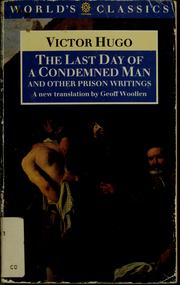 Victor Hugo · 1829The Last Day of a Condemned ManLvl 3Slow burn
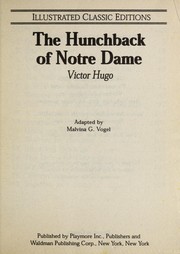 Victor Hugo · 1831The Hunchback of Notre-DameLvl 5Slow burn
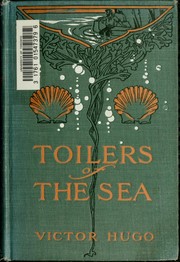 Victor Hugo · 1866Toilers of the SeaLvl 5Fast paced
 Victor Hugo · 1869The Man Who LaughsLvl 6Medium pace
 Victor Hugo · 1874Ninety-ThreeLvl 5Medium pace
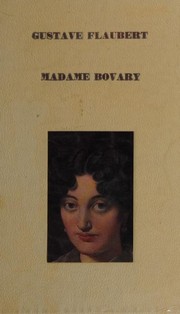 Gustave Flaubert · 1857Madame BovaryLvl 5Slow burn