
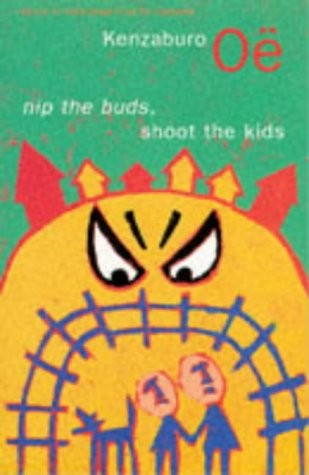
Nip the Buds, Shoot the Kids
Kenzaburō Ōe · 1935–2023 · Japan
Originally Memushiri Kouchi (Japanese) · translated by Paul St. John Mackintosh and Maki Sugiyama
Why it matters
Reform-school boys evacuated to a remote village are abandoned there when plague strikes, and briefly build a feral, self-governing world before the adults return to punish it. Ōe's ferocious debut novel, wartime cruelty seen from the bottom.
At a glance
Visceral, propulsive prose from a young author already pushing at grammar and taboo.
Deep dive
Why the reform-school boys' brief, feral self-government in an abandoned mountain village is the calm before the actual villains of Ōe's debut come back to reclaim the story.
Written for readers who have finished the book. No plot recap, and nothing here is safe to read first.
Themes & symbolism
Ōe opens with an ugly premise and then complicates it immediately: a group of reform-school boys, evacuated from the city for their own safety during wartime, are marched to an isolated mountain village and, when plague breaks out among the village's livestock and then its people, simply abandoned there, the villagers fleeing and blockading every route out rather than risk contagion. What follows isn't the chaos an adult reader might expect from delinquents left unsupervised but something closer to its opposite: the boys, joined by a Korean boy the village had already segregated, a deserting soldier, and eventually a young girl, build a functioning, cooperative small society with its own labor, its own rough justice, and, for the narrator, his first real experience of tenderness.
That interlude is more central to the book than the eventual return of the adults, and Ōe frames the boys' brief self-governance as evidence that the cruelty everyone assumes is native to them was manufactured by the institutions and the war that discarded them in the first place, not by anything essential to who they are. The girl the narrator comes to love, and who dies of the same plague that emptied the village of its adults, gives the interlude its clearest measure of what these boys were actually capable of when nobody powerful enough to punish them was watching: not the savagery their reform-school label predicts, but grief, loyalty, and something close to a working community.
Ōe's Twenty-Three-Year-Old Fury
Ōe wrote Nip the Buds, Shoot the Kids at twenty-three, his first novel, and its raw, propulsive prose, sentences that shove forward past ordinary grammatical caution, reads as the work of a writer discovering how much force language could carry before he'd fully learned the rules he was breaking. The novel arrived only a few years after the war's end, when Japan's official memory was already smoothing itself toward stories of collective endurance and shared suffering, and Ōe's insistence on showing wartime Japan abandoning its most disposable children to die of plague rather than risk contamination was received as a genuine provocation, a first shot in a career that would keep returning, from A Personal Matter onward, to institutions failing exactly the people they claimed to protect.
The last seal: what actually happens, and why it lands the way it does.
The ending, explained
When the villagers finally return, their fury isn't really about the boys at all: it's about the risk that their own abandonment of the village, and of the children left inside it, will become known and punished. To keep that secret, the returning adults kill the army deserter who had sheltered with the boys, threaten the group into silence, and buy their cooperation with food after weeks of near-starvation. Every boy in the group agrees to the cover story except the narrator, who refuses to let the villagers' cruelty and cowardice be rewritten as the boys' own savagery. For that single act of refusal, he's chased out of the village and into the surrounding forest alone, the novel ending on his flight rather than his fate, the last uncorrupted witness to what actually happened driven out by the very people responsible for it.
Where to go next
 Kenzaburō Ōe · 1964A Personal MatterLvl 5Medium pace
 Kenzaburō Ōe · 1967The Silent CryLvl 8Slow burn
 Kenzaburō Ōe · 1983Rouse Up O Young Men of the New Age!Lvl 6Slow burn
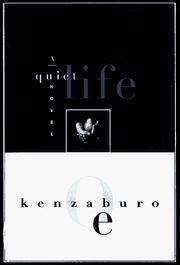 Kenzaburō Ōe · 1990A Quiet LifeLvl 5Slow burn
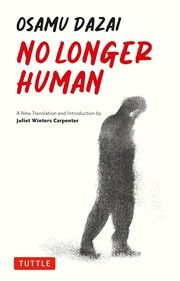 Osamu Dazai · 1948No Longer HumanLvl 4Medium pace
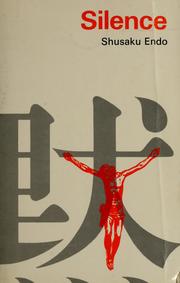 Endō Shūsaku · 1966SilenceLvl 5Slow burn