
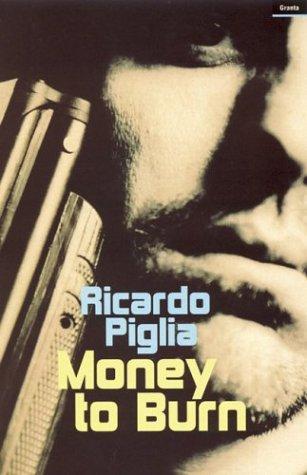
Money to Burn
Ricardo Piglia · 1941–2017 · Argentina
Originally Plata quemada (Spanish) · translated by Amanda Hopkinson
Why it matters
Small-time Argentine thieves hole up in a Montevideo apartment with a bank haul, burning the cash rather than surrender it to police. Piglia's true-crime novel of doomed loyalty pushed to its last, incendiary stand.
At a glance
A tense, fast-moving heist standoff narrated with journalistic, docudrama clarity.
Deep dive
Why a gang that's already gotten away with a fortune chooses a siege it can't win, and what Piglia's documentary method finds underneath a headline all of Argentina already thought it knew.
Written for readers who have finished the book. No plot recap, and nothing here is safe to read first.
Themes & symbolism
Piglia builds the novel almost entirely from the actual case file: a 1965 armored-van robbery outside Buenos Aires that he covered as a young journalist, assembled here from witness statements, police reports, and newspaper morgue clippings recombined into something closer to a documentary reconstruction than an invented plot. Malito's gang, working off inside information from corrupt provincial officials who expect a cut, hits the van with submachine guns and gets away clean, then does the one thing that guarantees they won't stay that way: they refuse to hand the promised percentage over to the police who tipped them off, converting cooperative corruption into an open, unwinnable war.
The bond between Nene Brignone and Gaucho Dorda, nicknamed the twins by the rest of the gang despite sharing no actual resemblance, is the novel's most carefully protected intimacy, tender in exactly the register the surrounding violence has no other outlet for. Piglia never turns their relationship into a subplot separate from the heist; it sits inside the same sentences as the gunfire, treated with more seriousness than the loyalty either man shows any institution, gang, police, or state. Dorda's volatility and his long, specific hatred of the police read less as a criminal profile than as the accumulated damage of a life the novel refuses to simplify into a single motive.
The Journalist Who Covered His Own Novel Twice
Piglia reported on the actual robbery and siege in 1965 for the magazine he worked for, then spent decades circling back to the material before finally publishing this reconstruction in 1997, gathering additional interviews and documents in the interim. That return produced real consequences outside the book: relatives of several of the dead, including Dorda's family, sued Piglia over the novel's portrayal, a controversy that only underlines how thin the membrane is here between reportage and fiction. Piglia's method treats that thinness as the point rather than a liability, insisting a genuinely accurate account of state violence sometimes needs a novelist's tools more than a reporter's just-the-facts restraint.
A Robbery the State Helped Plan
The gang's information comes from inside the police and provincial political machine, and Piglia keeps that complicity in constant view rather than treating the robbery as an isolated criminal event: officials who'd arranged to profit from the heist are the same ones who turn the resulting manhunt into a public spectacle once the gang stops paying. The novel's outrage isn't really aimed at four men with submachine guns so much as at an entire apparatus, police, press, politicians, that manufactures and then disowns its own criminals whenever the arrangement stops being convenient.
The last seal: what actually happens, and why it lands the way it does.
The ending, explained
Cornered in a Montevideo apartment after a tip-off, the gang holds off some three hundred and fifty Uruguayan police for close to sixteen hours on November 5, 1965, a siege broadcast live and watched by a national audience. Rather than let the stolen money be recovered, they set fire to it, burning millions of pesos in full view of the police outside, a gesture with no practical benefit that Piglia stages as the novel's real climax: the one form of refusal left to men who were never going to walk away regardless. Brignone and Mereles are killed in the final exchange along with two police officers; Piglia closes not on triumph or tragedy in any clean sense but on the sheer, useless completeness of the gesture, money that could have bought anyone's freedom turned to ash instead of evidence.
Where to go next
 Ricardo Piglia · 1980Artificial RespirationLvl 8Slow burn
 Jorge Luis Borges · 1944FiccionesLvl 7Slow burn
 César Aira · 1990GhostsLvl 5Slow burn
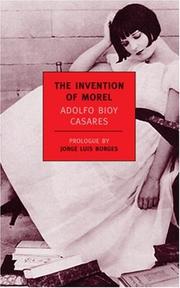 Adolfo Bioy Casares · 1940The Invention of MorelLvl 5Fast paced
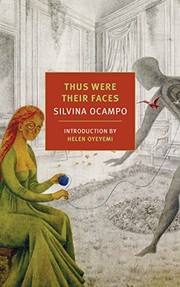 Silvina Ocampo · 1959Thus Were Their FacesLvl 5Fast paced
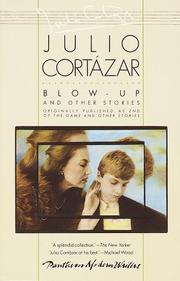 Julio Cortázar · 1959Blow-Up and Other StoriesLvl 6Medium pace