
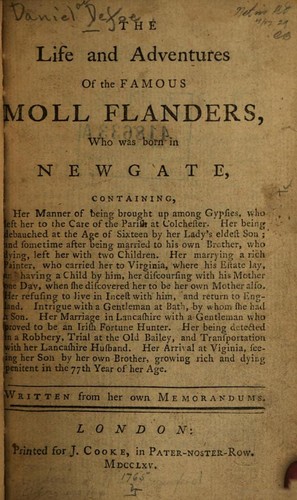
Moll Flanders
Daniel Defoe · 1660–1731 · England
Why it matters
A woman's unrepentant first-person tour through marriage, theft, and Newgate prison. Defoe gives the picaresque a female voice and an economist's eye: survival itself as the plot.
At a glance
Long unbroken first-person confession in eighteenth-century prose with minimal chapter breaks.
Deep dive
Why a novel that spends four hundred pages watching a woman lie, steal, and calculate every marriage for money ends with its narrator insisting she's sorry.
Written for readers who have finished the book. No plot recap, and nothing here is safe to read first.
Themes & symbolism
Moll never gets to keep her own name; "Moll Flanders" is one alias among several she moves through across a life that starts in Newgate prison, born to a mother already sentenced to transportation, and runs through five marriages, a career as London's most successful thief, and eventual exile to the Virginia colony. Defoe's first-person narration stays locked inside Moll's practical calculation at every turn: love, when it appears at all, is one asset among several she weighs against a suitor's income and prospects, and the novel's famous energy comes from watching a narrator this clear-eyed about her own motives never once pretend otherwise to the reader, even when the preface insists she has repented.
That gap between the moralizing frame Defoe supplies, a preface promising the book will show vice punished and virtue rewarded, and the actual pleasure the narrative takes in Moll's competence at thieving and marrying is where the novel's real interest lives. Moll narrates her most successful cons, the horse theft at Bartholomew Fair, the string of husbands worked for their money, with evident professional pride, and Defoe never supplies a scene where the reader is asked to feel her crimes as anything but expertly executed survival. Whether the late repentance is sincere or one more performance aimed at a specific audience, in this case eighteenth-century readers who needed a moral alibi to enjoy the book at all, has been argued over since the novel appeared.
Property and identity stay fused throughout: Moll's worth in the marriage market is stated in pounds before it's ever described in any other terms, and her worst crime in her own accounting isn't theft but the marriage she enters not knowing her husband is her own half-brother, discovered only after they've had children together in Virginia. Defoe treats the mistake less as a moral catastrophe than as the logical result of a world that trades women without asking who their families actually are.
A Preface Pretending to Be a Confession
Defoe published Moll Flanders with a title page and preface insisting the account is a real criminal's authentic memoir, lightly edited for decency, a framing device he used across his fiction, Robinson Crusoe makes the same claim, at a moment when the novel as a form had no established reputation and needed to borrow the credibility of journalism or confession to be taken seriously at all. The fiction of factuality lets Defoe have it both ways: the moral preface can promise instruction while the narrative itself delivers something closer to a criminal's own unapologetic professional memoir, exactly the kind of reading pleasure the preface claims not to be offering.
The last seal: what actually happens, and why it lands the way it does.
The ending, explained
Transported to Virginia as punishment for a final theft, Moll discovers her fellow prisoner and now-husband Jemy can be turned, through her hidden savings from decades of crime, into a prosperous planter, and that the colony holds her own mother, still alive, along with the son she bore her half-brother years earlier. She reclaims an inheritance her mother had set aside for her without ever knowing which daughter she was providing for, and closes the book wealthy, respectable, and reunited with Jemy back in England, presenting her old age as sincere penitence for a life of crime that has, not incidentally, delivered exactly the material comfort that life of crime was always aimed at securing.
Where to go next
 Daniel Defoe · 1719Robinson CrusoeLvl 4Medium pace
 Miguel de Cervantes · 1605Don QuixoteLvl 6Medium pace
 Laurence Sterne · 1759The Life and Opinions of Tristram Shandy, GentlemanLvl 9Slow burn
 Charles Dickens · 1861Great ExpectationsLvl 4Medium pace
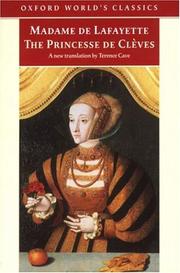 Madame de La Fayette · 1678The Princess of ClèvesLvl 4Slow burn
 Henry Fielding · 1749Tom JonesLvl 5Fast paced