
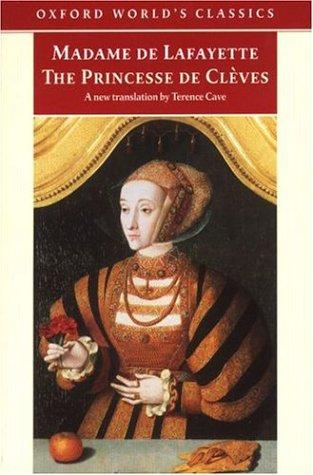
The Princess of Clèves
Madame de La Fayette · 1634–1693 · France
Originally La Princesse de Clèves (French)
Why it matters
At the court of Henri II, a virtuous young wife falls for a duke, resists him, and stuns her dying husband by confessing everything aloud. Often called the first true psychological novel, it finds its drama entirely in restraint rather than incident.
At a glance
Short and clear, though its interior stakes reward slow, attentive reading.
Deep dive
How a novel with almost no external incident stages its entire drama through conscience alone, and why its most dramatic act is a confession nobody demanded.
Written for readers who have finished the book. No plot recap, and nothing here is safe to read first.
Themes & symbolism
The novel's radical move is making conscience itself the plot's engine: court intrigue, gossip, and jealousy are omnipresent, but the actual drama is staged entirely inside the Princess's self-surveillance. Her mother's early education — that the court is a theater of appearances where a woman's safety lies in never being seen to feel — forecasts exactly the mechanism that undoes her. What destroys the Princess is never misconduct, only visibility: being read, being guessed at, being caught in the act of feeling. Her confession to her own husband, offered while he is healthy and has accused her of nothing, is presented as an act of near-impossible integrity, yet the book insists on showing honesty's capacity for violence in the same gesture — she unburdens her own conscience and hands him a wound he can never afterward un-know.
The novel is full of scenes of mutual, unwanted spectatorship rather than private encounter — a dropped portrait, a stolen glance, and above all the pavilion at Coulommiers, where Nemours spies on the Princess by night without her consent, in a scene that mirrors the surveillance she has spent the whole book fearing from everyone else. Court society here runs entirely on being watched; the Princess's tragedy is that the one man she can't stop watching her is the one whose gaze she has, on some level, invited by loving him at all.
Inventing the Psychological Novel
La Fayette wrote against the era's dominant form, the sprawling heroic romance of disguised princes and improbable rescues, and stripped nearly all of that machinery away — no battles, no captures, barely any plot beyond a marriage, an infatuation, and a confession. What replaces incident is analysis: long passages tracking exactly how a feeling forms, is suppressed, and leaks out anyway despite its owner's ferocious will. That substitution of interior tracking for external adventure is why literary historians routinely credit this short 1678 novel, rather than anything larger or later, as the point where French fiction discovers psychology as its proper subject.
The last seal: what actually happens, and why it lands the way it does.
The ending, explained
The Prince de Clèves dies believing, despite his wife's insistence otherwise, that she has betrayed him in deed rather than only in feeling — the knowledge simply outpaces what his temperament can absorb. Widowed and finally free to marry Nemours, whom she still loves and who still wants her, the Princess refuses him anyway. Her reasoning is the book's real argument: a passion this consuming, once permitted to fulfill itself, could only curdle into the same jealousy and suspicion that killed her husband, and she no longer trusts a happiness she can plainly see the shape of in advance. She withdraws from court, dedicates her remaining years to something closer to religious retreat, and dies young — choosing peace, and fidelity to her husband's memory, over a passion she has already watched destroy someone.
Where to go next
 Pierre Choderlos de Laclos · 1782Les Liaisons DangereusesLvl 5Medium pace
 Daniel Defoe · 1719Robinson CrusoeLvl 4Medium pace
 Gustave Flaubert · 1857Madame BovaryLvl 5Slow burn
 Abbé Prévost · 1731Manon LescautLvl 4Fast paced
 Voltaire · 1759CandideLvl 3Fast paced
 Guy de Maupassant · 1885Bel-AmiLvl 4Medium pace