
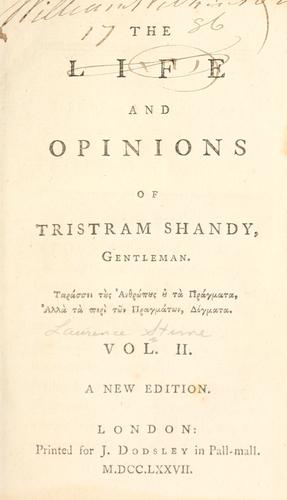
The Life and Opinions of Tristram Shandy, Gentleman
Laurence Sterne · 1713–1768 · England
Why it matters
The novel that deconstructed the form a century after its birth: black pages, marbled pages, a hero not born until volume three. Every experimental fiction since (Diderot to Rushdie) descends from Sterne's magnificent digressions.
At a glance
Constant digression, typographic experiment, and a plot that barely proceeds by design.
Deep dive
Why a novel that never gets its own hero born on schedule ends on a joke about a cock and a bull — and what that refusal to resolve is actually arguing about a life.
Written for readers who have finished the book. No plot recap, and nothing here is safe to read first.
Themes & symbolism
Every character rides a "hobby-horse" — Walter Shandy's crank theories of noses and names, Uncle Toby's miniature re-enactment of the Siege of Namur on the bowling green — and the joke is structural, not incidental: everyone here is so absorbed in a private obsession that genuine connection between people becomes almost accidental, a collision of monologues rather than a conversation. Uncle Toby's war games, staged in comic miniature by a man wounded in the groin at the real siege, fuse the novel's two great running subjects — violence rendered harmless and toy-like, and sexuality endlessly deferred, embarrassed, or displaced onto something safer to discuss.
The book's real subject is the impossibility of narrating a life in a straight line at all: Tristram sets out to tell his own story and gets derailed at every clause by the digression that clause requires, so that he isn't even born as a character until volume three and the narrative never gets him much past infancy. This isn't authorial failure but Sterne's argument, borrowed from Locke's theory of the association of ideas, made into comic form — a mind doesn't move forward, it branches, and any book honest about how thought actually works will look exactly this undisciplined. Tristram's botched christening, his name garbled into something his father never intended, is the whole method in miniature: even the one thing a person is supposed to control from birth, his own name, gets away from him before he can speak for himself.
The Book as Object
Sterne treats the physical page itself as material for the joke: a solid black page mourns Parson Yorick more bluntly than any elegy could, a marbled page stands in for something the prose admits it cannot represent, squiggling diagrammatic lines chart the "plot" of earlier volumes with mock precision, and a blank page is left for readers to sketch the Widow Wadman's beauty themselves, since any description Tristram could offer would only disappoint. These aren't gimmicks so much as the novel's thesis made typographic: a life, a feeling, a person can't actually be captured on a page in the tidy way novels pretend, so Sterne keeps showing you the page failing, on purpose, in increasingly inventive ways.
The last seal: what actually happens, and why it lands the way it does.
The ending, explained
The book doesn't resolve; it simply runs out, mid-anecdote, on a shaggy-dog story about a "COCK and a BULL," with Mrs. Shandy asking what the story has even been about and Yorick delivering the last line: that it's one of the best of its kind he's ever heard. There's no marriage plot closed, no siege concluded, no Tristram grown to adulthood — and that stopping-rather-than-resolving is the whole book's argument delivered as an ending rather than stated as one. A life digresses endlessly and never straightens into a plot; the only honest way to end such a book is to stop, not to finish.
Where to go next
 Laurence Sterne · 1768A Sentimental Journey Through France and ItalyLvl 5Medium pace
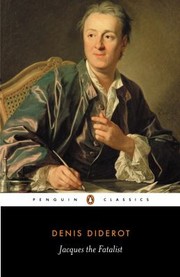 Denis Diderot · 1796Jacques the FatalistLvl 6Slow burn
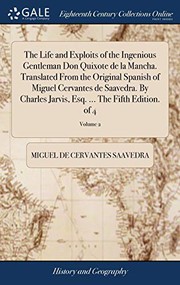 Miguel de Cervantes · 1605Don QuixoteLvl 6Medium pace
 Jonathan Swift · 1726Gulliver's TravelsLvl 5Medium pace
 Henry Fielding · 1749Tom JonesLvl 5Fast paced
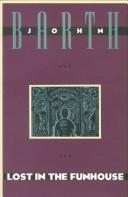 John Barth · 1968Lost in the FunhouseLvl 7Slow burn