
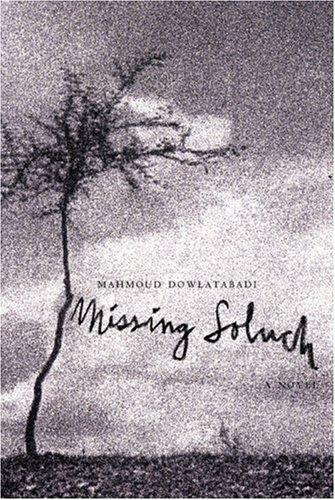
Missing Soluch
Mahmoud Dowlatabadi · b. 1940 · Iran
Originally Ja-ye Khali-ye Soluch (Persian) · translated by Kamran Rastegar
Why it matters
A woman wakes to find her husband has vanished overnight, left to raise three children alone in a droughted Khorasan village amid a community's casual cruelty. Rural Iran rendered with an epic, unsentimental density.
At a glance
Dense, unhurried village realism accumulates deprivation in exhaustive detail with little narrative relief.
Deep dive
A husband is simply gone from the first page onward, with no explanation offered by the book or by anyone in it, and what the novel is actually tracking is what a family and a changing village do with an absence nobody will name.
Written for readers who have finished the book. No plot recap, and nothing here is safe to read first.
Themes & symbolism
Mergan wakes to find her husband Soluch gone without warning, note, or trace, and Dowlatabadi refuses the reader the explanatory flashback a more conventional novel would supply. The disappearance stays a fact to be lived inside rather than a mystery the plot works to solve, and that refusal forces Mergan directly into day labor and debt to keep her three children fed in the drought-worn village of Zaminej.
New machinery arriving in the village partway through the novel displaces the older, communal, hand-labor harvest with wage work controlled by a local moneyed operator, and Dowlatabadi ties this change directly to the broader upheaval of state-driven land reform remaking rural Iran from outside. Families like Mergan's absorb the disruption first and benefit from it last, their old claims on land and labor rewritten by men who were never part of the village's own accounting of who owed what to whom.
Mergan's sons diverge in how they respond: both eventually sell off their share of the family's small disputed plot, known in the village as 'God's Land,' for petty, immediate cash, while Mergan alone holds onto her portion. Dowlatabadi tracks that split as two versions of the same generation's response to a vanishing agrarian world, one selling off the past for whatever it will still fetch, the other keeping a claim to ground that no longer supports anyone who holds it.
Zaminej's Drought as Documentary Method
Dowlatabadi renders the physical texture of Mergan's poverty, dust, hunger, the precise arithmetic of what a day's labor buys, with a relentlessness that functions less as symbolism than as documentary record. The novel rarely steps back to comment on what any of it means; it simply keeps recording, and the accumulated weight of that recording becomes the argument itself, closer to social realism than to fable.
Written From Memory in a Shah's Prison
Dowlatabadi was arrested by SAVAK, the Shah's secret police, in 1974 and held for roughly two years without formal charge. Denied any means to write, he composed the novel almost entirely in his head during his imprisonment, then wrote the whole thing out in a matter of weeks after his release, working from memory alone. That origin gives the novel's unhurried, accumulated detail an unexpected second meaning: a book about a village's slow attrition was itself first assembled slowly, under duress, by a man with nothing to write it down on.
Where to go next
 John Steinbeck · 1937Of Mice and MenLvl 3Fast paced
 Ghassan Kanafani · 1963Men in the SunLvl 5Medium pace
 Jokha Alharthi · 2010Celestial BodiesLvl 7Slow burn
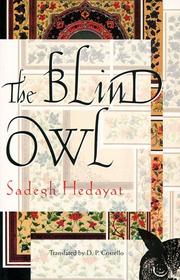 Sadegh Hedayat · 1937The Blind OwlLvl 8Slow burn
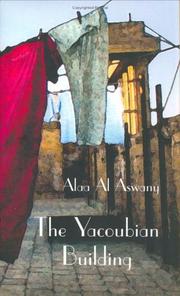 Alaa Al Aswany · 2002The Yacoubian BuildingLvl 4Fast paced
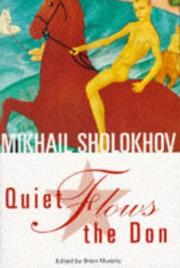 Mikhail Sholokhov · 1928And Quiet Flows the DonLvl 5Medium pace