
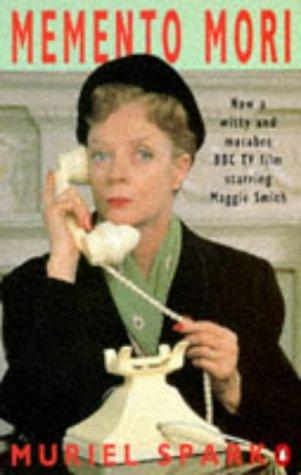
Memento Mori
Muriel Spark · 1918–2006 · Scotland
Why it matters
A circle of elderly Londoners each receive anonymous phone calls simply reminding them: 'Remember you must die.' Spark's mordant comedy treats mortality with the same brisk, unsentimental wit she brings to everything else.
At a glance
Large ensemble cast delivered in brisk, dryly comic vignettes.
Deep dive
Why a wave of anonymous phone calls telling elderly Londoners the one thing they already know does more damage than any of the book's blackmail plots.
Written for readers who have finished the book. No plot recap, and nothing here is safe to read first.
Themes & symbolism
A circle of Londoners in their seventies and eighties, most of them tied together by decades-old affairs, rivalries, and a shared secret from the 1920s, start receiving anonymous calls from a voice that says only 'Remember you must die' and hangs up. Spark refuses to resolve who is calling, and the refusal is the point: police investigation, séances, and gossip all fail to identify a caller because the caller's identity was never the real subject, mortality itself is, arriving indifferently and on schedule whether or not anyone answers the phone.
Dame Lettie Colston treats the calls as a personal persecution to be defeated by better locks and angrier letters, while Jean Taylor, bedridden in a charity ward with none of the others' money or status, receives the same message and simply agrees with it, the novel's clearest case of a character who has already made peace with what everyone else is still refusing to hear. Spark's cast is stratified by class and comfort, but the calls land on all of them equally, the one plot device in the novel that doesn't care who has money.
Mrs. Pettigrew's Blackmail Ledger
Godfrey Colston, Lettie's elderly brother, is quietly blackmailed for years by his own housekeeper, Mrs. Pettigrew, who holds proof of an affair he had decades earlier and uses it to extract cash and small humiliations on a running basis. Spark treats the blackmail almost as comedy, Godfrey pays and grumbles and keeps driving Mrs. Pettigrew around town, and the smallness of the scheme against the largeness of the calls' subject is deliberate: this is what people actually do with the years death has left them, run petty rackets rather than reckon with anything.
Charmian's Second Career
Charmian Piper, a once-celebrated novelist now dismissed by her family as senile, turns out over the course of the book to be sharper than anyone gives her credit for, her lapses selective rather than total, and her late-life return to writing, dictated, since her hands shake too badly to hold a pen, reads as the one form of defiance against mortality Spark actually endorses: not denial, and not Lettie's anger, but simply continuing to make something, dictated sentence by stubborn sentence.
The last seal: what actually happens, and why it lands the way it does.
The ending, explained
Spark closes the novel with a flat, clinical inventory of how each character eventually dies, cancer, a stroke, a house fire, murder, delivered in a few sentences apiece with none of the dramatic buildup a death scene usually gets. The anonymous calls are never explained, and the flat list makes clear they didn't need to be: whether or not anyone ever phones to say so, everyone in the book was on the same schedule from the first page. Jean Taylor, the one character who accepted the message calmly from the start, is markedly the only one Spark lets die without irony or punishment attached to the report.
Where to go next
 Muriel Spark · 1961The Prime of Miss Jean BrodieLvl 4Fast paced
 Kingsley Amis · 1986The Old DevilsLvl 4Medium pace
 Anthony Burgess · 1962A Clockwork OrangeLvl 7Fast paced
 E. M. Forster · 1924A Passage to IndiaLvl 6Medium pace
 Aldous Huxley · 1932Brave New WorldLvl 4Medium pace
 J. G. Farrell · 1973The Siege of KrishnapurLvl 5Medium pace