
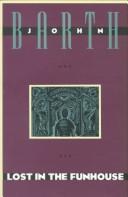
Lost in the Funhouse
John Barth · 1930–2024 · USA
Why it matters
A collection of stories about the act of storytelling itself, opening with a narrative literally printed as an endless Möbius strip. Barth's formal high-wire act made metafiction a mainstream American mode without ever losing its very real ache of adolescent longing.
At a glance
Self-referential frame stories, direct narratorial address, and formal tricks like the printed Möbius strip demand active engagement.
Deep dive
Why the book opens with a strip of paper you're told to cut out and twist into a loop before any story has properly started, and what that trick has to do with a boy lost in a boardwalk mirror maze a few pages later.
Written for readers who have finished the book. No plot recap, and nothing here is safe to read first.
Themes & symbolism
'Frame-Tale,' the collection's opening piece, is printed sideways with instructions to cut it out, give it a half twist, and tape the ends together, producing a Möbius strip that reads endlessly: 'ONCE UPON A TIME THERE WAS A STORY THAT BEGAN.' Barth sets that self-consuming loop as the collection's actual thesis, storytelling caught permanently inside its own beginning, before a single character has appeared. 'Night-Sea Journey' pushes the same idea into biology, narrated by a sperm cell swimming toward an egg it cannot confirm exists, doubting the point of its own migration in language lifted straight from existentialist quest narratives.
The title story puts a body inside the abstraction: Ambrose, thirteen, on a family trip to the Ocean City boardwalk, gets genuinely lost in the funhouse's mirror maze while the narrator keeps interrupting to critique his own handling of exposition, rising action, and Ambrose's unspoken crush on his cousin Magda, so that adolescent sexual panic and a lecture on how fiction is built run as the same sentence. 'Menelaiad' takes the nesting further still: Menelaus tells Telemachus and Peisistratus the story of once telling Helen the story of telling Proteus the story of Troy, quotation marks accumulating seven layers deep until the story is nothing but its own frame.
A Möbius Strip Instead of a Table of Contents
By making the reader physically construct 'Frame-Tale' before reading further, Barth turns a formal joke into an actual demand on the reader's hands, not just attention, and every later story's nested voices, interrupted narrators, and stories about telling stories are variations he has already made the reader perform once, literally, with scissors and tape.
A Minstrel in a Jar Closes What the Book Opened
'Anonymiad' ends the collection with a nameless minstrel marooned on an island, inventing fiction from scratch by sealing his stories inside wine jars and setting them adrift, with no idea whether any jar will ever reach a reader. Barth places that image last on purpose: it is the same self-consuming, uncertain transmission 'Frame-Tale' opened with, now given a body and a specific, lonely coastline to stand on.
Where to go next
 John Barth · 1972ChimeraLvl 7Slow burn
 Thomas Pynchon · 1966The Crying of Lot 49Lvl 8Medium pace
 Jorge Luis Borges · 1944FiccionesLvl 7Slow burn
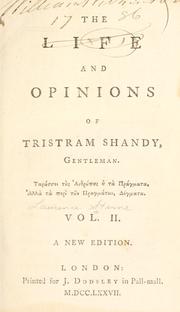 Laurence Sterne · 1759The Life and Opinions of Tristram Shandy, GentlemanLvl 9Slow burn
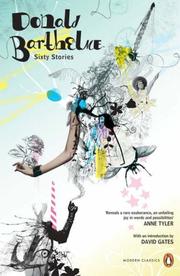 Donald Barthelme · 1981Sixty StoriesLvl 6Medium pace
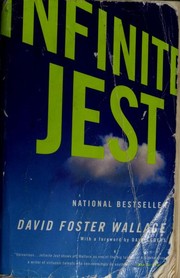 David Foster Wallace · 1996Infinite JestLvl 10Slow burn