
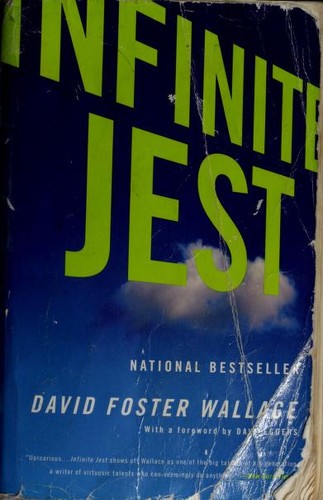
Infinite Jest
David Foster Wallace · 1962–2008 · United States
Why it matters
A tennis academy, a halfway house, and a film so entertaining it kills those who watch it. Wallace's maximalist, footnoted epic of an America addicted to pleasure: postmodernism turned to a moral purpose.
At a glance
A sprawling nonlinear structure, hundreds of endnotes, and dense prose test any reader.
Deep dive
What it means that a culture this saturated in entertainment eventually has to invent a fictional weapon out of pure, undiluted pleasure — and why almost nobody in the novel can want anything moderately.
Written for readers who have finished the book. No plot recap, and nothing here is safe to read first.
Themes & symbolism
Every plotline in the novel is a variation on the same compulsion: total, structureless wanting. The Entertainment — James Incandenza's final film, so purely pleasurable that anyone who watches it loses all desire to do anything else, up to and including staying alive — is the literal, weaponizable version of what marijuana is to Hal, what heroin and Substance are to the residents of Ennet House, what tennis perfection is to the junior athletes grinding themselves down at E.T.A., and what promiscuity is to Orin. Incandenza's absurd, exhaustive filmography, tucked into the endnotes, reads as dark comedy precisely because it's the work of a man who could never simply talk to his son, and instead built an entire abandoned career trying to communicate through images — the Entertainment is the accidental, fatal success of that project, a father's grief made into a trap.
Against all this the novel sets two disciplined counter-structures: Gerhardt Schtitt's philosophy at E.T.A., which frames competitive suffering as a kind of freedom achieved only through brutal external structure, and the recovery discourse at Ennet House, whose clichés — "one day at a time," "your best thinking got you here" — the addicts initially mock and then, having tried everything else, actually live by. Wallace's sympathy visibly migrates over the book's length away from the aesthetic brilliance of the tennis prodigies and toward the unglamorous, humiliating, moment-to-moment discipline of the addicts in early recovery, arguing that real freedom looks a lot less like genius and a lot more like showing up to a folding chair in a church basement.
Footnotes, Subsidized Time, and Structure as Argument
The 388 endnotes aren't a postmodern flourish so much as a formal enactment of the book's subject: reading Infinite Jest means constantly interrupting forward motion to chase a deferred payoff, flipping to the back of the book the way an addict interrupts a life to chase the next hit, sometimes finding the payoff genuinely rewarding (Incandenza's filmography, drug pharmacology explained in loving clinical detail) and sometimes finding nothing but more deferral. The novel's chronology, organized by corporate-sponsored 'Subsidized Time' (Year of the Depend Adult Undergarment, Year of Glad) rather than linear calendar years, scrambles cause and effect the way active addiction scrambles a user's own sense of sequence and consequence — you have to reconstruct the actual order of events yourself, the same reconstructive work sobriety demands of the addicts inside the story.
The last seal: what actually happens, and why it lands the way it does.
The ending, explained
The novel does not resolve, and that's by design rather than default: it doesn't tell us who ultimately possesses the master copy of the Entertainment, what becomes of the Quebecois separatists hunting it, or what specifically has happened to Hal by the time of the chronologically-later opening chapter, in which he's lost the ability to communicate normally during a college interview. Instead the book's final pages loop back to Don Gately, lying in a hospital bed with a gunshot wound, refusing the opiate painkillers his body is screaming for because relapse would undo everything his recovery has cost him — and the narrative slides into a drug-soaked memory of a past overdose with a man named Fackelmann, a flashback that is itself an act of discipline, since Gately is choosing to sit with the memory of the old high rather than chase a new one. Wallace's point is that recovery, and by extension any escape from the addictive loop the whole novel diagrams, was never going to be a plot event with a payoff — it's a refusal repeated one unbearable moment at a time, which is exactly the kind of ending that can't be delivered as a twist, only enacted as an unresolved, endnoted, looping structure that leaves the reader doing the same reconstructive work Gately is doing.
Where to go next
 David Foster Wallace · 1999Brief Interviews with Hideous MenLvl 8Slow burn
 Don DeLillo · 1985White NoiseLvl 6Medium pace
 Thomas Pynchon · 1966The Crying of Lot 49Lvl 8Medium pace
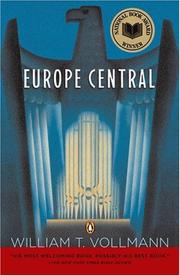 William T. Vollmann · 2005Europe CentralLvl 9Slow burn
 John Barth · 1968Lost in the FunhouseLvl 7Slow burn
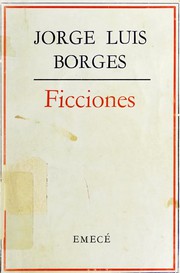 Jorge Luis Borges · 1944FiccionesLvl 7Slow burn