
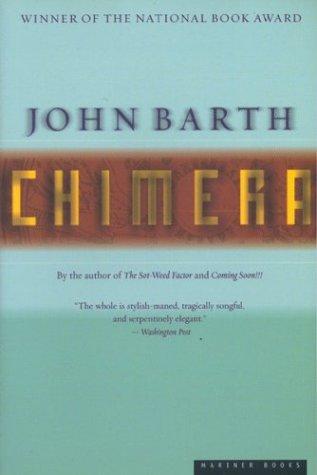
Chimera
John Barth · 1930–2024 · USA
Why it matters
Scheherazade, Perseus, and Bellerophon are reworked into a triptych of novellas about myth, memory, and the exhaustion of storytelling itself. Barth's shared 1973 National Book Award winner turned postmodern self-consciousness into something genuinely moving.
At a glance
Interwoven mythic retellings and constant self-conscious narration require sustained attention.
Deep dive
John Barth rewrites three myths, Scheherazade surviving one thousand and one nights, Perseus in comfortable middle age, Bellerophon trying to repeat a heroism he no longer understands, and lets all three argue, from different angles, about whether telling your own story well is the same thing as living it well.
Written for readers who have finished the book. No plot recap, and nothing here is safe to read first.
Themes & symbolism
The Dunyazadiad reimagines the frame story of the Thousand and One Nights from the perspective of Scheherazade's younger sister Dunyazade, who watches Scheherazade survive her murderous husband Shahryar one night at a time by weaponizing narrative suspense itself, and who eventually reveals that Scheherazade's storytelling technique came, in Barth's telling, from a time-traveling encounter with an author unmistakably modeled on Barth himself. The novella's argument is playful but pointed: survival, for Scheherazade, is a formal problem before it is an emotional one, solved by understanding exactly how to keep an audience needing the next installment.
The Perseid and the Bellerophoniad both take up heroes well past their mythic prime, Perseus in a stalled, restless middle age, still defined by having beheaded Medusa decades earlier, Bellerophon reduced to consciously reenacting his own famous exploits because he can no longer distinguish between having been heroic and merely narrating heroism convincingly. Barth uses both figures to interrogate the difference between a life and the story told about it afterward, suggesting that classical heroism, stripped of its original context and endlessly retold, curdles into a kind of performance anxiety, men trying to out-narrate their own myths.
A Novel That Keeps Interrupting Itself
Barth breaks the fictional surface constantly, inserting himself as a character in the Dunyazadiad, having Perseus argue with the mosaic murals depicting his own life, letting Bellerophon obsess over whether he is a genuine mythic hero or a lesser double narrating someone else's exploits. The postmodern self-consciousness isn't decoration, it is the book's actual claim: that myth has always worked this way, stories consuming and revising earlier stories, long before any theory gave the process a name.
A Split Decision at the National Book Award
Chimera shared the 1973 National Book Award for Fiction with John Williams's Augustus, a historical novel about the Roman emperor told entirely through invented letters and documents, an unprecedented split decision the award has never repeated. Placed beside each other, the two winners make an accidental argument: both are historical fictions obsessed with how classical material gets reconstructed, revised, and handed forward, Williams through documentary realism, Barth through open metafictional play.
Where to go next
 John Barth · 1968Lost in the FunhouseLvl 7Slow burn
 Thomas Pynchon · 1966The Crying of Lot 49Lvl 8Medium pace
 Jorge Luis Borges · 1944FiccionesLvl 7Slow burn
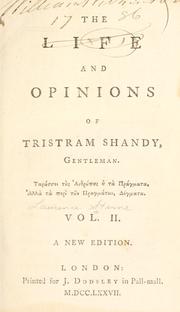 Laurence Sterne · 1759The Life and Opinions of Tristram Shandy, GentlemanLvl 9Slow burn
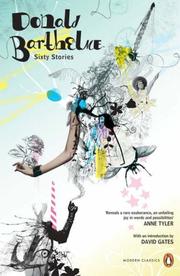 Donald Barthelme · 1981Sixty StoriesLvl 6Medium pace
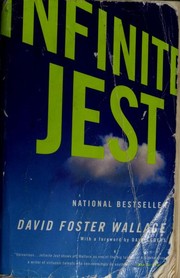 David Foster Wallace · 1996Infinite JestLvl 10Slow burn