
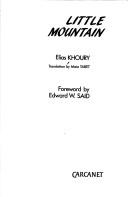
Little Mountain
Elias Khoury · 1948–2024 · Lebanon
Originally Al-Jabal al-Saghir (Arabic) · translated by Maia Tabet
Why it matters
Fragmented, overlapping voices recall the Lebanese civil war's first eruptions in Beirut's Christian quarter, memory shattering along with the city itself. Khoury's spare, experimental first novel, published with an introduction by Edward Said.
At a glance
Fragmented, non-chronological narration across multiple unnamed voices resists a single throughline.
Deep dive
Beirut's Christian quarter of Ashrafieh breaks apart street by street in the opening days of a civil war nobody involved can fully explain, and Khoury lets three different men who lived through it tell the story in pieces that never quite agree with each other.
Written for readers who have finished the book. No plot recap, and nothing here is safe to read first.
Themes & symbolism
Little Mountain, the hilltop neighborhood of Ashrafieh where Khoury himself grew up, comes apart across the novel's opening chapters through the eyes of a Joint Forces fighter caught in street battles, a shaken civil servant trying to hold onto ordinary life as it collapses around him, and a third, harder to place figure somewhere between combatant and intellectual, and Khoury refuses to smooth these three accounts of the same neighborhood's disintegration into a single coherent narrative. The effect is deliberately disorienting: readers get the texture of house-to-house fighting, a church turned battleground, the specific terror of a bombed room filling with shrapnel, without ever being handed the reassurance of one authoritative account of what actually happened or why.
Khoury, a Christian who nonetheless fought within the Palestinian-aligned Lebanese National Movement rather than with the Christian militias his own community might have expected of him, writes the novel's early chaos from a position that refuses easy sectarian mapping, and that refusal is structural as much as biographical: no single narrator in Little Mountain gets to explain the war from outside it, because Khoury does not believe anyone actually occupied that position in 1975 and 1976, himself included.
A War Without a Plot, Told in Images
Khoury builds Little Mountain out of recurring images rather than causal sequence, a burning building, a body in a stairwell, returning across sections in slightly altered form rather than advancing toward resolution, since chronological time and forward-moving plot were, for Khoury, precisely the kind of order a civil war's actual experience does not offer the people living through it. An early comparison in the French press of the prose to Rimbaud's clarity captures the paradox at the book's center: sentences of real lucidity used to represent an experience that keeps refusing to cohere into anything as orderly as a story.
The Paris Metro as a Different Kind of Exile
The novel's final section abandons Beirut's battle lines for a Paris metro car, where the narrator's fragmented memories of the war surface among strangers who have no way of reading what he is carrying, and Khoury uses that dislocation, violence recollected somewhere it cannot be understood by anyone nearby, to extend the novel's fragmentation into exile itself. Leaving Little Mountain does not resolve what happened there; it just relocates the difficulty of narrating it to a country with no stake in getting the story right.
Where to go next
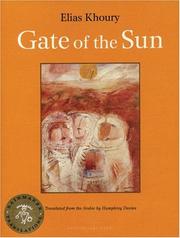 Elias Khoury · 1998Gate of the SunLvl 7Slow burn
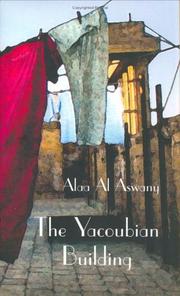 Alaa Al Aswany · 2002The Yacoubian BuildingLvl 4Fast paced
 Abdul Rahman Munif · 1984Cities of SaltLvl 6Slow burn
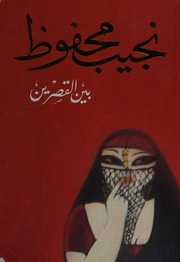 Naguib Mahfouz · 1956Palace WalkLvl 4Medium pace
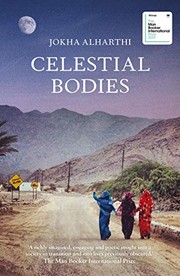 Jokha Alharthi · 2010Celestial BodiesLvl 7Slow burn
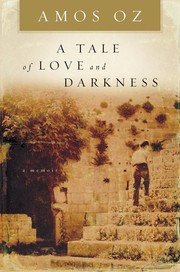 Amos Oz · 2002A Tale of Love and DarknessLvl 6Slow burn