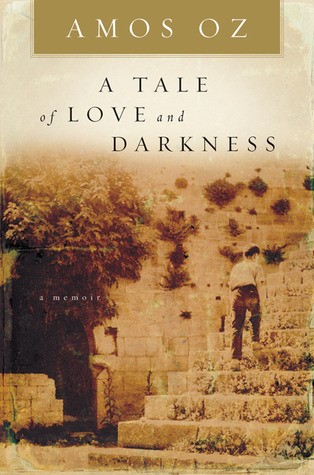
A Tale of Love and Darkness
Amos Oz · 1939–2018 · Israel
Originally Sipur al Ahava ve-Hoshech (Hebrew) · translated by Nicholas de Lange
Why it matters
Oz reconstructs his Jerusalem childhood, his mother's suicide, and the birth of Israel in one sweeping autobiographical epic. Family sorrow and national becoming braided into the great memoir-novel of the young state.
At a glance
Digressive, essayistic structure ranging across generations and registers rather than moving in a line.
Deep dive
How a chronicle of one Jerusalem childhood keeps circling a single event for five hundred pages before Oz is finally willing to name it, and what a twelve-year-old does with his own name once he gets there.
Written for readers who have finished the book. No plot recap, and nothing here is safe to read first.
Themes & symbolism
Oz builds his parents as a house divided down the middle. His father Arieh, a frustrated philologist who never got the professorship his own erudition seemed to promise, buries himself in etymology and a dozen languages he can read but barely live in. His mother Fania fills the same cramped Kerem Avraham apartment with folk tales that end in drowning or a door that will not open again, told with a specificity that unsettles her son more than any fairy tale should. The marriage the boy grows up inside is really two competing theories of how to survive displacement, one through mastery of texts, the other through a private sorrow neither parent can explain to the other, let alone to him.
The book's method mimics its subject. Oz refuses linear memoir, doubling back on the same afternoons and arguments from different angles decades apart, because the child living through Kerem Avraham in the 1940s did not understand what he was watching, and the adult writing it out is still assembling the evidence. Relatives arrive as competing versions of Zionism argued at the dinner table, Revisionist uncles and Labor-movement neighbors each certain their reading of the Jewish future is the only sane one, and Oz lets the boy absorb all of it without yet being able to sort genuine conviction from inherited grievance.
Jerusalem itself is rationed the way water was during the siege of 1948, a city cut into pieces the family can only reach on foot, past sandbags and neighbors counting bullets. Oz makes the war a background hum rather than a set piece, because the child's real crisis is happening indoors, in his mother's increasing silence, and the book insists a family's private catastrophe does not pause for a national one just because they are unfolding on the same streets at the same time.
Uncle Joseph and the Family's Theory of Genius
Joseph Klausner, Arieh's cousin and a towering Hebrew literary historian who ran, and lost, for Israel's presidency in 1952, hangs over the household as proof the family produces greatness and as a standing rebuke to everyone who has not yet produced it. Oz renders the great-uncle's book-lined study as a kind of shrine the boy is taken to visit like a pilgrimage site, and lets the reader feel exactly how much quiet pressure that visit puts on a child already absorbing his father's own thwarted ambitions. The writer Oz becomes reads, in the book's own telling, as one more attempt to satisfy that family theory of genius on different terms.
Fania's Fairy Tales
The stories Fania tells her son are not comforting inventions but small, complete tragedies, a miller's daughter who chooses the wrong door, a village swallowed for its pride, delivered in the same even voice she uses for everything else. Oz treats these tales as the clearest window his mother ever gives him into her own interior weather, more honest than anything she says about herself directly, and the book's late chapters ask the reader to hear them again, retroactively, as warnings the boy had no way to translate at the time.
The last seal: what actually happens, and why it lands the way it does.
The ending, explained
Fania's insomnia and depression deepen through the book's second half until, in January 1952, she takes an overdose at her sister's Tel Aviv apartment and does not survive it. Oz, twelve and a half, is told only that she is unwell, then simply that she is gone, and the book withholds that information from the reader for hundreds of pages just as his father withheld it from him at the time. Arieh remarries within a few years and the household reorganizes itself around a silence about Fania that is never officially broken. Oz's own response is the book's real closing argument: he leaves Jerusalem and his father's world of quotations for Kibbutz Hulda, and changes his surname from Klausner, the family of scholars and thwarted presidents, to Oz, the Hebrew word for strength, choosing for himself the one thing in his life that had, until then, only ever been inherited.