
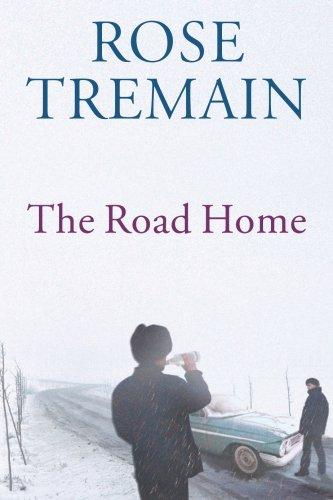
The Road Home
Rose Tremain · b. 1943 · England
Why it matters
A recently widowed Eastern European migrant arrives in London to labor in kitchens and building sites, sending money home to his mother and daughter. A clear-eyed, sympathetic account of the exploitation and resilience of contemporary migrant labor.
At a glance
Plain, socially realist prose and a linear plot make for an accessible read.
Deep dive
A widowed sawmill worker leaves everything he knows for London with almost nothing, and the novel tracks exactly what he has to become, and unbecome, before he can go home again.
Written for readers who have finished the book. No plot recap, and nothing here is safe to read first.
Themes & symbolism
Lev arrives in London from an unnamed Eastern European country after the local sawmill closes, carrying a photograph of his dead wife and a plan to send money back to his mother and young daughter Maya, and Tremain builds his early chapters around the specific humiliations of low-wage migrant labor: sleeping rough, handing out flyers, washing dishes, learning which kinds of English kindness come with strings attached. The novel is unusually precise about the mechanics of that economy, wages, tips, the exact math of what a kitchen porter can send home, in a way that keeps the book's warmth from curdling into sentimentality about the immigrant experience.
Lev's rise through the kitchen of celebrity chef G. K. Ashe's restaurant, from vegetable peeler toward something closer to a trusted hand, doubles as Tremain's argument about craft as a route to dignity that bureaucracy and prejudice can't easily block: skill in a kitchen is legible and rewarded in a way that Lev's grief, his foreignness, his accent, are not. His affair with Sophie, an English colleague, gives him a taste of belonging that never quite converts into permanence, and the novel is honest that Lev's real loyalties, to Maya, to his dead wife Marina, to his best friend Rudi back home, never fully relocate to London no matter how competent he becomes there.
Rudi, left behind running an unreliable car and dreaming of his own version of escape, functions as Lev's counterfactual: a man who stayed, whose ambitions stay local and slightly absurd, and whose eventual visit to London lets Tremain measure how far Lev has actually traveled, not in miles but in the kind of person the city has required him to become.
A Fairy Tale With the Costs Left In
Reviewers at publication split on whether the novel's rapid, largely unimpeded rise, from homeless newcomer to successful restaurateur inside a few years, undersells the harder realities of migrant labor it spends its opening chapters documenting so carefully. Tremain's own defense, implicit in the prose, is that Lev's competence and discipline are established early and often enough that his trajectory reads less as luck than as a specific, driven man finally finding a system that rewards the skills he already had; the novel's optimism is a choice, not an oversight.
The last seal: what actually happens, and why it lands the way it does.
The ending, explained
Having saved enough in London and absorbed enough of Ashe's culinary standards, Lev returns to his home village and opens his own restaurant, using both his earnings and what he's learned about ambition, service, and reinvention in a foreign kitchen. The homecoming is not a retreat; Tremain frames it as the completed arc of the immigrant story rather than its failure, a man who left with nothing bringing back a transferable trade rather than simply a pocket of foreign currency. The road home, the title's promise, turns out to run in both directions: London was never the destination, only the place Lev had to pass through to become someone capable of rebuilding what the sawmill's closure took from him.
Where to go next
 Helen Dunmore · 1995A Spell of WinterLvl 5Slow burn
 Howard Jacobson · 2010The Finkler QuestionLvl 5Medium pace
 Julian Barnes · 2011The Sense of an EndingLvl 4Medium pace
 Graham Swift · 1996Last OrdersLvl 5Medium pace
 Anita Desai · 1980Clear Light of DayLvl 5Slow burn
 John McGahern · 1990Amongst WomenLvl 4Medium pace