
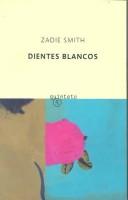
White Teeth
Zadie Smith · b. 1975 · England
Why it matters
Two wartime friends and their tangled families across decades of postwar London, from Bangladesh to Jamaica to the local pub. A dazzling debut and the great comic novel of the multicultural city.
At a glance
Sprawling multigenerational cast and digressive comic asides slow a fast-moving plot.
Deep dive
Why the novel hands its most tightly engineered symbol — a genetically programmed mouse — the job of escaping.
Written for readers who have finished the book. No plot recap, and nothing here is safe to read first.
Themes & symbolism
Samad's attempt to control his sons' futures by sending Magid back to Bangladesh while keeping Millat in London is the novel's cleanest demonstration that inheritance, cultural or genetic, refuses to run on rails: Magid returns a secular rationalist in a linen suit, while Millat, raised amid the very Western temptations Samad fled, drifts into the fundamentalist group KEVIN precisely because the alienation of growing up second-generation in London needs somewhere to go. Neither twin becomes what his father intended, and Smith plays the reversal for comedy without ever letting the comedy erase the real loneliness driving both boys' choices.
Marcus Chalfen's FutureMouse project — an animal whose lifespan and traits are engineered and therefore knowable in advance — is the novel's deliberate foil to every human character in it, all of whom inherit history, trauma, and identity in far messier, unpredictable ways than any genome chart could predict. The wartime mystery of what Archie and Samad actually did to a Nazi collaborator, retold slightly differently every time it comes up, works the same way: even personal history won't hold still and confess a single true version of itself.
Irie's arc runs the same argument through the lens of adolescence and inheritance both: caught between Clara's Jehovah's Witness upbringing and her own insecurities about her body, her hair, and where she fits against London's competing ideas of beauty and belonging, Irie is pulled toward the Chalfens precisely because their orderly, secular, thoroughly English household looks like an escape from the unresolved mess of her own family history — only to discover that the Chalfens have their own blind, controlling certainties about who she should become.
Comedy as method, not relief
Smith's comic voice is doing argumentative work, not softening serious material for easier consumption. Radicalization, racism, colonial history, and generational rupture are treated with genuine gravity, but the novel's instinct is to render even its darkest turns through farce rather than solemnity — because farce, with its pratfalls and mistaken identities and things refusing to go according to plan, is the correct comic register for a book whose whole thesis is that human lives resist tidy design. The comedy isn't a break from the argument; it's the argument, staged. Archie himself, the novel's most ordinary and least ideological character, works as the same argument in miniature: a man who has coasted through history on a coin flip (literally, at the moment he was supposed to execute a war criminal) survives everything the more purposeful characters around him can't, precisely because he never tried to engineer an outcome in the first place.
The last seal: what actually happens, and why it lands the way it does.
The ending, explained
Every thread converges at the public unveiling of Chalfen's FutureMouse: Millat arrives intending violence on behalf of his fundamentalist group, old secrets resurface amid the chaos (including the unresolved question of Irie's actual paternity, left deliberately unsettled between Archie, Samad, and the twins), and in the commotion the FutureMouse itself — the novel's emblem of a life fully predictable and controllable — simply gets loose. The ending is comic and anticlimactic on purpose: after nearly five hundred pages of parents, ideologies, and scientists all trying to determine what these characters will become, the actual answer arrives as slapstick, because that's the only genre honest about how little any of them were ever really in control.
Where to go next
 Zadie Smith · 2005On BeautyLvl 5Medium pace
 E. M. Forster · 1924A Passage to IndiaLvl 6Medium pace
 Salman Rushdie · 1981Midnight's ChildrenLvl 8Medium pace
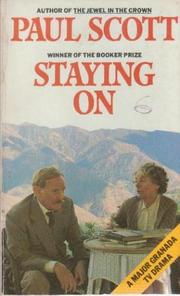 Paul Scott · 1977Staying OnLvl 4Slow burn
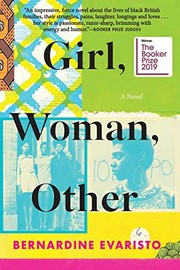 Bernardine Evaristo · 2019Girl, Woman, OtherLvl 4Fast paced
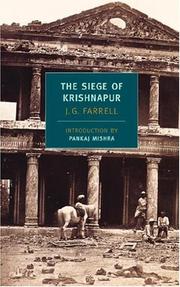 J. G. Farrell · 1973The Siege of KrishnapurLvl 5Medium pace