
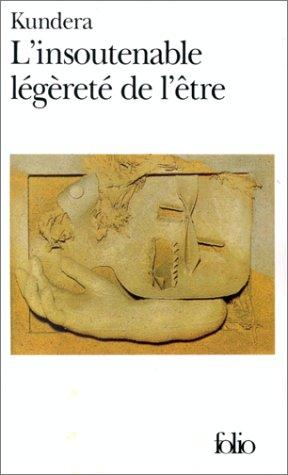
The Unbearable Lightness of Being
Milan Kundera · 1929–2023 · Czechia / France
Originally Nesnesitelná Lehkost Bytí (Czech) · translated by Michael Henry Heim
Why it matters
Two couples, the 1968 invasion, and a narrator who interrupts to philosophize about kitsch, chance, and eternal return. The novel-as-essay perfected, and the book that made Central Europe's fate a world subject.
At a glance
Nonlinear structure and frequent essayistic authorial intrusion interrupt the love story.
Deep dive
A surgeon who treats love and sex as separable, a woman who can't stop weighing every choice for meaning — and a narrator who keeps interrupting the story to argue Nietzsche with the reader.
Written for readers who have finished the book. No plot recap, and nothing here is safe to read first.
Themes & symbolism
Kundera opens with eternal return as a thought experiment rather than a plot device: if life happens only once, every choice is weightless, since nothing recurs to give it consequence. The novel then spends its length disproving its own premise on Tomáš and Tereza, whose bond keeps accumulating exactly the gravity that lightness theory says can't exist — his serial infidelities, her recurring dreams of humiliation, the dog Karenin's illness, all of it pressing down rather than floating free. Sabina runs the opposite experiment and gets the opposite result: her lifelong flight from kitsch, which she defines as anything demanding universal agreement and erasing what's discordant in a life, leaves her permanently unable to settle, rootless by the very logic that was supposed to set her free. Franz, meanwhile, mistakes her evasiveness for a cause, misreading betrayal-as-freedom as a political commitment he can march for, and dies for a solidarity march that has nothing to do with the woman he thinks he's honoring.
The Prague Spring and its crushing supply the book's clearest fusion of the personal and the historical: Tomáš's mildly Oedipal newspaper column, an act of private conscience, gets him stripped of his surgical career once the regime consolidates, demoting him first to window-washer, then, after a brief exile and return, to a truck driver in the countryside — proof that no life, however committed to lightness, stays exempt from the weight of the state. Tereza's unresolved, possibly police-engineered encounter with the engineer works the same vein in miniature: a private betrayal she can never verify becomes an image of what surveillance does to intimacy itself, corroding trust from the inside without ever needing to be proven.
The Essay as Novel
Kundera breaks continuously from the story to think aloud — about Nietzsche, about Beethoven's 'Es muss sein!' motif, about the etymology of compassion in different languages, about kitsch itself — and these digressions aren't scaffolding around the plot, they're the point. The technique insists that a novel can be a genuine vehicle for philosophical argument without collapsing into treatise, and that character and idea are inseparable: Tomáš and Tereza don't illustrate lightness and weight so much as they are the argument, worked out in two lives instead of two propositions.
The last seal: what actually happens, and why it lands the way it does.
The ending, explained
By the time Tomáš and Tereza die in a truck accident on a rain-slicked road, the novel has already told us this is coming — Sabina learns of it in an earlier chapter, so the ending isn't a twist but the arrival of a grief we've been carrying for hundreds of pages. What lands is the timing: the couple have just settled into a modest, contented rural life, worn down out of the city and its intrigues into something genuinely simple, dancing at a village inn the night before. Kundera's narrative irony — telling us the outcome, then making us feel it anyway once we finally reach it — is the book's closing argument in miniature: knowing an ending in advance doesn't drain it of weight, it just changes what kind of weight you feel.
Where to go next
 Milan Kundera · 1979The Book of Laughter and ForgettingLvl 6Slow burn
 Bohumil Hrabal · 1976Too Loud a SolitudeLvl 6Slow burn
 Franz Kafka · 1915The MetamorphosisLvl 4Medium pace
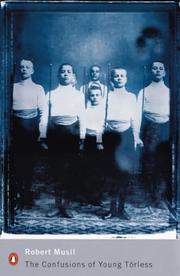 Robert Musil · 1906Young TörlessLvl 6Medium pace
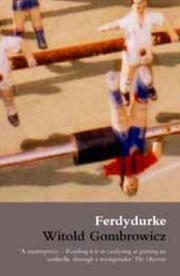 Witold Gombrowicz · 1937FerdydurkeLvl 7Fast paced
 Gabriel García Márquez · 1967One Hundred Years of SolitudeLvl 6Medium pace