
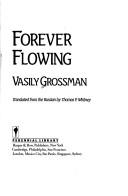
Everything Flows
Vasily Grossman · 1905–1964 · Ukraine / Russia
Originally Vsyo Techyot (Russian)
Why it matters
A man released after thirty years in the camps returns to a society of those who denounced and survived. Grossman's unfinished last novel reckons with informing, complicity, and a searing indictment of the man-made famine in Ukraine.
At a glance
Essayistic historical digressions on the famine interrupt the fragmentary, unfinished narrative.
Deep dive
A man walks out of thirty years in the camps to find his own cousin has spent that time quietly benefiting from the system that put him there, and Grossman uses the reunion to ask how far back Russia's failure to value a single life actually goes.
Written for readers who have finished the book. No plot recap, and nothing here is safe to read first.
Themes & symbolism
Ivan Grigoryevich is released after three decades in the Gulag, arrested during the purges for reasons the novel never bothers to specify because Grossman's point is that the reasons were never the point, and returns to a Soviet Union transformed enough to disorient him and unchanged enough to still refuse him any real reckoning. He stays briefly with his cousin Nikolay Andreyevich, a scientist who advanced his own career throughout the same decades by staying carefully quiet, and Grossman stages their reunion less as confrontation than as excruciating, mutual avoidance, Nikolay unable to apologize for a complicity he has spent thirty years not naming even to himself.
The novel's most sustained set piece leaves Ivan's story entirely to recount, through the memory of a peasant woman named Anna Sergeyevna, the 1932 to 1933 famine in Ukraine in unflinching, procedural detail, quotas, requisitioning, starving villages stripped of grain by officials who understood exactly what they were doing. Grossman was writing at a time when the famine could not be named at all in Soviet print, and the chapter reads now as one of the earliest sustained literary reckonings with it anywhere, delivered with a documentary plainness that refuses the reader any of the consoling distance fiction usually provides.
Grossman widens the argument beyond Stalin specifically, in long essayistic passages arguing that the Soviet system's contempt for the individual traces back through Lenin and further, into a Russian political tradition that had never valued personal freedom highly enough to resist what followed. It was a genuinely dangerous claim to publish, implicating the revolution's founding rather than only its later corruption, and it is the reason Everything Flows circulated only abroad for years after Grossman's death, following the same fate as his suppressed earlier novel Life and Fate.
A Famine Chapter the Country Could Not Print
Anna Sergeyevna's account of the Ukrainian famine, delivered as a long, largely uninterrupted monologue, catalogs the mechanics of starvation with a specificity, which households were searched, which grain was seized, which children died first, that Grossman could not have published inside the Soviet Union at any point in his lifetime. Its appearance in a novel smuggled out and printed abroad in 1970 gave Western readers one of their first literary accounts of an event Soviet historiography had spent decades erasing entirely.
The last seal: what actually happens, and why it lands the way it does.
The ending, explained
Ivan eventually settles into a modest, quiet life with a new companion, but Grossman refuses him anything like vindication or restored standing; there is no trial for Nikolay's complicity, no public reckoning for the system that took thirty years from Ivan for no stated reason. The novel's actual close is essayistic rather than personal, Grossman's own voice extending the argument about freedom's absence from Russian history past Ivan's individual story entirely, ending the book on argument rather than resolution, as if the only honest way to close a book about a system that never answered for itself is to refuse it a tidy ending too.
Where to go next
 Vasily Grossman · 1980Life and FateLvl 7Medium pace
 Mikhail Sholokhov · 1928And Quiet Flows the DonLvl 5Medium pace
 Anton Chekhov · 1899Selected StoriesLvl 4Medium pace
 Aleksandr Solzhenitsyn · 1962One Day in the Life of Ivan DenisovichLvl 3Fast paced
 Boris Pasternak · 1957Doctor ZhivagoLvl 6Slow burn
 Leo Tolstoy · 1878Anna KareninaLvl 5Medium pace