

Endings
Abdul Rahman Munif · 1933–2004 · Saudi Arabia / Jordan
Originally Al-Nihayat (Arabic) · translated by Roger Allen
Why it matters
A desert village's catastrophic drought sends its legendary hunter out after one last quarry, and the long wait for his return exposes the community's fraying bonds. Munif's spare early masterpiece, a smaller companion to Cities of Salt's vast canvas.
At a glance
A compact village tragedy told with spare, elemental restraint rather than dense political detail.
Deep dive
A desert village's best hunter keeps warning everyone that the old way of living off the land cannot survive the drought closing in around them, and the wake his neighbors hold after one final hunting trip becomes the occasion for finding out how right he was.
Written for readers who have finished the book. No plot recap, and nothing here is safe to read first.
Themes & symbolism
Assaf lives at the edge of the village of al-Tiba, closer to the desert than to the community he technically belongs to, and his skill as a hunter, along with his blunt warnings that the villagers' unsustainable hunting habits are worsening a drought already stripping the land bare, mark him as the kind of truth-teller a shrinking community both depends on and refuses to fully accept. Munif builds al-Tiba's decline in patient, accumulated detail, the well running lower each season, the young leaving for the city, half-finished talk of a dam that may or may not ever be built, so that Assaf's isolation reads as the position anyone honest about the village's prospects would eventually be forced into.
A hunting expedition organized for wealthy visitors from the city, over Assaf's explicit objections about the weather, becomes the occasion for the drought's argument to finally settle itself: Munif stages nature's indifference to human hierarchy directly, a sandstorm that has no interest in who among the hunters is powerful and who is merely along for the trip, closing in exactly as Assaf predicted it would. The animals Assaf has spent his life tracking carry as much weight in the novel as any of its human characters, Munif's clearest way of insisting that al-Tiba's crisis is ecological before it is economic or political, however much the coming dam-based solutions will try to frame it otherwise.
Fourteen Stories Around One Body
The wake held for Assaf, once his fate is confirmed, occupies roughly the second half of the novel and consists of fourteen separate tales told through the night by the men keeping vigil, most of them drawing on the old pre-Islamic tradition of using animal behavior, a hunted gazelle, a circling hawk, to say something about human fate that direct statement cannot. Munif lets the stories accumulate without much narrative connective tissue, and that structural choice is itself an argument: a community processing a loss it does not yet have the language to name directly reaches instead for its oldest available form.
A Dam That Never Quite Arrives
Talk of a government dam project drifts through al-Tiba's conversations across the whole novel, always promised, never actually begun, and Munif uses that permanent deferral as his quietest indictment of how modernization actually reaches villages like al-Tiba, as rumor and bureaucratic delay rather than as the material help that might have let Assaf's warnings matter in time. The dam's absence turns Assaf's death from isolated tragedy into something closer to a structural inevitability, a village failed twice over, first by drought and then by the state that promised, and never delivered, a remedy for it.
The last seal: what actually happens, and why it lands the way it does.
The ending, explained
Assaf disappears into the sandstorm along with his dog during the very expedition he tried to prevent, and his body is found only after the storm clears, confirming what the village had spent the whole novel refusing to fully accept about how little margin its way of life still has left. His death, less a plot twist than the outcome the whole narrative has been quietly building toward, becomes the occasion rather than the point: what matters to Munif is what al-Tiba does with the loss, gathering to tell fourteen stories that circle Assaf's life and the land's failing health without ever directly naming either, since direct naming is not a resource this particular community's oral tradition was built to supply. The novel ends without the dam, without rain, and without any of the deliverance discussed throughout, only the village's oldest way of making sense of catastrophe reasserting itself over its newest one.
Where to go next
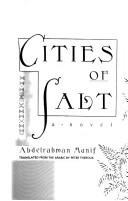 Abdul Rahman Munif · 1984Cities of SaltLvl 6Slow burn
 Ghassan Kanafani · 1963Men in the SunLvl 5Medium pace
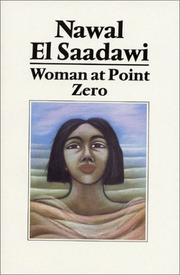 Nawal El Saadawi · 1975Woman at Point ZeroLvl 3Fast paced
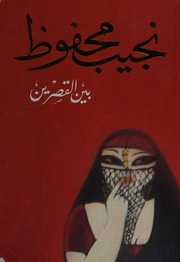 Naguib Mahfouz · 1956Palace WalkLvl 4Medium pace
 Elias Khoury · 1998Gate of the SunLvl 7Slow burn
 Thomas Mann · 1912Death in VeniceLvl 6Slow burn