
Romanticism & the Gothic
The inner life, the sublime, and the monstrous become literature's subjects.
Against Enlightenment order, the Romantics placed feeling, imagination, and the individual soul. Goethe's Werther made all Europe weep and imitate its hero; the Gothic novel (ruined castles, doubles, forbidden knowledge) gave shape to everything reason repressed.
Its deepest legacy is the exploration of consciousness at its extremes. Frankenstein asks what a creator owes his creation; Hoffmann's tales dissolve the border between dream and waking. The Gothic never dies: it migrates into Poe, Dostoevsky, the Southern Gothic, and every story where the past refuses to stay buried.
How to spot it on the page
- Landscapes that mirror the hero's inner turmoil: storms, ruins, and mountains as mood
- Doubles, monsters, and creators who can't face what they've made
- Letters and diaries confessing feelings realism wouldn't dare print
- Ruined castles, locked rooms, and secrets kept by architecture itself
- A hero undone by passion rather than circumstance
- Dread that builds in atmosphere long before anything actually happens
What it left behind
Romanticism burned out by mid-century as realism's cooler eye took over, but the Gothic never really ended; it just changed address. Poe imported it to America, the Brontës fused it with the marriage plot, and Dostoevsky turned its doubles into psychology. Its truest heirs are the Southern Gothic and every ghost story that treats the past as unburied evidence, still walking.
Defining works
For a guided order with notes, follow the reading path →
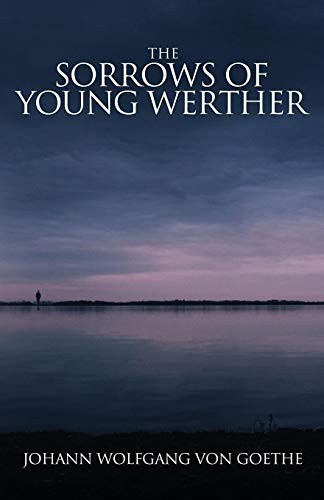
Johann Wolfgang von Goethe · 1774
The book that ignited European Romanticism: an artist's letters chart a hopeless love spiraling past anything friendship or reason can talk him back from. Young men dressed like Werther, some died like him: the first literary phenomenon of feeling, and still its sharpest study.
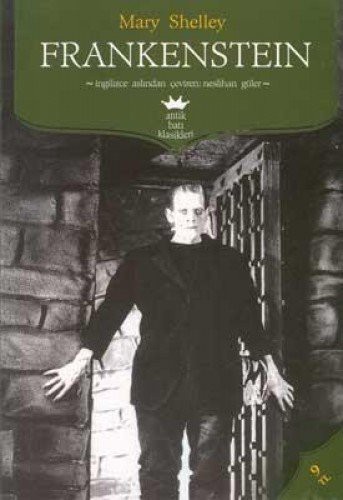
Mary Shelley · 1818
Written at eighteen, it founded science fiction and gave modernity its master-myth: the creation that turns on its creator. The creature (eloquent, abandoned, murderous) remains literature's great question about what makers owe the made.
Emily Brontë · 1847
A love story only in the way a storm is weather: nested narrators circle Heathcliff and Catherine's amoral, annihilating bond. Victorian critics recoiled; the novel outlived every stricture: nothing else in the canon sounds like it.
Authors of this movement
 1717–1797Horace WalpoleEnglandstart with The Castle of Otranto
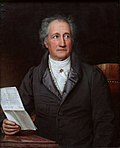 1749–1832Johann Wolfgang von GoetheGermanystart with The Sorrows of Young Werther
 1764–1823Ann RadcliffeEnglandstart with The Mysteries of Udolpho
 1771–1832Walter ScottScotlandstart with Waverley
 1775–1817Jane AustenEnglandstart with Pride and Prejudice
 1776–1822E. T. A. HoffmannGermanystart with The Sandman
 1777–1811Heinrich von KleistGermanystart with Michael Kohlhaas
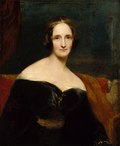 1797–1851Mary ShelleyEnglandstart with Frankenstein
 1802–1885Victor HugoFrancestart with Les Misérables
 1818–1848Emily BrontëEnglandstart with Wuthering Heights
 1847–1912Bram StokerIrelandstart with Dracula
 1850–1894Robert Louis StevensonScotlandstart with Treasure Island