
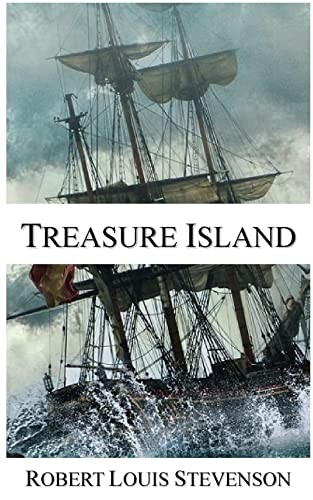
Treasure Island
Robert Louis Stevenson · 1850–1894 · Scotland
Why it matters
A boy, a map, and a one-legged sea cook named Long John Silver set the template for every pirate story since. Stevenson wrote it to entertain his stepson and ended up inventing the modern adventure novel's vocabulary.
At a glance
Clean adventure prose aimed at young readers, minimal structural difficulty.
Deep dive
A boy's adventure story that invented half of pirate mythology, narrated by a fourteen-year-old who is never quite sure whether Long John Silver is a villain or a father figure.
Written for readers who have finished the book. No plot recap, and nothing here is safe to read first.
Themes & symbolism
Long John Silver is the novel's real engine precisely because Stevenson refuses to let him settle into either hero or villain: he's a murderer and a mutineer who nonetheless protects Jim Hawkins at real personal risk, switches sides with the wind whenever it's expedient, and is allowed to sail off at the end uncaptured and unpunished, richer than when he started. Jim's fascination with him — equal parts admiration and terror — is the novel's most sophisticated move, teaching a juvenile audience that charisma and moral reliability aren't the same quality, well before the plot gets around to saying so outright.
Jim's repeated unauthorized departures from the adult chain of command — sneaking into the apple barrel to overhear the mutiny being planned, abandoning the stockade to cut the Hispaniola loose from Israel Hands, ultimately capturing the ship single-handed — structure the book as a coming-of-age story disguised as a treasure hunt: every major turn in the gang's fortunes happens because Jim acts on his own initiative outside what Squire Trelawney, Dr. Livesey, or Captain Smollett have sanctioned, and the narrative rewards his disobedience precisely when the adults' plans have stalled.
The treasure map and Flint's cross-marked island promise a fixed, findable prize, but Stevenson undercuts the fantasy at nearly every step — the skeleton pointing the way with its bones arranged as another Flint joke, the first cache found already emptied by Ben Gunn, the fortune's actual location relocated to a random cave by a marooned man's idle years of labor. The gold, when it finally arrives, is far less orderly and far more accidental than the treasure-map genre it invented would later insist on, a deflating irony Stevenson plants without ever undercutting the adventure's forward momentum.
The Book That Wrote the Pirate Rulebook
Nearly every stock pirate image now taken for granted — the treasure map marked with an X, the parrot on the shoulder, the black spot, the wooden-legged sea cook, 'Yo ho ho and a bottle of rum,' men saying 'shiver me timbers' — either originates with Stevenson or was fixed permanently in popular culture by this one novel, first serialized in a boys' magazine in 1881–82 under the title The Sea Cook. Stevenson drew loosely on real pirate history and earlier maritime fiction, but the specific, coherent mythology of piracy that later writers, and later Hollywood, simply inherited wholesale was substantially his own invention.
The last seal: what actually happens, and why it lands the way it does.
The ending, explained
With the mutineers reduced to a handful and Silver having craftily rejoined the loyalist side once he judges it safer, the party follows Flint's map to the cache only to find an empty pit — Ben Gunn, marooned for years, had already found and moved the treasure to his cave. The remaining mutineers briefly turn on Silver before Livesey's party scatters them for good, leaving the loyalists in full control of ship and hoard. Silver is kept alive and brought partway home, but slips away with a sack of coins at a port stop rather than face English trial, vanishing exactly as ambiguously as he's lived — never redeemed, never punished, simply gone. Jim closes the narrative haunted less by the gold than by the island itself, admitting the surf still breaks in his dreams, a boy's-adventure ending that quietly concedes the adventure left a permanent mark rather than a clean, happy resolution.
Where to go next
 Robert Louis Stevenson · 1886Strange Case of Dr Jekyll and Mr HydeLvl 4Fast paced
 Alexandre Dumas · 1844The Count of Monte CristoLvl 4Fast paced
 Bram Stoker · 1897DraculaLvl 4Fast paced
 Charlotte Brontë · 1847Jane EyreLvl 4Medium pace
 E. T. A. Hoffmann · 1816The SandmanLvl 6Medium pace
 Joris-Karl Huysmans · 1884Against Nature (À rebours)Lvl 7Slow burn