
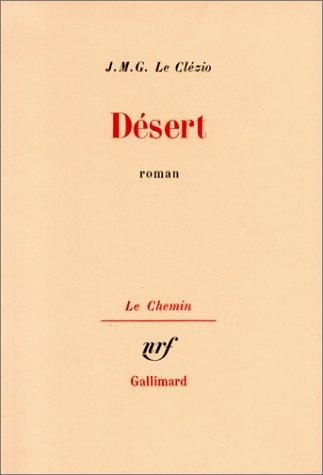
Desert
J. M. G. Le Clézio · b. 1940 · France
Originally Désert (French) · translated by C. Dickson
Why it matters
The doomed 1910 march of the Saharan 'blue men' against French guns alternates with Lalla, their descendant, drifting luminous and unbroken through Marseille's slums. Le Clézio's turning point: colonial destruction and its long afterlife told as pure light and landscape.
At a glance
Little plot and long sensory passages; the twinned timelines carry the meaning.
Deep dive
A doomed Saharan uprising against French guns in 1910 alternates with a young descendant drifting through Marseille's slums decades later, and Le Clézio lets the two timelines argue about which kind of survival actually counts.
Written for readers who have finished the book. No plot recap, and nothing here is safe to read first.
Themes & symbolism
Le Clézio splits Désert between Nour, a boy marching with Ma al-Aïnin's Saharan followers, the 'blue men' rallying against French colonial expansion into the Sahara in 1910, and Lalla, Nour's descendant generations later, an orphaned girl moving from a Moroccan shantytown to the immigrant slums of Marseille. The two timelines never intersect on the page; Le Clézio lets their kinship work entirely through repeated imagery, light, sand, thirst, the body's exposure to an indifferent landscape, so that colonial defeat and its long economic afterlife read as one continuous experience rather than two separate stories.
Nour's chapters render the historical march toward the French army's guns almost entirely through sensory deprivation, heat, hunger, the disappearance of water, refusing the reader any of the strategic or political narration a conventional historical novel would supply, which is Le Clézio's own argument: this defeat has already been explained by history books that never once describe what starving alongside Ma al-Aïnin's followers actually felt like.
Lalla's Marseille chapters run the same refusal in a modern register, poverty, factory work, a near-arranged marriage to a much older man rendered with the same immersive present-tense attention Le Clézio gives Nour's desert, until a photographer discovers her and turns her briefly into 'Hawa,' a fashion-world sensation stripped of the name and history that actually belong to her.
Hawa, the Name Marseille Gave Her
Lalla's brief celebrity as the photographer's discovery 'Hawa' repeats, in a consumer-culture key, the same erasure the novel's colonial timeline performs on Nour's people: a Western gaze that finds her beautiful only once it has renamed her and stripped away everything about where she actually comes from. Le Clézio, who spent years in Mexico and Panama before writing this novel, uses her fame's hollowness to mark his own break from the Parisian avant-garde that once made him famous the same way, a system that consumes what it calls exotic rather than actually seeing it.
The last seal: what actually happens, and why it lands the way it does.
The ending, explained
Lalla, pregnant after her relationship with the Hartani, a mute shepherd from her home village, turns her back on the modeling career that could have kept her in Marseille's spotlight and travels back toward home, choosing to give birth not in a hospital but on open ground near the sea, alone, in a scene Le Clézio writes with the same unhurried, sun-blinded prose he gives Nour's march. The novel closes on that birth rather than on any of Lalla's Marseille success, setting new life against Nour's earlier annihilation and insisting, without spelling out the argument, that returning to the desert is survival, not defeat.
Where to go next
 Patrick Modiano · 1978Missing PersonLvl 5Medium pace
 Michel Houellebecq · 1998The Elementary ParticlesLvl 5Medium pace
 Hugo Claus · 1983The Sorrow of BelgiumLvl 6Medium pace
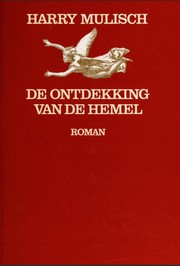 Harry Mulisch · 1992The Discovery of HeavenLvl 6Medium pace
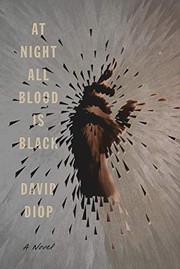 David Diop · 2018At Night All Blood Is BlackLvl 5Fast paced
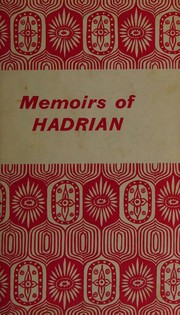 Marguerite Yourcenar · 1951Memoirs of HadrianLvl 6Slow burn