
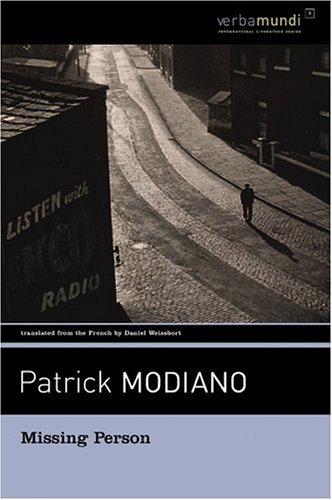
Missing Person
Patrick Modiano · b. 1945 · France
Originally Rue des Boutiques Obscures (French)
Why it matters
An amnesiac private detective investigates his own erased identity through Occupation-era Paris's fog of collaboration and disappearance. Modiano's Goncourt-winning novel distills his lifelong obsession with memory and complicity.
At a glance
Spare, hypnotic sentences but a deliberately elliptical, repetitive structure.
Deep dive
A detective spends the whole investigation chasing the one case he can never close: his own erased identity, in an occupied Paris that worked just as hard to forget.
Written for readers who have finished the book. No plot recap, and nothing here is safe to read first.
Themes & symbolism
Guy Roland's amnesia is never just a personal affliction; Modiano stages it as the exact mechanism by which a nation avoids its own history. Born in 1945 to a father who survived the Occupation through murky black-market dealings, Modiano writes a narrator whose blank prewar decade mirrors the blank France cultivated about collaboration for the three decades after Liberation — official silence dressed up as national moving-on. The deeper Guy digs into photographs, gutted apartment blocks, and old acquaintances who may or may not recognize him, the more the trail points toward a milieu of nightclub owners, minor aristocrats, and fixers who profited from the chaos of Vichy-era Paris, quite possibly including a doomed attempt to smuggle a group across the Swiss border that went wrong in ways the novel refuses to spell out. Modiano isn't interested in unmasking a villain; he's interested in showing that the very act of investigation, conducted with the same procedural tools, photographs, address books, old colleagues' testimony, that any occupying power or collaborationist police force would use, can never fully separate the innocent search for self from the guilty machinery of surveillance it borrows from.
Every witness Guy interviews supplies a different, half-corroborated fragment, and the photographs he collects show faces that might or might not be his own younger self, doubled and redoubled until identity itself starts to look like a rumor. That epistemological fog is enacted, not just described, by Modiano's prose: short declarative sentences, addresses given with GPS precision, dates stated with total confidence, all surrounding a center that never firms up. Paris itself becomes the novel's real protagonist, a city Guy walks street by street cross-referencing what's there now against what stood there before the war, each demolished building and renamed shopfront one more layer of the palimpsest burying whatever he was. The title of the French original, Rue des Boutiques Obscures, names an actual street Guy investigates, but it also names the book's method: obscure shopfronts, the past accessible only as a series of darkened storefronts you can press your face to the glass of and still not fully see inside.
A Detective Novel That Refuses to Detect
Modiano borrows the private-eye plot's outward mechanics, an investigator, a missing man, a paper trail, only to hollow out its payoff: there is no final scene where every clue snaps into a coherent picture and Guy explains the case to a room. Hutte, the employer whose retirement kicks off the search, functions less as a boss than as a keeper of a trade Guy no longer needs once he starts hunting himself, and the shift from professional to personal investigation is the novel's real structural hinge — solving other people's disappearances has apparently been rehearsal all along for solving, or failing to solve, his own.
The last seal: what actually happens, and why it lands the way it does.
The ending, explained
Guy's last lead takes him to Rome, to an address connected to one of the several names his fragmentary trail has attached to him along the way, and the novel closes not on confirmation but on arrival: he reaches the building at dusk, aware that whatever he finds there will still leave the deepest layer of the story, what exactly happened at the Swiss border, whose betrayal or survival it was, permanently out of reach. Modiano refuses the genre's obligatory unmasking; the last pages settle instead into a hushed, elegiac acceptance that reconstructed lives, like reconstructed cities, never fully recover what's been erased. The final image folds Guy's private search into every vanished Occupation-era life the book has passed through, suggesting all of them, found or unfound, eventually dissolve into the same anonymous dark.
Where to go next
 Patrick Modiano · 1988Suspended SentencesLvl 4Medium pace
 Javier Marías · 1992A Heart So WhiteLvl 8Slow burn
 J. M. G. Le Clézio · 1980DesertLvl 5Slow burn
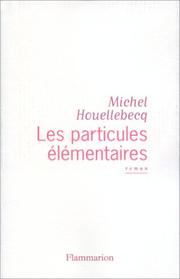 Michel Houellebecq · 1998The Elementary ParticlesLvl 5Medium pace
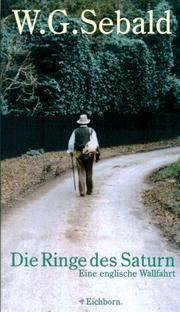 W. G. Sebald · 1995The Rings of SaturnLvl 7Slow burn
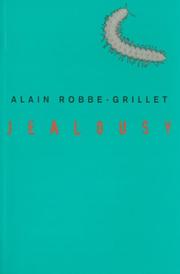 Alain Robbe-Grillet · 1957JealousyLvl 8Slow burn