
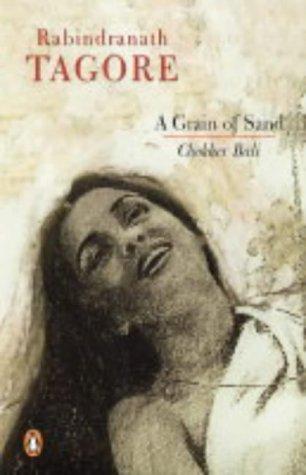
Chokher Bali
Rabindranath Tagore · 1861–1941 · India (Bengal)
Originally Chokher Bali (Bengali) · translated by Radha Chakravarty
Why it matters
A young widow's presence in a newly married couple's household stirs a repressed desire none of them can name. Tagore's sharpest novel of Bengali domestic convention, psychological interiority pointed like a blade at marriage itself.
At a glance
Dense psychological interiority and social critique unfold within an otherwise leisurely domestic plot.
Deep dive
The 1903 novel that gave a young Hindu widow her own desire on the page, decades before Bengali fiction had anywhere to put it.
Written for readers who have finished the book. No plot recap, and nothing here is safe to read first.
Themes & symbolism
Binodini is widowed within months of her own marriage and sent to live out a socially mandated, sexless existence at an age when her friend Asha is only beginning married life with Mahendra, and Tagore's radical move is to give Binodini a mind: sharp, educated, self-aware, and furious at a system that punishes her for surviving her husband. Her friendship with Asha curdles into something closer to rivalry once Binodini and Mahendra's mutual attraction becomes undeniable, but Tagore refuses to flatten her into either a temptress or a victim. She manipulates the household's affections deliberately, and the novel holds her responsible for it without pretending the widow's code that produced her rage was ever just.
Bihari, Mahendra's steady, unglamorous friend, offers the novel's real alternative to both Mahendra's weakness and Binodini's calculation, a version of desire disciplined by conscience rather than denied outright, and his late, complicated feelings for Binodini give the book its most genuinely uncertain relationship, since neither of them can fully separate affection from the guilt attached to it. Chokher Bali translates roughly as a grain of sand in the eye, Tagore's own name for the low, persistent irritant of suppressed desire that the widow's code was supposed to eliminate and instead only concentrated.
Bengal's First Psychological Novel
Tagore called Chokher Bali his first true novel, distinguishing it from his earlier romances by its refusal of melodrama in favor of interior conflict, and Bengali criticism has generally agreed, treating it as the moment psychological realism arrives in the language: motive, not incident, drives every major turn, and even the novel's one adulterous near-catastrophe unfolds through hesitation and self-justification rather than plot mechanics.
A Widow Written Against Her Own Genre
Bengali fiction had a well-worn type for the young widow by 1903, pious, silent, decoratively tragic, and Binodini is Tagore's deliberate rebuttal to it: literate, articulate, and entitled in her own mind to more than grief, she argues her case to Mahendra and to the reader in language no earlier widow character in Bengali fiction had been given, which is exactly what made her so unsettling to contemporary reviewers.
The last seal: what actually happens, and why it lands the way it does.
The ending, explained
Binodini, having drawn both Mahendra and Bihari's affections and watched the damage that triangle does to Asha's marriage, refuses the ending a more conventional novel would offer her: she turns down Bihari's eventual proposal, the one path that would have given her a stable, respectable second life, and instead leaves for Kashi to live independently, on her own terms. Mahendra and Asha's marriage survives, chastened rather than restored to its earlier innocence, and Bihari remains alone, his feelings for Binodini permanently unresolved. Tagore denies the novel's most compelling character the domestic resolution its plot keeps dangling in front of her, choosing instead to let her walk out of the story as a woman who has finally chosen her own terms, which reads less as punishment than as the one ending the book's logic can actually support.
Where to go next
 Rabindranath Tagore · 1910GoraLvl 5Slow burn
 Rabindranath Tagore · 1912GitanjaliLvl 3Slow burn
 Rabindranath Tagore · 1912The Post OfficeLvl 3Medium pace
 Rabindranath Tagore · 1916The Home and the WorldLvl 6Medium pace
 Bankim Chandra Chattopadhyay · 1882AnandamathLvl 5Medium pace
 Sarat Chandra Chattopadhyay · 1917DevdasLvl 2Fast paced